
7 Practical Ways to Manage Plantar Fasciitis Pain at Home
If you’re over 40 and on your feet a lot, heel pain can throw off your whole day before breakfast. That sharp, stabbing feeling with your first steps in the morning is often how plantar fasciitis shows up, and your heel doesn’t care that breakfast, commutes, and caregiving are waiting.
You may notice it eases after you move around, then comes right back after standing too long, walking a lot, or sitting for a while. When you’re trying to manage plantar fasciitis pain, start simple. Better foot support, a few steady habits, and supportive insoles for arch and heel pain can make everyday movement feel a little easier.
Why arch support matters when your feet hurt
Your arch helps spread pressure each time you stand, walk, and pivot. When it doesn’t get enough support, the thick band along the bottom of your foot, called the plantar fascia, takes on more strain. That’s part of why the pain often hits hardest with those first morning steps and can flare again later, as explained in Mayo Clinic’s plantar fasciitis symptoms and causes.
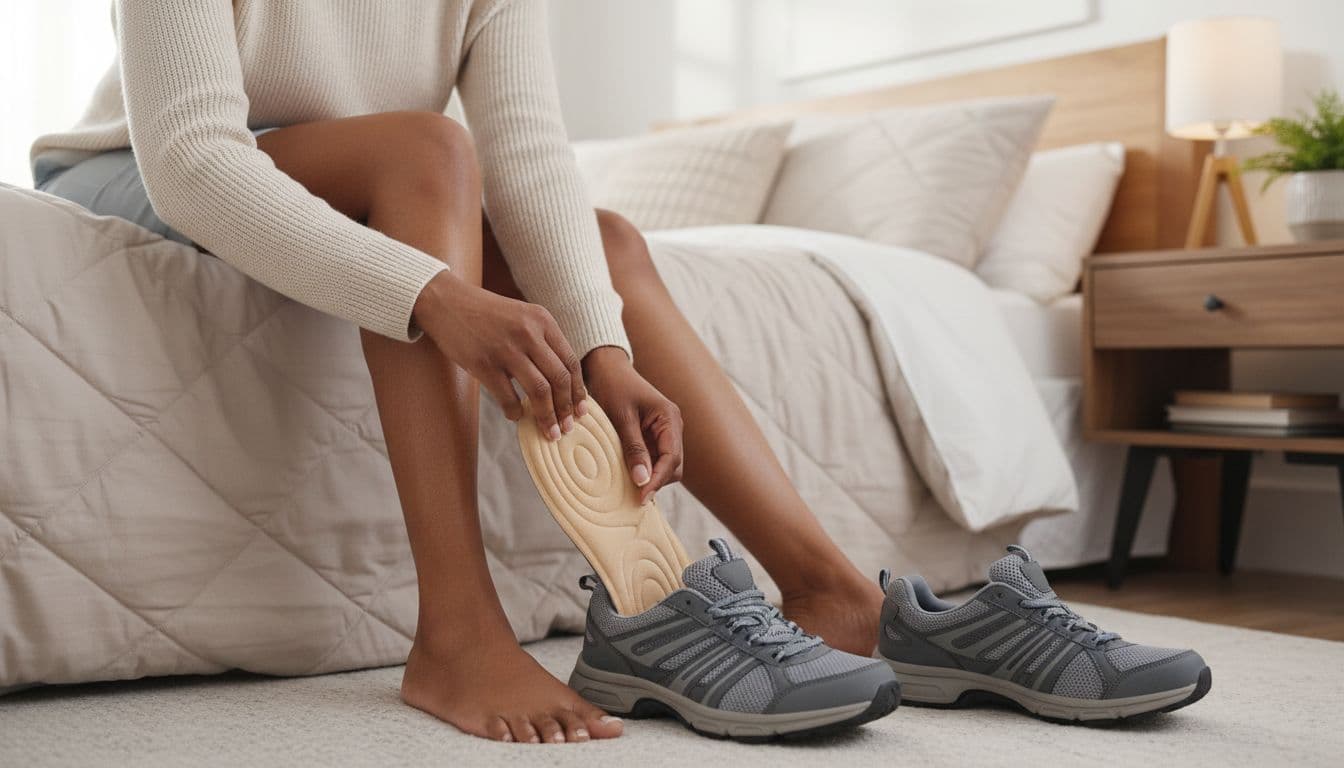
How the right support can reduce heel strain
Think of your arch like a bridge. If the support underneath gets shaky, everything above it feels the stress. Flat shoes, worn-out sneakers, and long hours on hard floors can leave your heel doing more work than it should.
Good support won’t fix everything overnight, but it can lower the daily pull on your heel. Supportive cushioning also helps absorb some of the shock before it lands on the sore spot. That matters when you’re cooking, cleaning, working, or making one more stop before heading home.
What to look for in shoes and inserts
Look for shoes with a firm arch, a cushioned heel, and a sole that doesn’t fold in half too easily. A stable shoe is usually better than one that feels floppy or twists too easily through the middle.
If you use inserts, choose ones that support the arch and cradle the heel. Save the flat flip-flops and worn slippers for another season. Your feet need structure right now, not soft shoes with no backup.
7 practical ways to manage plantar fasciitis pain at home
These home habits are realistic, and that’s the point. They may help calm the pain, but they’re not a cure, and you don’t need to do them perfectly to get some relief.
Wear supportive shoes or insoles
Start here. Better support can ease pressure on your heel and arch during normal life, not only workouts. It helps when you’re standing at the stove, cleaning up, running errands, or working a long shift. The big win is reducing repeat stress with every step.
Stretch your calves and feet gently
Tight calf muscles can pull on your heel more than you think. Try a gentle calf stretch before you get moving, and stop before you hit pain. Slow and steady works better than bouncing or forcing it. Cleveland Clinic shares a few easy plantar fasciitis stretches and exercises you can do at home.
Use ice after long periods on your feet
After a busy day, your heel may feel sore and irritated. Wrap a cold pack in a towel and place it on the painful area for 15 to 20 minutes. Short sessions can help calm things down. Don’t put ice straight on bare skin.
Avoid going barefoot on hard floors
Tile, wood, and concrete don’t give your heel much grace. Even quick trips across the kitchen can stir up pain. Keep cushioned slippers or supportive house shoes nearby so you don’t forget. Your home shoes matter more than you think.
Give your feet rest when possible
You may not be able to put your feet up for an hour. But you can sit while folding laundry, pause between chores, or take a short break during meal prep. Small rests count. You don’t need a full day off, you need less constant strain.
Pay attention to routines that trigger pain
Notice the patterns. Maybe your heel flares after a long shopping trip, after standing through church, or when you rush through the morning. A quick note in your phone can help you see what makes things better or worse. That’s how you stop getting blindsided by the same flare-up.
Use over-the-counter relief only as directed
Some people use over-the-counter pain relief during flare-ups. Follow the label, and check with a medical professional if you have health concerns or take other medicines. The goal is short-term help, not pushing past pain and paying for it later. If you’re reaching for it often, that deserves a conversation with your doctor.

Simple ways to build foot care into your daily routine
The best plan is the one you can keep doing on regular days, messy days, and extra-busy days. You don’t need a whole new schedule.
Create a morning routine that protects your heels
Before you stand up, flex your feet and do one gentle calf stretch. Then put on supportive shoes right away instead of padding across hard floors. Mayo Clinic’s diagnosis and treatment guide is a helpful bookmark if you want a doctor-reviewed look at common home care.
Plan ahead for busy days on your feet
If you know you’ll be out a while, wear your supportive pair from the start, not after the pain shows up. Pace your errands, sit when you can, and keep extra cushion in mind if walking is part of your routine. If exercise is part of your week, these tips on high-quality running shoes for women can help you think about support before discomfort starts.
Know when to talk with a medical professional
Home care helps a lot of people, and many improve with rest, ice, stretching, better footwear, and cutting back on painful activities. But you don’t have to tough it out forever. If your pain is severe, lasts for weeks, keeps getting worse, or starts changing how you walk, it’s time to check in with a doctor, podiatrist, or other medical professional.
When conservative treatments aren’t enough to manage persistent pain, a consultation with a specialist can clarify the underlying issue. They can offer a precise diagnosis, considering factors that might be overlooked in a self-assessment.
Sometimes, the problem stems from more complex structural conditions that benefit from expert intervention. It is often wise to seek orthopaedic care to explore all available options for relief and recovery, especially when mobility or daily function is significantly impacted.
The AAOS overview of heel pain can help you understand when plantar fasciitis may need a closer look. If you notice swelling, numbness, or pain that is getting in the way of daily life, get it checked.
Final encouragement
You do not have to ignore heel pain and hope it disappears. When you work to manage plantar fasciitis pain with steady, simple habits, those small choices can add up to more comfortable days over time.
Please pin one of these images to your favorite Pinterest board.
This simple share makes a big difference to my blog. Thank you!




Michelle D. Garrett is the founder of Divas With A Purpose.
She focuses on sharing resources for being purposely productive; setting personal and professional goals and achieving them through daily action; and successfully running a business while focusing on your mental health. Michelle is a full-time entrepreneur who specializes in teaching female entrepreneurs how to show up consistently in their business – online and off.