Weekly Reset Routine That Busy People Can Keep

A week can feel messy before it even gets going. The dishes stack up, your calendar has surprises, dinner becomes a daily question, and your brain never quite powers down.
A weekly reset routine gives your next week a softer landing. It isn’t about becoming the person with color-coded bins and endless free time. It’s about creating one repeatable pause that helps you feel clear, prepared, and a little more in control.
Key Takeaways
- A weekly reset works best when it’s small, repeatable, and realistic.
- Pick one day and time you can return to each week, even if you only have 20 minutes.
- Focus on the categories that create the most stress, home, calendar, meals, finances, self-care, and mindset.
- Stack your reset onto something you already do, and keep a shorter version for busy weeks.
- Progress beats perfection every time. A half-done reset still helps.
Why a weekly reset routine works when it’s simple
A good reset routine is less like a makeover and more like a bridge. It helps you move from one week to the next without dragging loose ends behind you.
That’s why random catch-up sessions rarely stick. They depend on motivation, open time, and energy you may not have. A weekly reset creates a home for the tasks that otherwise keep floating around in your mind.
It also cuts down on decision fatigue. When you already know when you’ll check your calendar, prep meals, or glance at your budget, you stop renegotiating those tasks all week long. That matters when you’re balancing work, family, school, errands, and your own needs.
The key is keeping it small enough to repeat. You do not need a three-hour Sunday production. You need a routine that still works after a long week, a sick kid, a late shift, or a full social calendar.
A reset routine should give you energy back, not ask for more than you have.
If you’ve ever felt better after tidying a counter, writing down your to-do list, or setting out tomorrow’s clothes, you’ve already felt the power of a reset. The goal now is to turn that feeling into a weekly rhythm.
Pick your reset day, time, and starting size
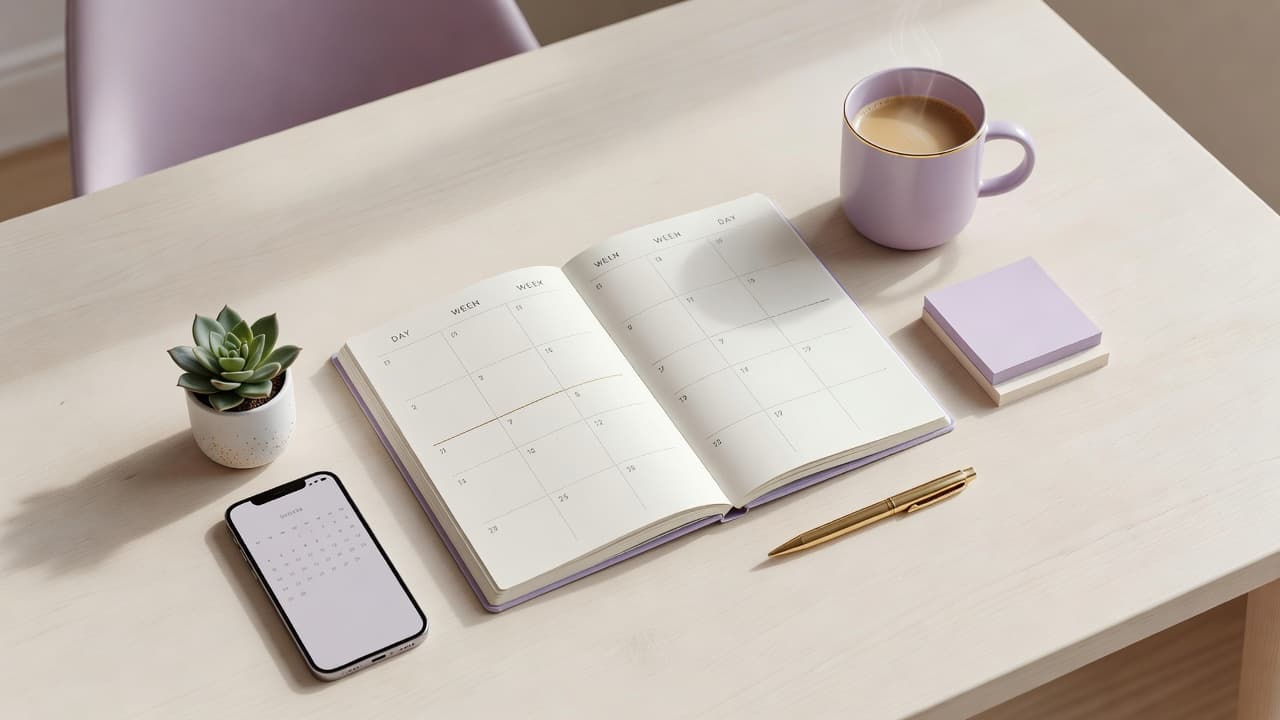
Before you choose tasks, choose your anchor. Your routine sticks faster when it lives at the same point in your week.
For some people, that’s Sunday afternoon. For others, it’s Friday evening, Monday morning, or even a quiet hour on Saturday. There is no gold star for doing it on Sundays. The best time is the one you can protect most often.
Next, decide how long your reset should be. Start with the version you can finish on an ordinary week, not your best week.
Here’s a simple way to size it:
| Reset length | What fits | Best for |
|---|---|---|
| 20 minutes | Calendar check, brain dump, top priorities | Busy parents, students, packed workweeks |
| 45 minutes | Home tidy, meal plan, bills, self-care prep | Most people |
| 90 minutes | Deeper cleaning, grocery run, admin, planning | Weeks when you have more margin |
Twenty minutes is enough to change your week. Forty-five is plenty for a solid routine. More time is fine, but only if it doesn’t make the habit harder to keep.
Now stack the routine onto something you already do. Pair it with your first cup of coffee, your grocery order, your Sunday playlist, or the moment the kids go to bed. Habit stacking works because it gives the new habit a familiar door to walk through.
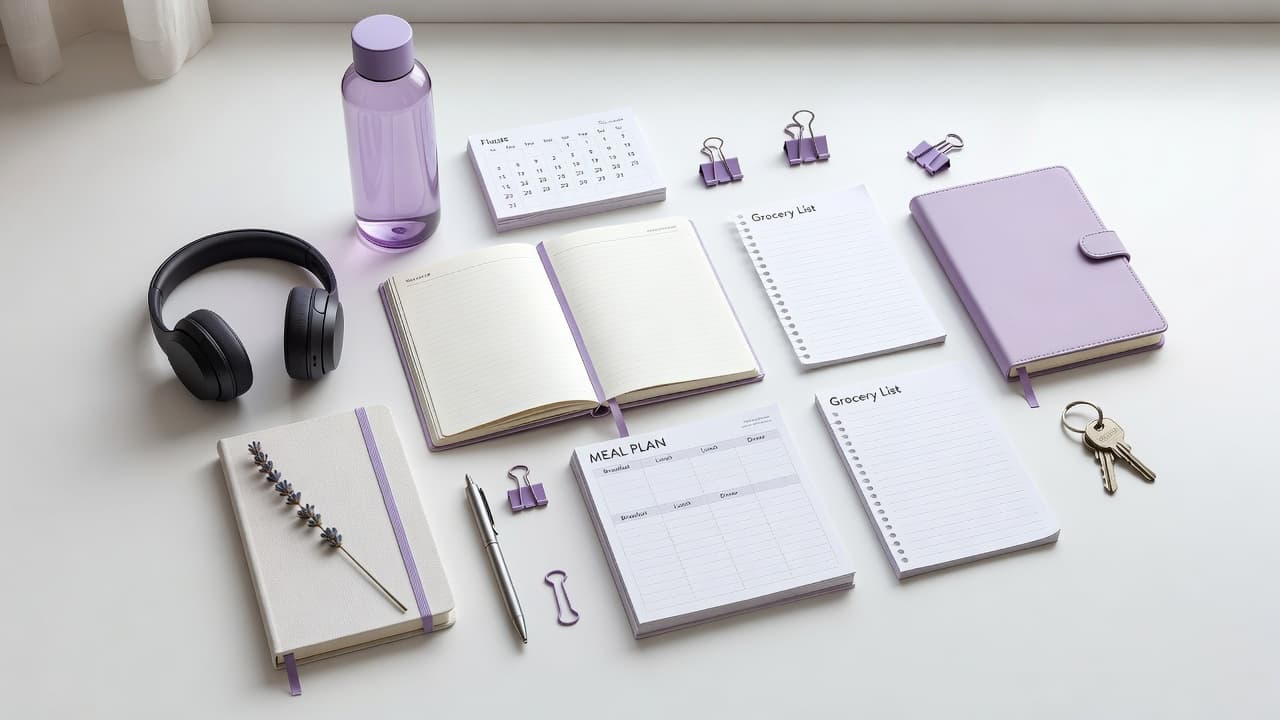
Last, gather the tools you use every week in one spot. A planner, pen, grocery app, notebook, and budget app are enough. When the setup is easy, the follow-through gets easier too.
If work planning is part of your reset, it helps to choose your top three weekly priorities before the week starts. Fewer priorities usually lead to more follow-through.
What to include in your weekly reset routine
Your reset should cover the areas that tend to unravel first. For most people, that means a mix of planning, prep, and a little peace.
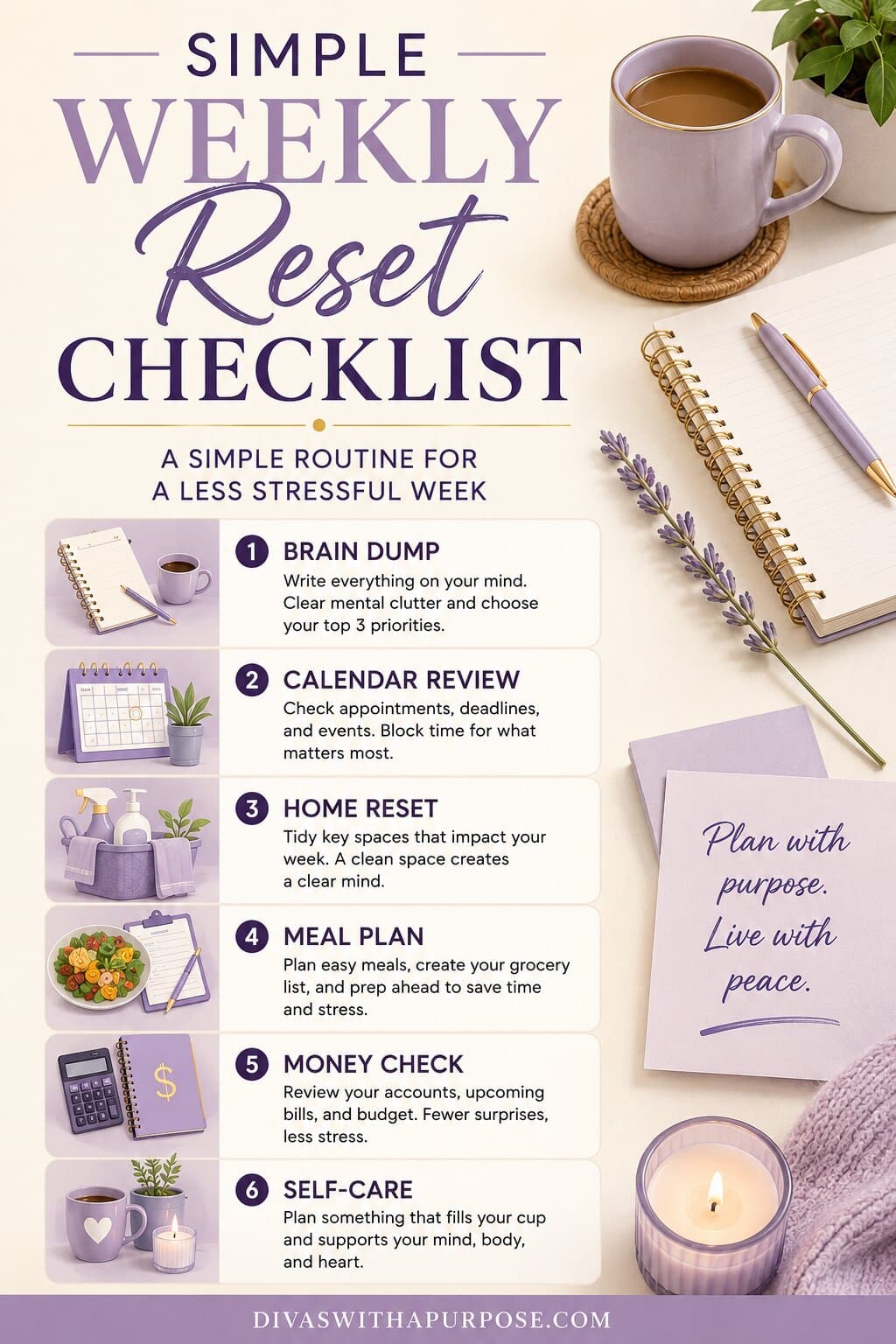
Start with a quick review and brain dump
Begin by looking back for five minutes. What got done? What needs to move forward? What appointments, deadlines, or school items are already on the calendar?
Then do a fast brain dump. Write down every loose thought, task, reminder, and worry. Get it out of your head and onto paper. This step alone can make your shoulders drop.
After that, choose your top three priorities for the week. Not ten. Three. You can still do other things, but your top three tell you what matters most if life gets noisy.

Reset the spaces that create weekday stress
Start with home. You don’t need to deep-clean every room. Focus on the places that affect your week the most, usually the kitchen, entryway, bathroom counter, desk, or laundry area.
A short home reset might mean unloading the dishwasher, starting one load of laundry, clearing surfaces, and putting bags or shoes where they belong. If you’re looking for more ideas, this weekly reset checklist includes digital clutter too, like email and phone files.
Then check your calendar. Confirm appointments, add school events, look at commute time, and notice any days that already feel tight. This is also the time to block off rest, workouts, study time, or focused work sessions. If you run a business or side hustle, you may want to schedule your weekly CEO planning block here as well.

Prep meals, money, and the little things that save you later
Meal planning doesn’t have to mean a fridge full of containers. Pick a few easy dinners, a lunch plan, and one or two snacks you know you’ll eat. Then make the grocery list before the week gets busy.
A simple meal reset can look like washing fruit, chopping one vegetable, marinating protein, or writing down five dinner options on a sticky note. Done is better than gourmet.
Give your finances a quick glance too. Check account balances, upcoming bills, and anything that needs attention this week. You are not doing a full money makeover here. You’re giving yourself fewer surprises.
This is also a smart time for small practical moves, refill your medicine case, charge devices, set out your bag, pack school items, or lay out one ready-to-wear outfit. Tiny prep work saves big mental energy later.

Leave room for self-care and mindset
This part gets skipped first, but it often matters most. A weekly reset should support your body and mind, not only your task list.
Maybe that means filling your water bottle, picking a bedtime, setting one screen limit, or planning a walk with a friend. Maybe it means five minutes of prayer, journaling, gratitude, or repeating a few grounding affirmations.
If Sundays feel like too much, this flexible Sunday reset example is a good reminder that some weeks call for a lighter version. Your routine can be caring and practical at the same time.
How to make your reset routine stick for real
The routine that sticks is not the prettiest one. It’s the one you can do when life is full.
Keep the order the same each week. When the sequence stays familiar, you waste less energy figuring out what comes next. Try something like this: brain dump, calendar, home tidy, meals, money, self-care. Repetition builds comfort.
Protect a “minimum version” for hard weeks. If your normal reset takes 45 minutes, create a 15-minute version too. Check the calendar, choose three priorities, do a quick tidy, and plan meals. That’s enough to keep the habit alive.
Perfectionism is another trap. Missed a week? Start again next week. Got interrupted halfway through? Pick back up later or call it good. A weekly reset routine is not a test. It’s support.
A simple tracker can help. Put a small check mark in your planner each time you finish your reset. Not for pressure, just for proof. Consistency gets easier when you can see it.
If your work life is packed, it can also help to build a rhythm for your weekly productivity, especially if your personal and professional tasks keep blending together.

Final Thoughts
If your week has been starting in chaos by Tuesday, you don’t need more pressure. You need a repeatable pause that helps you breathe, plan, and prepare.
The strongest reset routine is usually the simplest one. Pick a day, keep it small, and let it grow only after it becomes familiar.
A routine that fits real life will carry you farther than one that looks good on paper.