
Sleep Routine for Busy Women That Fits Real Life

Your day may end with dishes in the sink, one more email, a child calling your name, and a mind that refuses to settle. That doesn’t mean you’ve failed at rest. It means you need a sleep routine for busy women that meets you where you are, not one that requires a perfectly quiet house and two free hours every night.
Achieving quality sleep is not a luxury item on your self-care list. When you are managing a busy schedule, prioritizing your rest prevents chronic sleep deprivation and becomes part of how you show up for your family, your work, your goals, and yourself. Start small, stay flexible, and let your routine support your real life.
Key Takeaways
- Maintaining a consistent sleep schedule often matters more than a perfect bedtime.
- Build a short bedtime routine you can repeat even on busy evenings.
- Set up your sleep environment to make rest easier, not another task to manage.
- Plan for interruptions, late nights, and stress instead of expecting them to disappear.
- Talk with a qualified healthcare professional when healthy sleep remains out of reach or affects daily life.
Build a Sleep Routine for Busy Women Around Your Actual Schedule
A realistic sleep routine for busy women starts with honesty. If your evenings include homework help, caregiving, shift work, business tasks, or a long commute, a 9:00 p.m. bedtime might not be possible right now. Don’t build a plan around a version of life you aren’t living.
Begin with your wake-up time and build a consistent sleep schedule. Choose a time you can keep most days, including weekends when possible. Your body responds well to regular cues, which helps support your circadian rhythm. The Sleep Foundation’s sleep tips for women also point to the value of a calm sleep environment, regular exercise, and added care during hormonal shifts, along with practical sleep tips for daily habits.
Next, count backward to shape your sleep schedule. Most adults need at least seven hours of rest, but your first goal doesn’t have to be perfect. If you wake at 6:00 a.m. and usually fall asleep near midnight, don’t force an 8:30 p.m. bedtime tomorrow. Move your bedtime earlier by 15 minutes for several nights. Let your body adjust without a fight.
Think of your bedtime routine as a set of anchors, not a strict script. You might have:
- A morning routine anchor, such as opening the curtains and drinking water.
- An evening anchor, such as setting a reminder to begin winding down.
- A bedroom anchor, such as charging your phone away from the bed.
These small actions tell your brain, “Estamos moving toward rest now.” They work even when the day felt messy.
A bedtime routine doesn’t need to be long to be effective. It needs to be repeatable on an ordinary Tuesday.
If your schedule changes often, keep the same sequence even when the clock changes. Brush your teeth, dim the lights, prepare tomorrow’s essentials, and get into bed. Familiar steps can feel like a soft landing after a full day.

Give Yourself a Short Evening Transition
Many women go straight from doing to sleeping. One minute you’re packing lunches or replying to a client. The next minute you’re supposed to close your eyes and be calm. Sister, your body needs a little room to come down.
Create a 15-minute bedtime routine that fits into your evening. This isn’t about adding another elaborate bedtime ritual. It is about giving your thoughts somewhere to go besides your pillow so you can ease into quality sleep.
Try a simple pattern: finish your last task, make a quick list for tomorrow, wash up, and sit in a dim room with a book or calming music. Using simple relaxation techniques like prayer, journaling, or stretching helps you release the day. When you practice these gentle relaxation techniques, you invite restorative rest.
A written tomorrow list can be an effective tool for stress management when your mind starts running through appointments, bills, school forms, and work deadlines. Keep a notepad by the bed. Write the thought down, then give yourself permission to leave it there until morning.
For more ways to make rest part of your everyday care, explore these simple wellness habits for busy women. Self-care does not always look like a weekend away. Sometimes it looks like choosing not to solve every problem at 10:45 p.m.
Stress may still show up. That’s okay. Take slow breaths, relax your shoulders, and remind yourself that rest is still useful even if sleep doesn’t happen instantly. Putting pressure on yourself to establish a rigid bedtime routine can make a tired mind even louder.

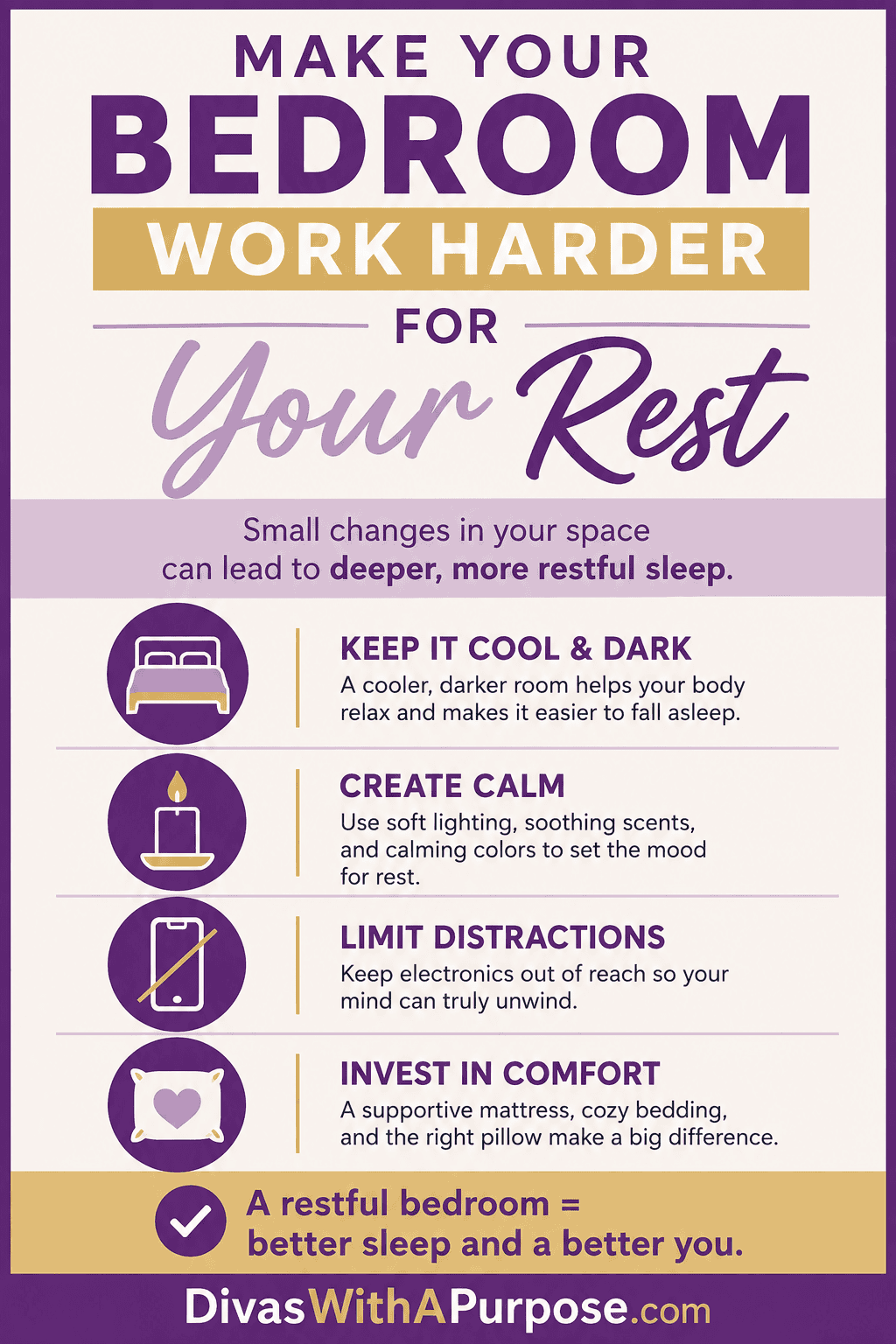
Make Your Bedroom Work Harder for Your Rest
Your bedroom doesn’t need a complete makeover. A few practical changes can make it easier to settle down when your head finally hits the pillow, starting with an optimized sleep environment.
Start with light. Bright overhead lights and glowing screens emit blue light, which can block melatonin production and tell your brain to stay alert. Dim lamps during your wind-down time. If outside light wakes you early, try blackout curtains or an eye mask. Keep your bedroom environment cool enough for comfort, and use a fan or white-noise machine if household sounds pull you awake. Investing in a quality mattress can also promote deep sleep and support your overall sleep quality.
Your phone deserves an honest conversation, too. Many of us use it as an alarm, a connection to family, a work tool, and a late-night escape. But scrolling can turn five minutes into 45 before you know it.
Set a realistic boundary by incorporating a digital detox before bed. Charge your phone across the room, put it on Do Not Disturb after a certain hour, or choose one screen-free pocket of time. Harvard Health’s sleep hygiene guidance also recommends limiting your caffeine intake after lunch and creating a relaxing sleep space to protect your overall sleep quality.
You don’t have to give up every evening show or group chat. The goal is to notice what leaves you relaxed and what leaves you wired. If social media makes you compare, worry, shop, or keep checking messages, it may not be the best last thing your mind takes in.
Keep one comforting item ready for bedtime: a book, soft socks, a favorite blanket, or unscented lotion. These little signals create consistency without requiring extra time or money.

Plan for Parenting, Late Nights, and Unpredictable Days
A good routine has room for real life. Babies wake up. Teens need a ride. A parent may need help. A deadline may stretch late. Your sleep habits should support you through these seasons, not shame you for having them, especially when you are managing a demanding, busy schedule.
If you are parenting young children, consider a flexible bedtime plan that fits your busy schedule. Do what helps you get in bed sooner after the house settles. Skip the pressure to clean every room, answer every text, or catch up on every task. The laundry can wait. Your tired body cannot always keep borrowing from tomorrow.
When you face late nights and sleep deprivation, protect your wake-up time as much as you can. Avoid sleeping half the day if possible, since it can make the next bedtime harder. Strategic power naps may help, but keep these power naps early and short if they interfere with your nighttime sleep.
For irregular work schedules, create a portable wind-down routine. Maybe it is the same playlist, shower, face wash, and five-minute brain dump after every shift. The clock may change, but the message to your body stays familiar. Maintaining a consistent bedtime routine and a steady sleep schedule becomes much easier when these simple, daily habits consistently lead to restorative rest.
A routine can also include support. Ask a partner to handle bedtime one or two nights a week. Let older children help with a small evening responsibility. Say no to one optional task when your week is overloaded. Rest is not selfish. It helps you bring more patience and energy to the people who count on you.
A self-care plan for overwhelm can help you see where your energy is going and where a small boundary may give you breathing room.
Notice When Sleep Needs More Support
Lifestyle changes can help, but they don’t fix every sleep problem. If you regularly struggle to fall asleep, wake often, or experience poor sleep quality that prevents deep sleep, talk with a qualified healthcare professional.
Reach out sooner if loud snoring, gasping during sleep, morning headaches, restless legs, panic at night, depression, or anxiety are part of the picture. Hormonal changes during pregnancy, postpartum recovery, perimenopause, and menopause can also affect sleep quality and make it harder to achieve deep sleep. You deserve care that looks at the whole story.
The healthy sleep habits guidance for women is a helpful reminder that healthy sleep matters, but your provider can help when consistency alone isn’t enough. Keep notes for a week or two about bedtime, wake-ups, caffeine intake, mood, medications, and any other sleep tips you have tried. That information can make the conversation easier.
Frequently Asked Questions
What if my evening schedule is completely unpredictable?
Focus on a flexible sequence rather than a strict clock time. Keeping the same simple steps—like washing your face, dimming the lights, and putting your phone away—signals to your body that it is time for rest, no matter what time the house finally settles.
How can I stop my mind from racing at bedtime?
Keep a notepad by your bed to quickly write down tomorrow’s to-do list or lingering thoughts. Putting those tasks on paper tells your brain it is safe to let go of them until morning.
Do I really need to give up my phone before bed?
You don’t have to eliminate screens entirely, but setting a small boundary helps. Charging your phone across the room or turning on Do Not Disturb prevents mindless scrolling from keeping your mind wired when you need to wind down.
What should I do if my sleep problems persist?
If consistent lifestyle habits and a simple wind-down routine don’t help, reach out to a qualified healthcare professional. Conditions like hormonal shifts, sleep apnea, or chronic stress may require personalized medical support.
Make Rest Part of Your Purpose
A sleep routine for busy women is not about doing bedtime perfectly. It is about choosing a few steady practices that help you rest more often, even when life is full. Prioritizing quality sleep leads to long-term healthy sleep and better self-care for everything else on your plate.
Start with one anchor tonight. Put your phone down 15 minutes earlier. Write tomorrow’s list. Dim the lights. Rest is not something you earn after every task is complete. It is part of caring for the woman who carries so much, and your ideal bedtime routine should reflect that grace.