Adaptive School Uniforms: Making Morning Routines Inclusive
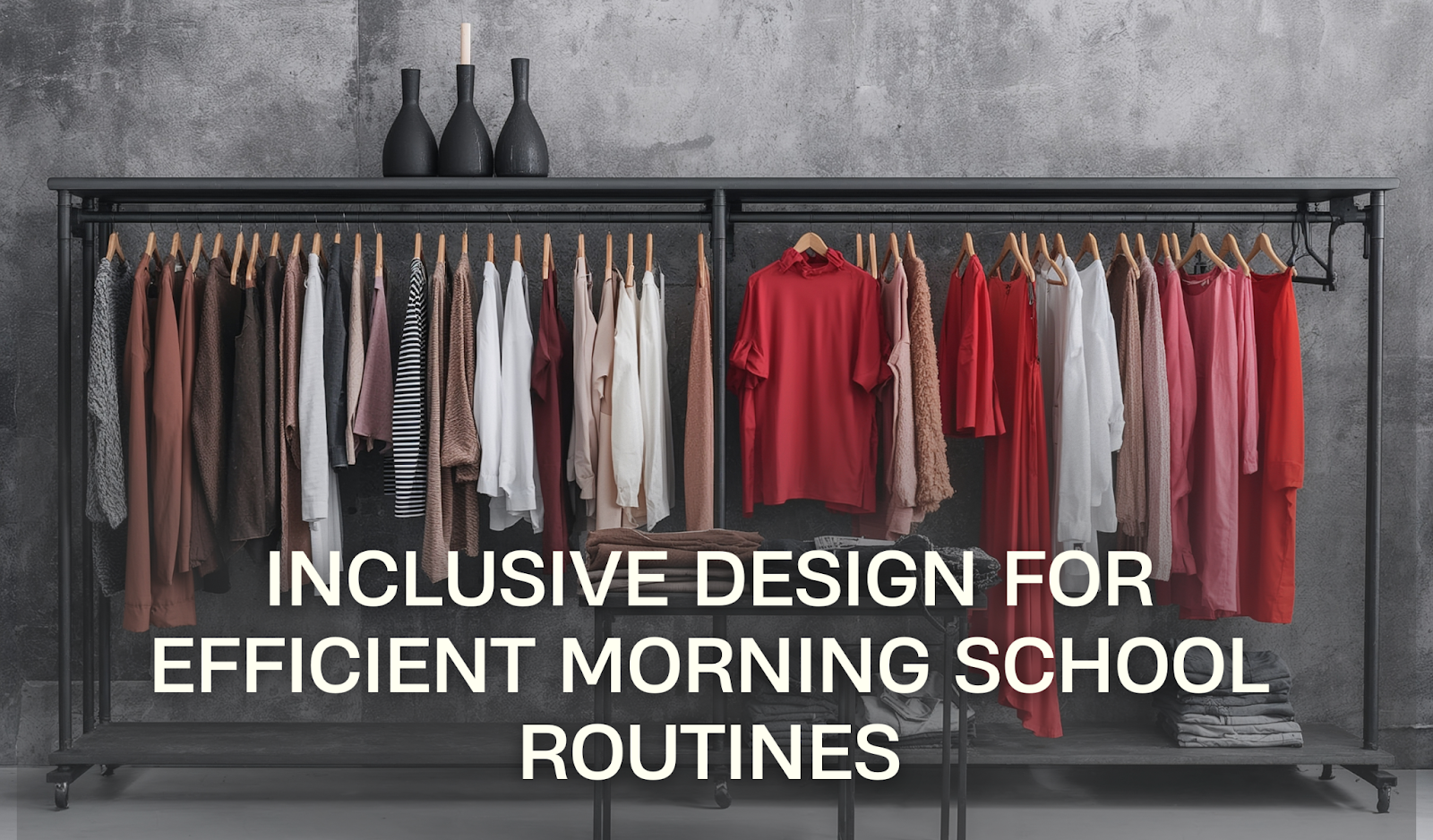
School uniforms are often sold as the “easy option.”
For many disabled children, and for the families supporting them, uniforms can be the opposite: itchy seams that derail the day before breakfast, fastenings that require a second pair of hands, waistbands that press painfully when sitting, and rules that leave little room for sensory or medical needs.
Inclusive uniform routines start with a simple shift in mindset. The goal is not to force a child to tolerate discomfort in the name of compliance. The goal is to remove avoidable barriers so getting ready is calmer, faster, and more independent where possible.
Disability Horizons exists to support disabled people to live as they choose, and that includes the ordinary realities of mornings, clothing, and school life.
Why uniforms can be harder for disabled children
Uniform issues tend to fall into a few repeat patterns:
- Sensory discomfort: scratchy fabrics, tight collars, stiff waistbands, labels, seams, and socks can trigger distress or shutdown for children with sensory differences. NHS occupational therapy resources often recommend exploring tolerable textures, trying different fits, and avoiding forcing clothing a child cannot manage. If transitions and sensory load are part of your child’s experience, these back-to-school tips for autistic children offer routine and comfort strategies that pair well with uniform planning.
- Fine motor and coordination barriers: buttons, small zips, ties, and fiddly buckles can be a daily bottleneck.
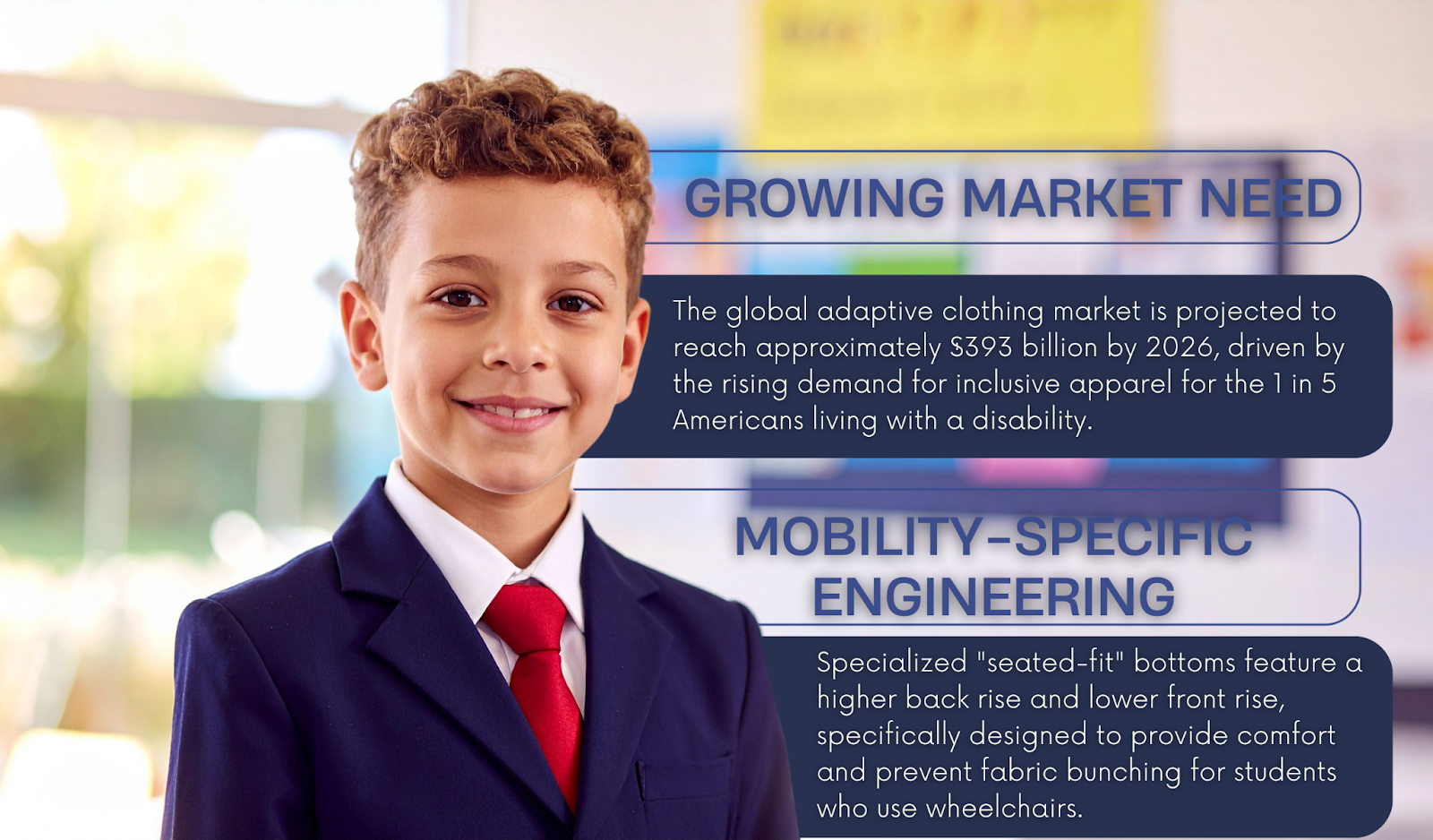
- Mobility and seating needs: clothing that rides up, bunches, or creates pressure points can be uncomfortable for wheelchair users or children who sit for long periods.
- Medical and toileting needs: braces, catheters, continence pads, stomas, sensory breaks, and temperature regulation all interact with what is realistic to wear.
Uniform policy is not just a “school preference” in the UK. Education providers have duties around disability and reasonable adjustments, and families can ask for changes that reduce barriers.
Government guidance and Equality Act resources outline that schools must not discriminate and should consider reasonable adjustments for disabled pupils.
Start with a uniform routine, not a uniform purchase
Before you change what your child wears, change how mornings work.
- Do a two-minute “friction audit”
For three school mornings, note where time and stress spike:
- Is it putting items on, taking them off, or tolerating them once on?
- Is it the sensation, the fastening, the fit, or the rule that creates the barrier?
- Is it worse at certain times (fatigue, anxiety, pain, sensory overload)?
This quick audit keeps you from buying a “solution” that does not address the real problem.
- Reduce decisions without removing autonomy
Many children do better with limited choice: two acceptable options, both comfortable. If sensory needs are part of the picture, NHS guidance often suggests exploring what textures and fits a child can tolerate, and using those preferences to guide clothing choices.
Choosing uniform pieces with adaptive needs in mind
This is not about a single perfect garment. It is about building a flexible set of “uniform-compliant enough” options. Prioritise comfort features that reduce sensory load. Look for:
- Softer, breathable fabrics
- flat seams where possible
- tagless or easy-to-remove labels
- gentle waistbands or adjustable waists
- layers that do not trap heat
If your child is highly sensitive to clothing sensations, occupational therapy advice commonly focuses on validating discomfort, avoiding force, and choosing tolerable textures and fits as a starting point.
Make fastenings work for the child, not the other way around
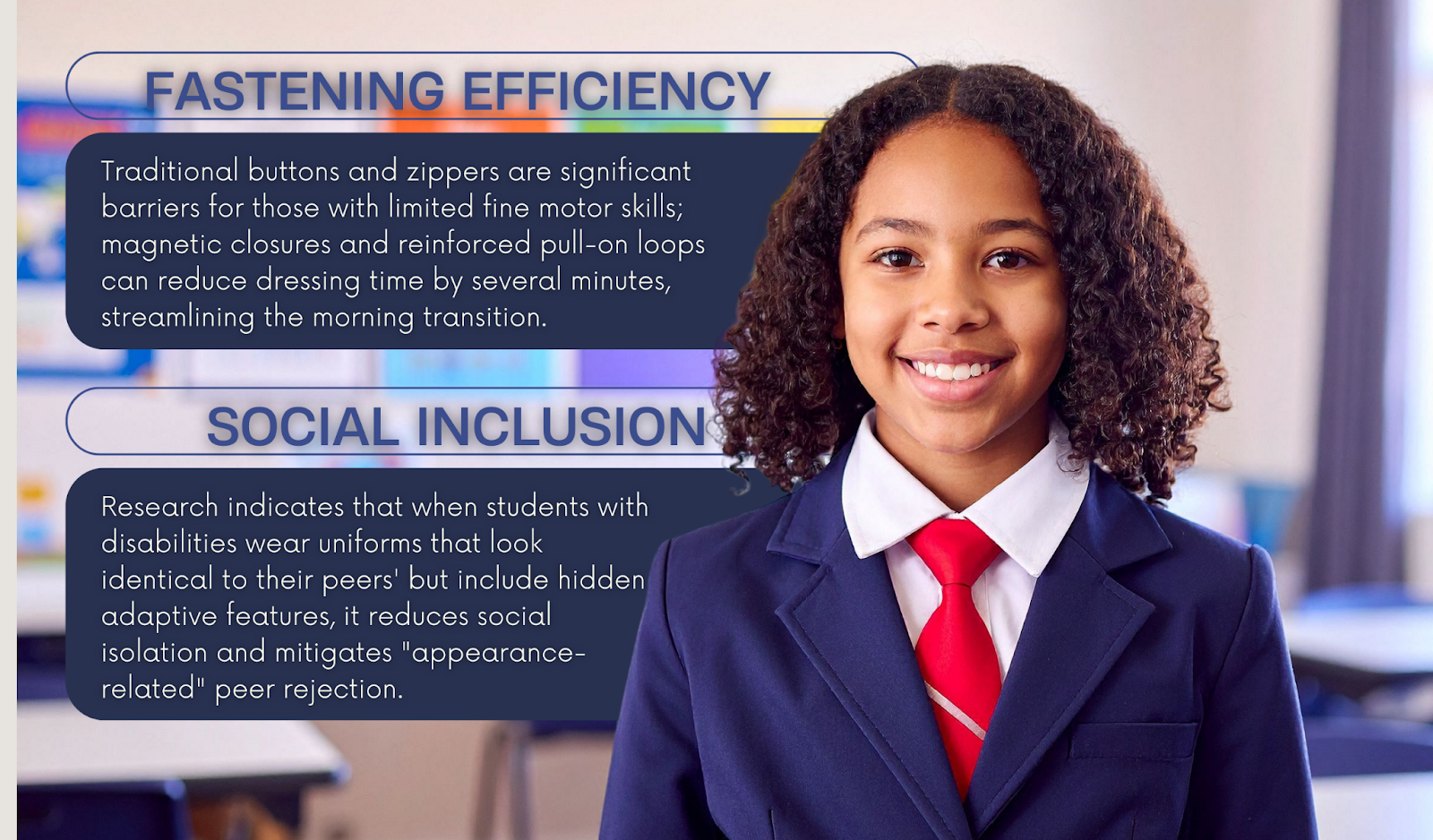
If buttons, zips, or ties slow everything down, consider adaptations:
- sew-in magnetic closures behind a button placket (so it still “looks like buttons”)
- Velcro swaps inside waistbands
- elasticated waists that still match uniform colour rules
- clip-on ties where permitted
A useful way to plan is to scan the uniform categories your school expects, then select the versions that best match your child’s needs. For example, French Toast school uniforms for girls can serve as a reference for common uniform staples and silhouettes, which helps families identify which items are easiest to adapt for sensory comfort, mobility, or independence without reinventing the whole wardrobe.
Fit for wheelchair users and seated comfort
If your child sits most of the day, comfort problems can show up as:
- waistbands digging in
- fabric bunching behind knees
- shirts riding up
- seams rubbing pressure points
Small changes can help:
- size up in tops for seated reach
- choose trousers with softer waist construction
- consider tailoring hems and cuffs to prevent dragging, snagging, or wheel contact
Inclusive strategies that make mornings easier
Use a “practice wear” routine before term starts
For some children, especially those with sensory differences or anxiety around transitions, practising uniform wear in short bursts can reduce morning distress. Disability Horizons’ back-to-school guidance for autistic children highlights the value of planning routines and comfort supports around school transitions. Try:
- 5 minutes wearing the uniform while doing a preferred activity
- gradually increase time
- pair uniform wear with predictable steps (visual schedule, timer, reward that is not food-based if that matters for your family)
Build an “access kit” that supports the day
Uniforms do not exist in isolation. If your child uses aids or needs support items, plan for them:
- spare sensory-friendly base layer
backup socks that do not irritate - continence supplies
- a small comfort object where permitted
- easy-open bag or pouch for independence
Disability Horizons has previously covered back-to-school product planning for disabled children, which can help families think through practical support beyond clothing.
Make laundry and organisation accessible
For families where a parent is disabled, or for teens who are learning independence with disability, laundry systems matter:
- label drawers with large print, braille, or tactile markers
- pre-sort uniforms into “ready sets” (top, bottom, socks)
- use consistent storage locations
RNIB’s guidance on labelling highlights options including tactile, large print, audio, and braille labels that can make clothing identification easier.
Working with schools on uniform flexibility
Some schools are helpful immediately. Others need a clear, calm request that explains the barrier and the adjustment.
Ask for an adjustment that is specific and practical
Instead of “my child cannot wear this,” try:
- “My child cannot tolerate the collar seam due to sensory needs. Can the policy allow a crew-neck top in the same colour?”
- “Fastenings are a barrier. Can we use an alternative closure that still looks like the uniform?”
- “For medical needs, we need a looser waistband and easier toileting access.”
UK guidance is clear that education providers have a duty to make reasonable adjustments so disabled pupils are not discriminated against.
Use uniform policy guidance to support the conversation
DfE guidance on school uniform policy is aimed at schools, but it reinforces that uniform policies should be considered carefully, including around affordability and implementation. It can be a useful context when asking for flexibility that also reduces cost and burden.
What to avoid
- Do not treat distress as defiance. If a child is melting down over socks, it is rarely about “attitude.”
- Do not assume one solution fits every disability. Sensory differences, pain, mobility, fatigue, and coordination create different needs.
- Do not wait for a crisis week. Trial, tweak, and document what works before school starts where possible.
Conclusion
Adaptive uniforms are not about special treatment. They are about removing barriers so disabled children can start the day ready to learn, rather than exhausted from getting dressed.
The most inclusive morning routines are built from small, realistic steps: choose fabrics and fits your child can tolerate, swap or adapt fastenings, plan for toileting and mobility needs, and work with schools on reasonable flexibility.
Over time, these adjustments can shift mornings from conflict to confidence, and for many families, that is the difference between simply attending school and actually thriving there.