One-on-One vs Group Programs: How to Choose
Choose one-on-one services when you need tailored guidance, private conversations, or help with a complex challenge. Choose group programs when shared learning, peer encouragement, and a more affordable option fit your goals.
When comparing one-on-one vs group programs, the strongest starting point is your level of support needed, not which offer has the longest list of bonuses. You deserve help that fits your responsibilities without stretching your budget or schedule beyond what you can sustain.
Start by understanding what each format gives you.
One-on-one vs group programs at a glance
One-on-one mentoring pairs one mentor with one mentee. Their mentor-mentee relationship centers on the mentee’s needs, goals, and challenges.
Group mentoring brings one or more mentors together with several mentees at once. Participants learn through both the mentor’s guidance and their interactions with one another.
The same comparison applies to one-on-one coaching and group coaching, as well as one-on-one classes, group classes, and training.
| Decision factor | One-on-one services | Group programs |
|---|---|---|
| Personalization | Guidance is personalized to your needs | A shared curriculum guides the group |
| Peer interaction | Limited unless offered separately | Participants exchange ideas and encouragement |
| Privacy | Fewer people hear your concerns | Personal sharing reaches other participants |
| Scheduling | Often more individual choice | Usually follows a shared calendar |
| Cost | You cover dedicated professional time | Participants share delivery costs |
| Attention | The session focuses on you | The facilitator divides attention |
The strongest choice depends on which trade-offs matter most for your next goal.
Mentoring statistics show its broader value. CNBC-cited research reports that around 71% of employees with mentors receive career advancement opportunities through their companies. National Mentoring Day statistics report that around 97% of employees find mentoring programs valuable.
LHH’s 2021 state of coaching and mentoring report also described a 30% rise in mentoring initiatives after the pandemic began. These figures concern mentoring overall; they don’t establish that either delivery format produces better results.
When individual attention is worth the investment

Your situation needs a tailored approach
Individual support makes sense when a standard lesson leaves important needs unanswered. A mentor can provide personalized guidance on a career challenge. A teacher can adapt lessons to your learning pace and learning style.
Similarly, one-on-one training lets a trainer watch your form closely and adjust exercise intensity. That attention makes it a better fit for clients with injuries or medical conditions, alongside appropriate medical guidance.
The trade-off is the higher fee. Dedicated preparation, meeting time, and follow-up require more professional effort per person. That can limit access for individuals and organizations with tight budgets.
Privacy and flexibility affect your participation
Some topics are easier to discuss without an audience, including business finances, workplace conflict, or personal setbacks. Individual sessions reduce the number of people involved, although privacy still depends on the provider’s practices.
Private appointments may also offer more flexible scheduling than a fixed group calendar. However, cancellation windows and available hours still create limits.
Personal attention doesn’t mean unlimited access. A useful package states how to contact the provider, expected response times, and what support happens between meetings. Reliable boundaries help you plan without expecting someone to remain on call.
What group programs offer beyond a lower price
Peer support can strengthen follow-through
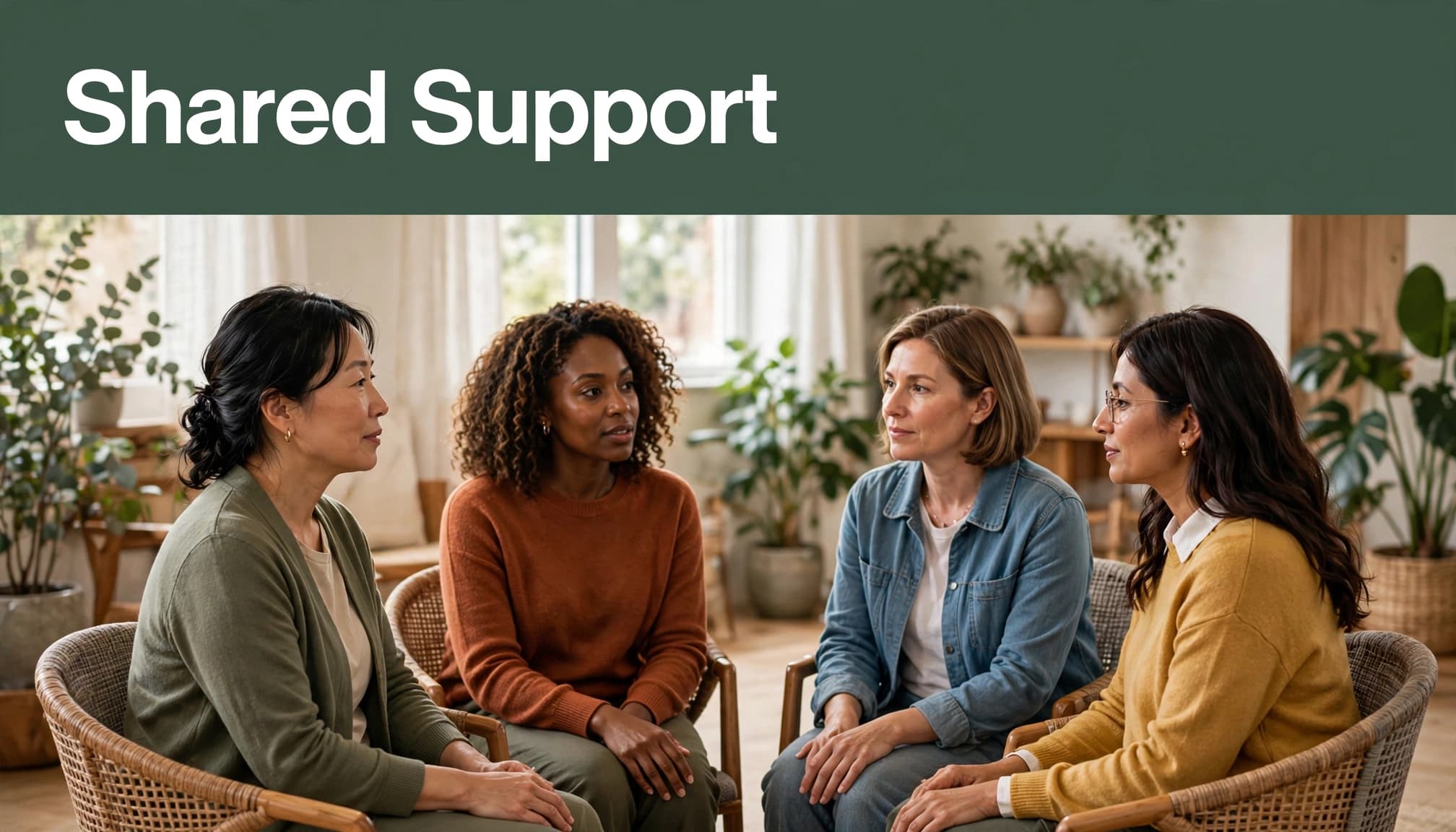
Social interaction exposes participants to diverse perspectives, questions, approaches, and encouragement. Another participant may describe a challenge you hadn’t yet found words for.
That shared experience can make follow-through feel more manageable. A simple text exchange or brief weekly check-in can sustain motivation and keep participants connected between meetings. Elaborate systems aren’t necessary when everyone understands the commitment.
Our approach to goal setting and follow-through emphasizes consistent action alongside encouragement. A supportive circle works best when members leave with actions they can take, rather than inspiration alone.
Facilitation matters as much as headcount
The facilitator’s time is shared, so personalized attention is limited. Assertive participants can also dominate discussions and leave quieter members without enough space.
Useful safeguards include structured turns, written questions, and clear expectations about participation to balance group dynamics. Familiarity matters too. Reddit commenters discussing social comfort described knowing the people and understanding their role as important factors, sometimes more important than group size.
Those comments are personal experiences, not program research. Still, they offer a useful reminder: being quiet doesn’t automatically make group learning a poor fit. The structure needs to give you a comfortable way to contribute.
Compare the full cost and time commitment
Look at what the fee covers
Group coaching and classes are generally a cost-effective option because participants share the professional’s time. Likewise, small group training lets a trainer serve two or more paying clients at once, earning more per hour while each client pays less than for private training.
However, the lowest fee doesn’t automatically provide the support you need. Compare the full commitment, including materials, travel, childcare, and any separately charged individual sessions.
Also distinguish advice from completed work. Learning how to plan social media content is different from paying someone to produce it. A longer package description doesn’t necessarily mean less work for you.
Session length doesn’t equal personal attention
Suzy Martinek describes individual life coaching sessions as typically lasting 60 to 90 minutes. Group coaching sessions often run 90 minutes to two hours. These are useful examples, rather than universal standards.
A longer group meeting won’t give every participant that entire block of direct feedback. Meanwhile, a shorter private session may address your immediate obstacle in detail.
Consider preparation and follow-through time too. If your calendar only accommodates the meeting, a program with substantial weekly assignments may be difficult to sustain, regardless of format.
Compare the support you can use within your real week, not just the number of session hours included.
Choose your format in four steps
Begin with the result you want. Our guidance on creating a focused plan of action can help you connect that result to manageable next steps.
- Name one outcome you want help reaching. “Grow my business” leaves too much open. A defined outcome, such as completing a content plan, makes it easier to judge whether teaching, personal feedback, or production help belongs in the package.
- Identify the support you can’t do without. Prioritize private discussion if confidentiality affects your willingness to participate. Choose individual feedback when your challenge needs close attention. Favor a group when peer practice and shared follow-through are central to your progress.
- Set limits for money and time. Include the total fee and the hours required outside sessions. A program you can sustain gives you a better chance to participate consistently than one that creates financial strain or repeated scheduling conflicts.
- Match the offer to those requirements. Compare the actual deliverables, responsibilities, and exclusions. Choose the option that meets your essential needs without paying for extras you’ll rarely use.
For social media support, the distinction is practical: choose teaching when you need skills, individual consultation when you need decisions about your business, and production services when you need someone to do the work.
A hybrid approach can meet overlapping needs
You don’t have to choose one format forever. A group program with a scheduled private check-in can combine community with targeted guidance.
The group can cover shared lessons and progress check-ins. Then, an individual appointment can address a sensitive concern or an obstacle that doesn’t require the whole group’s time.
Hybrid support works best when each part has a clear purpose. The package should explain when private sessions occur, what they cover, and whether the fee includes them.
NFPT describes group training participants later becoming individual clients. That progression can make sense when someone discovers a need for closer attention. However, moving into private support should follow your needs, without pressure to upgrade.
If professional coaching doesn’t fit your budget, an accountability partner can provide encouragement and follow-through. That relationship doesn’t replace specialist advice, but it can support actions you already understand.
Measure progress before committing again
Decide what progress will look like before your first session. For a business goal, our guidance on setting measurable business goals offers a practical foundation.
Track attendance and completed assignments, but also the result those activities support. Finishing every lesson matters less if you still can’t apply what you’ve learned.
After the first month, review whether feedback helped you take action. Notice whether you had enough opportunity to participate and whether the workload fit your schedule.
If progress stalls, identify the obstacle before changing formats. Unclear goals may need a better plan. Limited feedback may call for individual help. Missed meetings may point to a scheduling mismatch.
Also separate encouragement from treatment. Coaching can support goals and habits, but it isn’t a substitute for licensed mental health care. Choose qualified professional care when that is the support you need.
Key takeaways
- Choose one-on-one services when tailored attention or privacy is essential to your progress.
- Favor group programs when shared learning and peer follow-through meet your needs at a price you can sustain.
- Consider a hybrid when community helps you stay engaged but occasional challenges need private attention.
Frequently asked questions
Can group coaching provide the same support as private coaching?
A group can provide strong teaching, encouragement, and accountability. It generally can’t provide the same amount of dedicated attention because the coach divides time among participants. Written feedback or included private check-ins can narrow that gap.
Which format works better for a tight budget?
Group programs usually cost less per participant. However, a focused individual consultation may fit better than a longer program when you need help with one defined decision. Compare the complete commitment and included support, rather than assuming a particular format is always the cheapest.
Choose support that fits your next step
The right format gives you enough support to act without creating a commitment you can’t maintain. Choose for your actual needs, including the conversations you need to have and the time you can give.
Write down your desired outcome and your nonnegotiable support needs before comparing offers. Let those requirements guide your choice, with room to change formats as your needs change.