
When Bullying Comes Home
PACER’s National Bullying Prevention Center launched National Bullying Prevention Month in 2006. Communities across the United States observe the campaign every October. Communities across the country observe the campaign each October to educate others and raise awareness about bullying prevention.ion.
Bullying Is More Common Than Many Parents Realize
A 2023 report from The Public Health Post highlighted troubling disparities in school bullying. Black students make up only 15 percent of the nation’s K-12 public school population. Yet they account for 37 percent of students who experience bullying. Experts believe the actual number may be even higher. Many students of color never report bullying because they distrust the school system.
Each day, about 160,000 students miss school because they fear bullying. That statistic highlights the serious impact bullying has on students and their families. StopBullying.gov reports that researchers still do not know how often race, ethnicity, or national origin motivates bullying. It is also unclear how often kids of the same group bully each other. Research is still growing. It is clear that Black and Hispanic youth who are bullied are more likely to suffer academically than their white peers.
When My Son Faced Peer Pressure at School
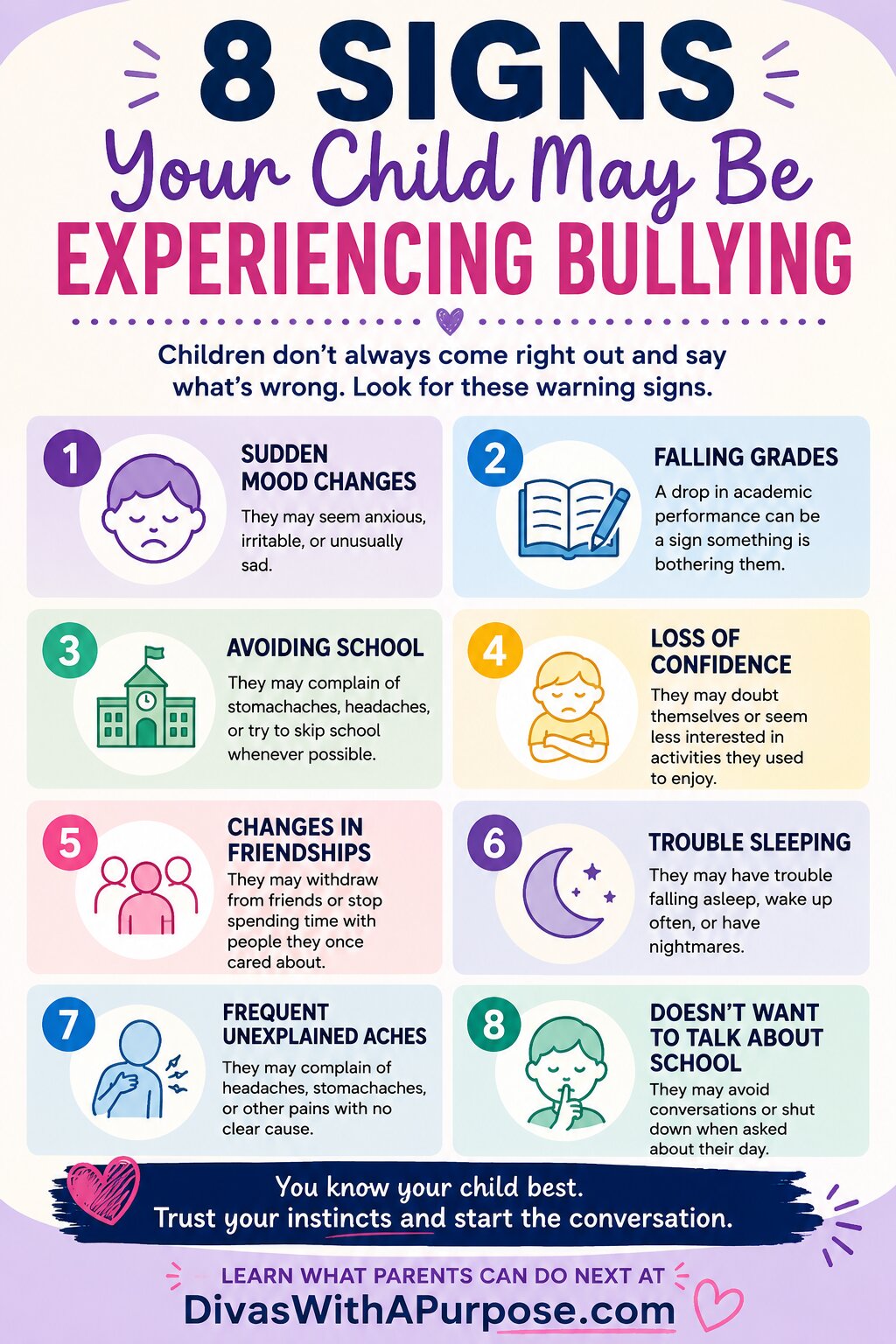
Last year was a rough year for my oldest son academically. It took a lot of digging to find out that part of the problem was that he was being pressured to act out by older children in our neighborhood. He was torn between fitting in and being part of the popular crew and doing what was right. I had to explain to him that was a form of bullying and some changes had to be made. Conversations were had with parents, my presence was increased and he and another friend took a stand for themselves.
The stories we see regularly remind me how quickly bullying can escalate. I feel grateful our experience remained mild compared to others. Some situations have led to fights or even more tragic outcomes. Unfortunately, these kinds of incidents can escalate quickly. Physical bullying outside the home can quickly create serious consequences. The situation becomes even more serious if someone gets hurt. In this case, you may need to consider hiring an assault lawyer to represent your child.
Bullying Can Happen at Home, Too
Recently, I realized we were dealing with a different type of bullying situation. Right in our home. My youngest son became clingier and whinier than usual. It seemed he was crying at the drop of the hat and we could not figure out what was going on. I walked in on a hushed conversation between my two boys and a light bulb went off. My oldest son was bullying his little brother.
Recognizing the Warning Signs
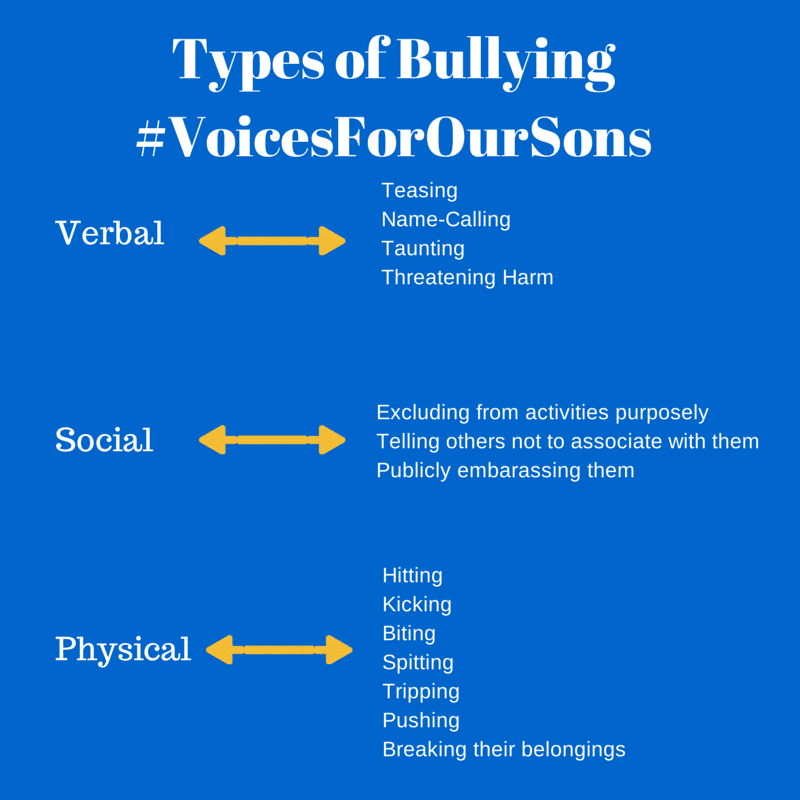
Verbal bullying includes teasing, name-calling, taunting and threatening harm. Check, check, check and check. Social bullying includes leaving someone out on purpose, telling others (in this case my niece and nephew) not to be friends or play with someone, and embarrassing someone in front of others. Check, check, and check again. Physical bullying includes hitting, kicking, punching, tripping, pushing, taking and/or breaking someone’s things, and making mean or rude hand gestures. I was shocked and, honestly, it was a hard pill to swallow.
When Sibling Rivalry Crosses the Line
A friend of mine argued that it was a rites of passage for big brothers to “torment” their younger siblings and I shouldn’t worry about it. That did not fly with me at all. Especially when we had issues with my oldest son joining in a with or even leading others in teasing and taunting his little brother and definitely when someone was always running into or tripping over the other.
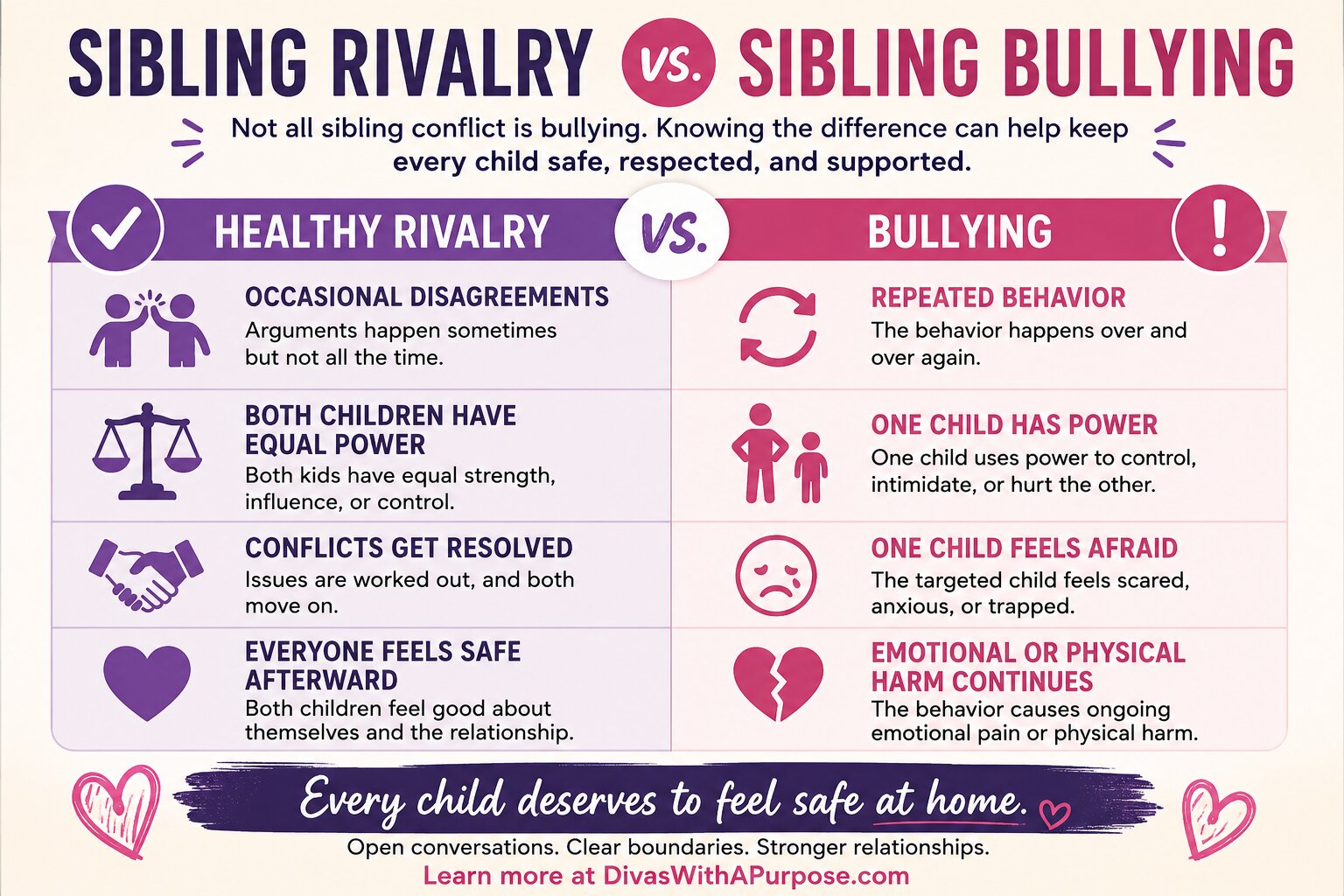
Sibling rivalry usually involves equal power. Sibling bullying involves repeated behavior that causes fear, humiliation, or emotional harm.
Some children who experience bullying may lash out in unhealthy ways. They may find someone “weaker” than them to take it out on. There’s sibling interactions and there’s crossing the line. Any child who feels unsafe at home needs immediate support and intervention. Every child deserves to feel secure in their own home.
What Helped Our Family
Improving their relationship has taken time, and we still have work to do. Even so, they have made meaningful progress together. The teasing and taunting happen far less often now. Every positive step reminds me that patience, consistency, and open communication make a difference.
We’re pretty open in our household and my kids like to say I can talk an issue into the ground. Those conversations help my children express their thoughts and feelings with honesty and confidence. These skills will serve them well as they grow and mature.
I also encourage them to step away when frustration or anger starts to take over. Taking a timeout gives everyone a chance to calm down and think clearly. We also respect each other’s need for space before continuing the conversation. These habits build healthy communication skills that last a lifetime.
Talking With Your Kids About Bullying
I encourage you to have open conversations about bullying. As parents, we must recognize the signs of bullying and teach our children to respond when they witness it. If we know our children are the bullies, don’t ignore it. React and correct.
Have you had to deal with bullying with your tween or teen? What helped your family navigate the situation? Share your experience in the comments. Your story may encourage another parent who needs support.