
Personal Care: The Keys to Ensuring a Great Working Relationship With a Medical Professional
Building a strong relationship with your medical professional can be an incredible investment in your overall well-being. Healthcare is something that’s increasingly personalized today, and patients are encouraged to take a more active role in their care, not just for the sake of feeling part of the process, but actually having those discussions that develop a holistic manner in which to support someone’s wellness.
Whether you are exploring new approaches to wellness or you are managing a chronic condition, the quality of the relationship with your healthcare provider can be invaluable to shape your experiences and outcomes, so let’s show you how to strengthen that relationship, regardless of whether it’s gender reassignment, long-term healthcare, or you just need to have a conversation with them. Here’s a few things to consider:

Find Care That Respects Your Identity and Needs
Feeling seen and respected is foundational, particularly in terms of gender reassignment. Access to services like gender affirming care, which recognizes and supports individual identity. Someone who understands your background, values your experiences, and respects your choices will create a safe space for honest conversations and also better care. This is vital for anybody who is going through something like gender reassignment or wants to have these real, frank discussions.
Communicate Openly and Honestly
It can feel really uncomfortable to discuss certain symptoms or habits, but we have to remember that transparency is essential. Your provider will rely on accurate information to make informed decisions, so be upfront about your lifestyle, concerns, and any treatments that you are considering, even if they do fall outside of conventional medicine. The more open you are, the more tailored your care will be, which means that ultimately you are the one who will benefit at the very end of it all.
Prepare for Your Appointments
Walking into an appointment with a clear idea of what you want to discuss can make a big difference, so make sure that if you’re going for a general appointment, you need to write down questions, keep track of symptoms, and bring relevant information about your health, medications, or what you want to achieve because this will ensure that your concerns are fully addressed, but it also saves time in the long run.
Ask Questions and Seek Clarity
Healthcare can be complex because we are not people who understand all of this, so therefore it’s okay to actually ask for plain language because if something doesn’t make sense, you should speak up!
Understanding your diagnosis, your treatment options, and your next steps will mean that you make informed decisions about your care. This is the difference between a good and a bad provider because they will welcome your questions and take the time to answer them thoroughly.

At its very core, a relationship with a medical professional is about a partnership, and therefore, a great relationship is about working together towards a shared goal: your health and your well-being. When you feel comfortable, informed, and respected, you’re more likely to engage in your care and achieve better outcomes. If you take small and intentional steps to strengthen this relationship, you can create a healthcare experience that truly supports your life.
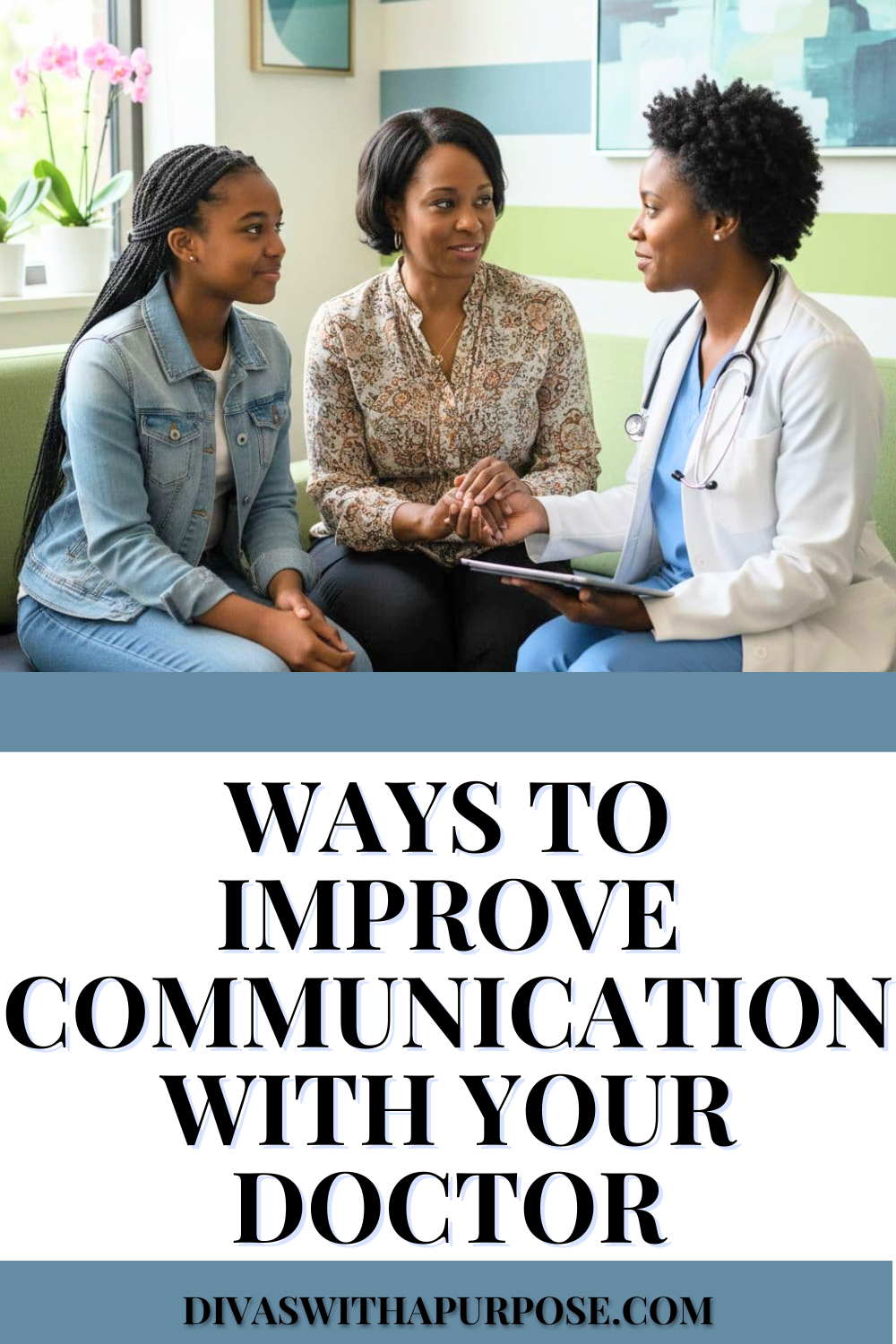
Please pin one of these images to your favorite Pinterest board.
This simple share makes a big difference to my blog. Thank you!



Michelle D. Garrett is the founder of Divas With A Purpose.
She focuses on sharing resources for being purposely productive; setting personal and professional goals and achieving them through daily action; and successfully running a business while focusing on your mental health. Michelle is a full-time entrepreneur who specializes in teaching female entrepreneurs how to show up consistently in their business – online and off.