How to Create Audio Content That Connects With Your Audience
In today’s visual world, sound offers a unique and personal way to connect with your audience. Think of podcasts that build communities or short audio clips that grab attention on social media. Creating audio content lets you share your brand’s message in a personal, genuine way. It allows your personality to shine, helping you build trust with listeners who can truly hear the passion in your voice.
If you’re ready to dive into this engaging medium, here’s how to start making great audio content for your brand.
Why Audio Matters for Brands
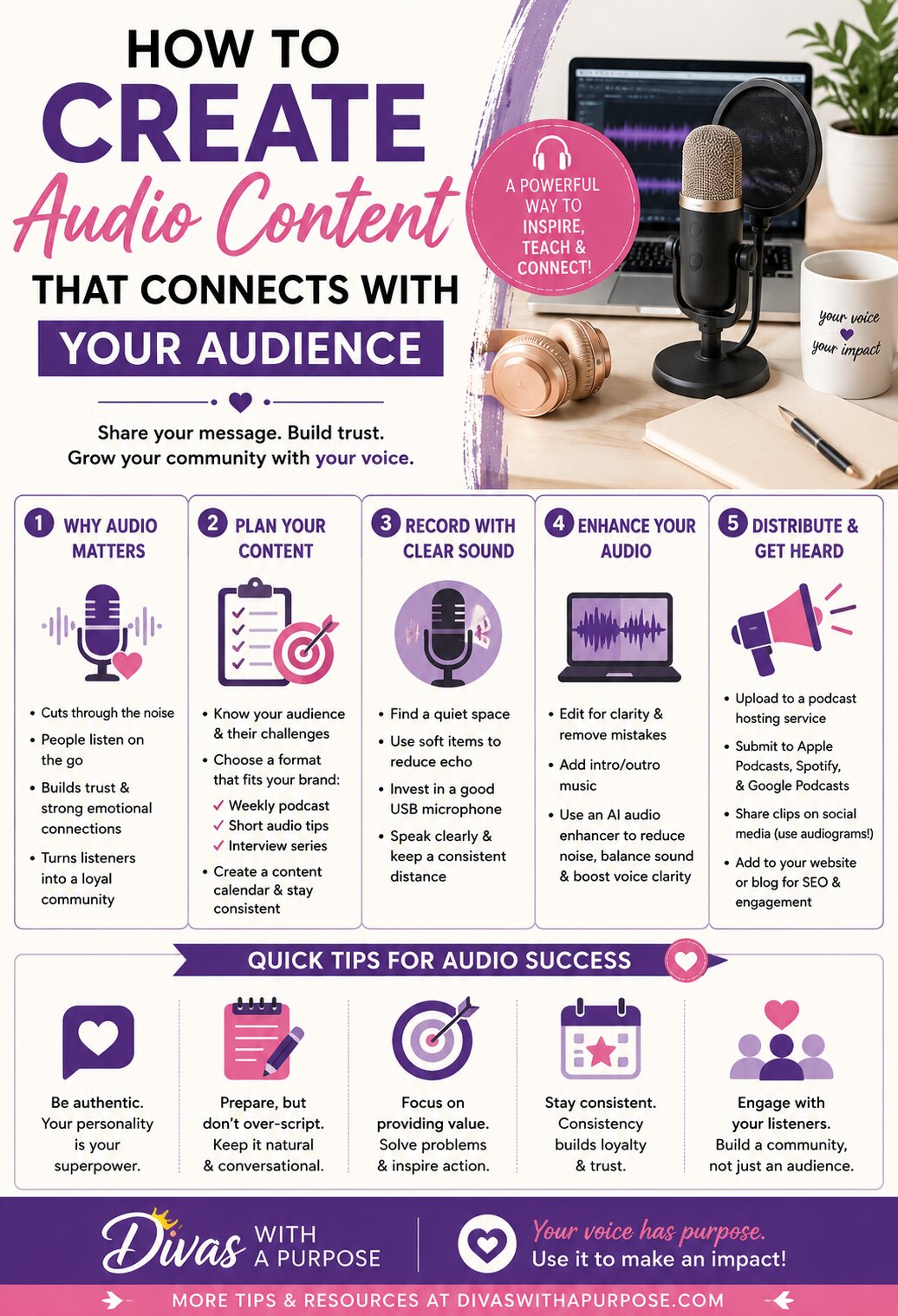
Audio has a special knack for cutting through all the noise. People often scroll past images and videos, but they’ll listen to audio while doing other things: commuting, working out, or doing chores. This gives your brand a dedicated spot in their day. Industry research shows that audio enhances marketing campaigns, building strong emotional connections and making your brand more memorable.
Unlike text or even video, your voice directly shares your tone, feelings, and personality. This creates a sense of familiarity and trust. When people regularly hear you speak, they start to feel like they know you, turning casual listeners into a loyal community. This kind of connection is especially valuable for any brand looking to grow with intention.
Planning Your Audio Content
Before you hit record, a little planning goes a long way. First, think about your audience and what they’d want to hear from you. What problems do they face? What topics would be helpful and fit with your brand’s goals?
Next, pick a format. You could start a:
- Weekly podcast: This is a longer format for diving deep into topics.
- Short audio tips: Quick clips you can easily share on social media.
- Interview series: Bring in guests who can offer fresh ideas to your audience.
Once you have a format, brainstorm a list of possible episode or segment topics. Having a content calendar will help you stay consistent and make sure you always have something valuable to share.
Recording Tips for Clear Sound
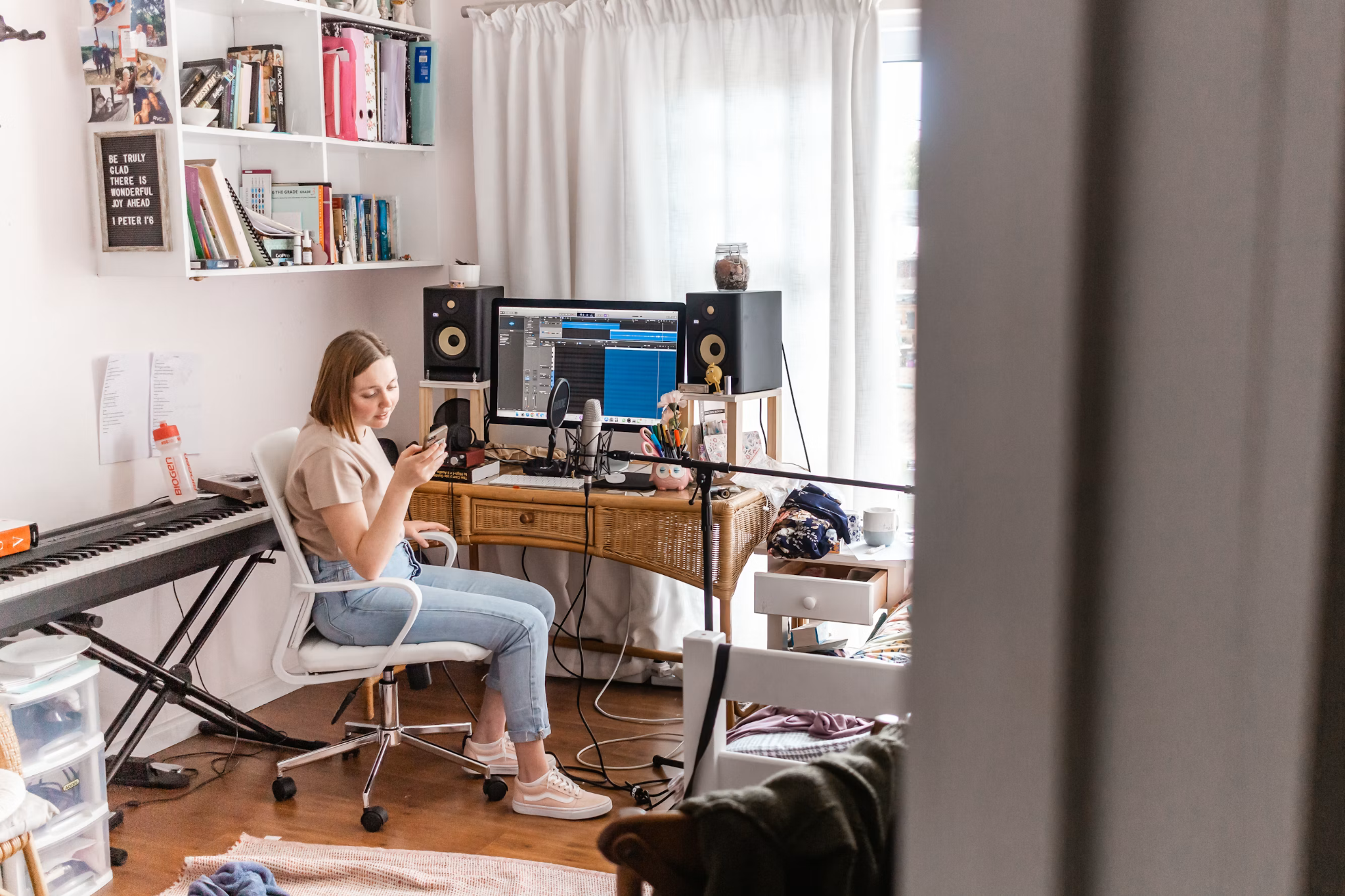
You don’t need a fancy studio to get clear, sharp audio. Your main goal is to keep background noise down and make sure your voice is easy to understand. Start by finding a quiet place to record. A small room with soft things like carpets, curtains, or even a closet full of clothes can help soak up echoes and make the sound better.
While your smartphone mic can work in a pinch, a simple USB microphone is an affordable buy that can really boost your sound quality. When you record, speak clearly and keep a consistent distance from the microphone. For more detailed advice, there are great guides on creating captivating audio content that cover everything from how to use your mic to structuring your story.
Enhancing Your Final Product
After you have your raw recording, it’s time to edit. This is where you can fix mistakes, cut out long pauses, and add intro or outro music. Simple editing software like Audacity or GarageBand is free and pretty easy to learn. The aim isn’t perfection, but clarity.
Even with careful recording, background noise like an air conditioner hum or a distant siren can be distracting. This is where technology can give you a professional edge. An AI audio enhancer can automatically reduce background noise, balance volume levels, improve voice clarity, and enhance overall audio quality with minimal manual editing. This helps transform an amateur recording into polished, professional-sounding content that strengthens your brand’s credibility and creates a better listening experience for your audience.
Distributing Your Audio
Your awesome audio content won’t make a difference if no one hears it. The last step is sharing it with the world. If you’ve made a podcast, you’ll need to upload your files to a podcast hosting service. These services create an RSS feed that you can submit to places like Apple Podcasts, Spotify, and Google Podcasts.
For shorter audio clips, social media is your best friend. Make eye-catching audiograms, which are static images with an audio waveform, to share on Instagram, Facebook, or LinkedIn. And don’t forget to put your audio content on your website or blog. This not only gives your visitors something valuable but also helps with SEO and keeps people engaged with your brand longer.
Your voice is a powerful way to connect. By creating and sharing audio content, you open up a new path to inspire, teach, and grow your community with purpose.