
Protect Your Family Budget From Winter Emergencies
Cold weather can raise utility bills and expose small home maintenance issues that went unnoticed during warmer months. Preparing early gives you time to handle affordable fixes before you need emergency service. Focus first on improvements that reduce heat loss, protect pipes and keep major systems running efficiently. Many useful winter projects cost less than $50, and some require only basic supplies you may already have at home.
Start With a Simple Home Check
Walk through your home on a cool, windy day and look for obvious trouble spots. Check exterior doors for visible gaps, feel around window frames for drafts and inspect the attic for damaged insulation. Cleaning gutters, disconnecting outdoor hoses and checking exposed areas are all practical ways to get your house ready for winter before freezing temperatures arrive.
Make a short list based on urgency. A dripping outdoor faucet or loose roof shingle deserves attention before a slightly drafty guest room. This helps you direct your money toward problems that could cause expensive damage. Take photos as you inspect so you can compare conditions later or clearly explain an issue to a professional.
Give Your Heating System Attention Early
Replace or clean the heating system filter before cold weather settles in. A dirty filter restricts airflow and may make the system work longer to warm your home. Standard disposable filters often cost between $10 and $30, though the correct size and replacement schedule depend on your equipment.
Turn the heat on early in the season and listen for rattling, grinding or unusually loud cycling. Check whether every room receives warm air and confirm that vents aren’t blocked by furniture or rugs. If the system blows cool air, produces unusual smells or repeatedly shuts down, schedule furnace repair before relying on portable heaters or experimenting with internal components.
Regular preventative home maintenance can also help catch heating problems, drafts and other seasonal issues before they become more expensive to fix.
Seal Drafts Without Replacing Windows
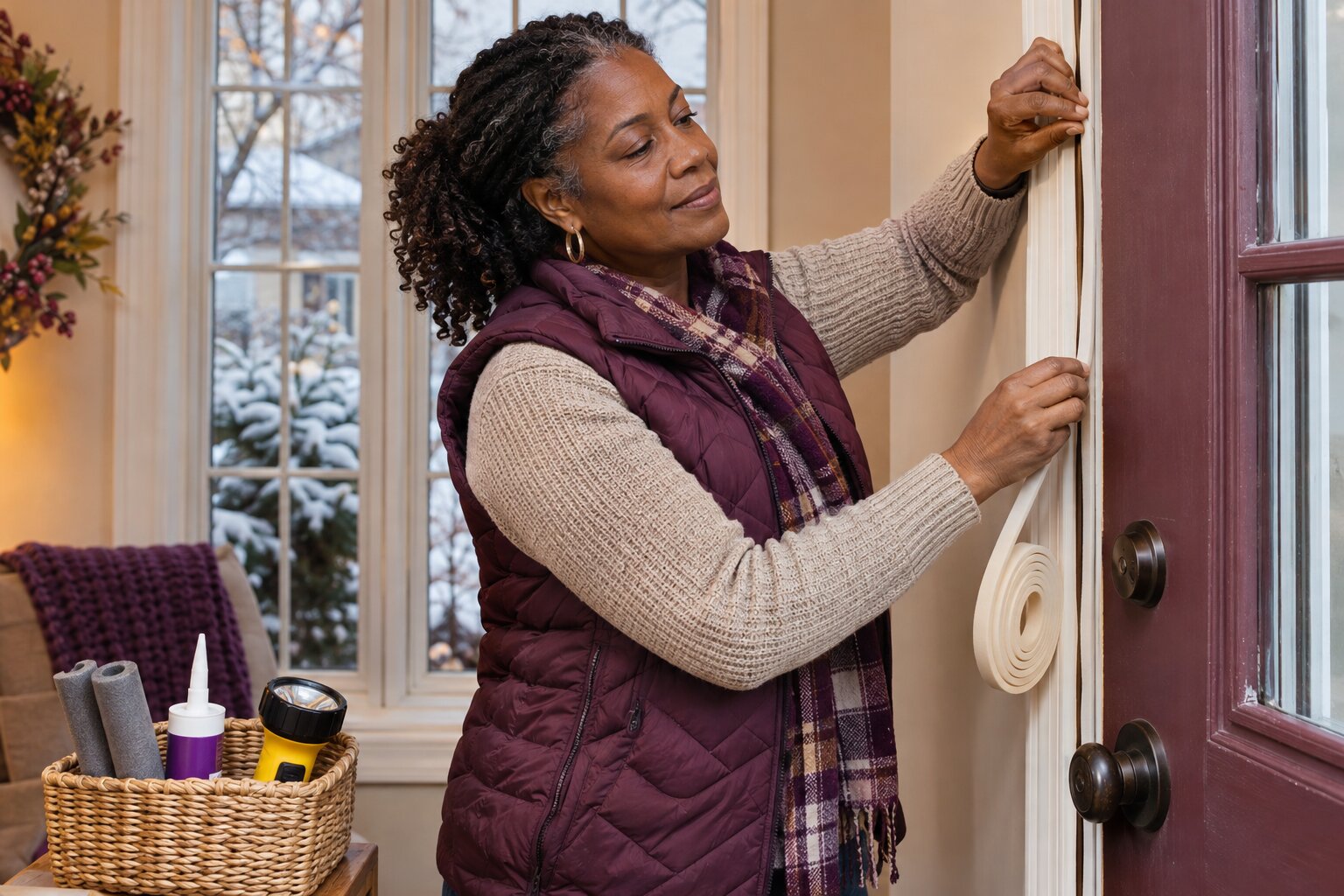
New windows can improve efficiency, but they’re rarely the first move for a tight winter budget. Start with removable caulk, weatherstripping or clear window film. These materials can close common air leaks without requiring a major renovation. A rolled towel or fabric draft stopper can also help at the bottom of an infrequently used door.
Pay attention to less obvious openings around plumbing lines, cable connections and window air-conditioning units. Use a suitable sealant for small gaps, following the product directions and keeping required ventilation openings clear. Close curtains after sunset to reduce heat loss, then open them on sunny mornings. If you have ceiling fans, check for a winter setting that moves warm air down at a low speed.
Protect Plumbing From Freezing
Insulate exposed water pipes in basements, garages and crawl spaces with inexpensive foam sleeves. Measure each pipe before shopping so you don’t buy more material than you need. Seal the sleeve seams as directed and pay special attention to pipes near exterior walls.
Remove garden hoses, drain outdoor faucets if your setup allows and close interior shutoff valves that supply outdoor lines. During a severe cold spell, open cabinet doors beneath sinks on exterior walls so warm indoor air can reach the pipes. Keep the thermostat at a steady, safe temperature when you leave town. If a faucet produces only a trickle during freezing weather, the line may already be frozen. Shut off the water if necessary and call a qualified plumber instead of using an open flame to thaw it.
Lower Heating Costs Through Daily Habits
Small routine changes can control winter spending without making your home uncomfortable. Set the thermostat a few degrees lower while you’re asleep or away, as long as everyone in the household can do so safely. A programmable thermostat can automate the schedule, but consistent manual adjustments work too.
A clear winter preparation checklist can help you stay on top of tasks such as testing smoke detectors, clearing gutters and preparing for power outages. Keep vents unobstructed, close the fireplace damper when the fireplace is cold and avoid heating empty rooms with plug-in devices. Track your utility use from one billing cycle to the next so you can see which changes have a measurable effect.
Set aside a small amount for unexpected repairs after covering basic supplies. Even $10 or $20 per month can create a useful home maintenance cushion. Once the first cold night arrives, check each room for drafts again and confirm that warm air is reaching the spaces your family uses most.