
Create a One-Page Business Plan for Your Side Hustle
Your side hustle does not need a 40-page document before it earns its first dollar. It needs a one-page business plan with clear direction. This concise overview works like an executive summary, bringing your idea, offer, customers, numbers, and next steps together.
If you’re building around a job, family, or a full calendar, this one-page business plan makes strategic planning practical. It helps you prioritize business goals and clarify your value proposition, much like startup founders do when testing an idea. Start small, then let real results guide your next move.
Why a one-page business plan works for a side hustle
A traditional business plan can be helpful when you are applying for major funding or bringing in partners. For a side business, a short plan can provide a company description and act as an executive summary, keeping your attention on action.
A lean business plan is simple, flexible, and focused on what you need to do next. Pursuit’s guide to lean business plans describes this approach as practical and action-focused, rather than packed with long descriptions.
Your plan is not a test you have to pass. It turns strategic planning into a simple planning process and keeps your business strategy focused on weekly action.
- Who do I help in my target market?
- What problem do I solve?
- What is my value proposition?
- What am I selling first?
- How will people find me?
- What will this cost me?
- What needs to happen this week?
A side business should fit your real life, and your lean business plan can change as results come in. If you have five hours available this week, don’t create a plan that needs 20.
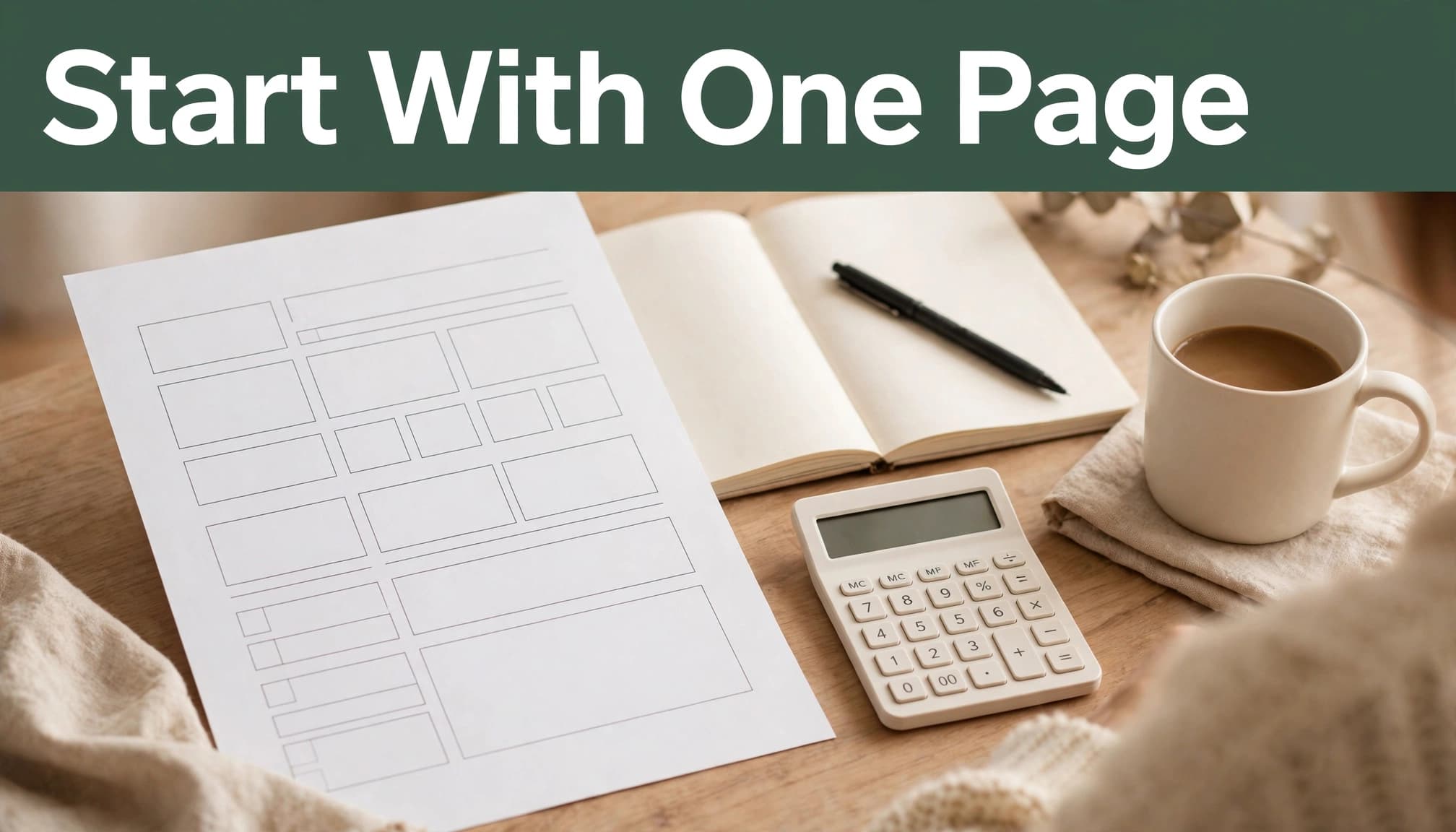
Build your one-page business plan in seven blocks
Keep every section short. A few clear sentences and numbers are enough for your first draft.
Use the page as a brief company description of what your side hustle does. It should also show your business model, including how the idea earns money.
1. Name the customer problem
Begin with one person and one problem. Your target market should be specific, not “everyone.” “Busy local salon owners who struggle to post consistently online” is much easier to understand.
Write down what frustrates that person, what they have tried, and why your offer can help. A lightweight industry analysis can reveal competitors, customer needs, and market conditions. Talk with at least five people who fit that audience before you spend heavily on a logo, website, or inventory.
Those customer conversations can sharpen your value proposition. The SBA business-planning resources include market research, startup cost, and planning guidance that can help you organize those early conversations.
2. Describe one clear offer
Avoid starting with a long list of services. Choose one starter offer that fits your skills, available time, and budget.
A freelance writer might offer four blog posts each month for local service businesses. A baker might test a limited batch of celebration cupcakes. A virtual assistant might offer a two-hour inbox reset session.
Your value proposition can be simple: “I help [customer] get [result] without [frustration].” A clear value proposition makes the offer easy to explain and buy. Your revenue model can be just as simple, such as a one-time fee, monthly package, or per-order price. Make the offer possible to deliver well.
3. Plan visibility, sales, and delivery
Your marketing plan does not need to be complicated. Choose one or two places where your target market already spends time, such as Instagram, LinkedIn, local Facebook groups, email, referrals, or in-person events.
Then name the action that turns interest into income. That could be a booking link, an inquiry form, a direct message, or an invoice. This customer acquisition step should connect clearly to your revenue model. Use an implementation timeline to map the sequence from promotion to inquiry, sale, and delivery. Plan how you will follow up, too. People get busy, and a kind follow-up is part of good service.
Keep your delivery plan honest. List your business hours, tools, materials, and how many clients or orders you can handle without losing sleep or missing deadlines. Keep your value proposition consistent from promotion through purchase.
Test demand before you build too much
Kind words feel good, but a paid sale teaches you more. Before you buy extra supplies or subscriptions, create a small test for your target market and gather real feedback.
Sell a small first version
Offer three social media audits, five custom cake orders, or a limited product batch. This small test can reveal an early revenue model, especially if you’re comparing one-off sales with recurring work.
Set a beginning price that covers your direct costs and respects your time. Simple unit economics can show whether your value proposition feels worth the customer’s time and money.
Ask each customer what made them say yes, what felt confusing, and what they would change. A paid pilot teaches more about customer acquisition than likes or compliments. Use the results to refine your value proposition and replace guesses with actual sales and costs in your financial projections.

Protect your time, job, and energy
Review your employer’s policies before you begin. Do not use company time, equipment, contacts, confidential information, or software for your business. If your side work could overlap with your employer, get clear on the rules first.
You also need a stopping time. Protect at least one evening for rest. A side hustle should support your life, not consume every open space.
For more help creating a routine around a full schedule, read these tips on starting a side business while working full-time.
Put simple numbers behind your idea
You do not need perfect financial projections. You need a realistic starting point. Include your price, direct cost per sale, monthly business costs, and a basic sales goal.
Set a price your target market can reasonably pay. It should reflect your value proposition, not only your materials and other costs.
For a product business, direct costs may include materials, packaging, shipping supplies, and payment-processing fees. For a service business, consider contractor help, booking tools, software, or supplies used only for client work.
Here is a hypothetical candle business financial summary. It shows a simple revenue model, where price and sales volume generate revenue:
| Item | Monthly estimate |
|---|---|
| Price per candle | $24 |
| Direct cost per candle | $10 |
| Money left per candle before monthly bills | $14 |
| Monthly business costs | $60 |
| Candles needed to cover monthly costs | 5 |
| Goal for the first month | 12 candles |
These simple calculations are the first version of your financial projections.
At 12 candle sales, revenue would be $288. Direct costs would be $120, and monthly business costs would be $60. That leaves a projected $108 before taxes and owner pay.
Revenue is not profit, and profit is not the same as cash in your bank account.
Track when money is collected and when bills are due. SCORE’s financial statement templates can help when you are ready to forecast sales, expenses, cash flow, and break-even points.
Use this fill-in-the-blank business plan template
Copy this business plan template into a notebook, Google Doc, or spreadsheet. Keep it on one page. Once completed, it can serve as an executive summary for your own decisions or for explaining the idea to someone else.
| Planning area | Fill in your answer |
|---|---|
| Business idea | I help __________ with __________. |
| Customer | My first customer is __________. |
| Problem | They are frustrated because __________. |
| Starter offer | I will sell __________ for $__________. |
| Value proposition | It helps because __________. |
| Marketing plan | I will reach people through __________ and __________. |
| Sales action | My revenue model is simple: people can buy or inquire by __________. |
| Weekly business time | I have __________ hours each week. |
| Startup budget | I need $__________ for __________. |
| Monthly costs | My regular business costs are $__________. |
| Sales goal | I need __________ sales each month to reach $__________. |
| This week’s action | By Friday, I will __________. |
The costs, price, and sales goal you fill in become your first financial projections.
Don’t fill in every blank with what sounds impressive. Fill it in with what is true today. Your first offer can change. Your first audience can become clearer. Your price can rise when your results, demand, and capacity support it.
Make the plan part of your weekly routine
A plan only helps when it is close enough to guide your next decision. Put it where you can see it during your business time.
Hold a 15-minute weekly check-in
Choose one day each week. Look at sales, expenses, unpaid invoices, leads, upcoming work, and your energy.
Ask yourself:
- What brought in income this week?
- What needs follow-up?
- Which offer got the strongest response?
- What created stress or took too long?
- What are my three priorities next week?
Turn those three priorities into action plans with a clear task and deadline. Even when you work alone, this makes the next step easier to complete.
Track only the key performance indicators that connect your numbers to your business goals and help you decide what to do next. New leads, sales closed, revenue collected, expenses, profit, and workload are enough for most new side hustles.
The 30-day side hustle challenge has more ideas for building steady action and tracking what is working.
Review assumptions every month
Once a month, compare your plan with real life. Did people buy at your price? Did your costs stay close to what you expected? Did your value proposition deliver the result customers expected?
A strong sales month is not always a healthy month. If it took every evening and left you exhausted, the plan needs adjusting. You may need fewer clients, stronger boundaries, a higher price, or a simpler offer.
Repeated results should shape the strategic direction of your next plan. Use a basic profit and loss report to make those choices. This small-business P&L guide can help you separate revenue, expenses, and actual profit.
Know when one page is not enough
A one-page business plan is a strong conversation starter. It can serve as an executive summary when you need to explain your business opportunity quickly to a mentor, partner, or potential investors.
It is not a replacement for the records a bank or institutional lender may request. Depending on your funding requirements, you may also need detailed financial projections, tax returns, bank statements, personal financial information, licenses, contracts, and industry analysis. A growing business may also need to document its leadership team and how funds will be used.
Bank of America’s small-business planning guidance also points business owners toward fuller financial projections when they need to look ahead.
Start with your one-page summary. Build more detailed documents only when your business stage or funding request calls for them.
Key Takeaways
- Start with one customer problem and a clear value proposition, the result your offer creates for the customer.
- Test demand with a small paid offer before making big purchases.
- Price with your direct costs, time, and monthly expenses in mind.
- Turn your business goals into numbers, deadlines, and one next action.
- Use the business plan template, then review your plan weekly as your side hustle grows.
Frequently asked questions
What should a one-page business plan include?
Include your target market, the problem, your offer, price, marketing plan, delivery capacity, startup costs, monthly costs, sales goal, and next action. State the offer’s value proposition clearly so customers understand its benefit. Your completed page serves as an executive summary that connects your idea to real work and numbers.
How often should I update my side hustle plan?
Check your numbers and priorities every week. Do a fuller review each month, then refresh your bigger goals every 90 days. Update the plan after a new offer, major price change, new supplier, family shift, or change in available time.
Can I create a plan before I have customers?
Yes. Your first draft gives you a starting point for testing. Use a business plan template, keep your assumptions visible, then replace them with what customers tell you and what they’re willing to pay for.
Let your plan grow with your business
Your one-page business plan doesn’t need to predict every future decision. It needs to help you make the next wise one, while your value proposition becomes clearer over time.
Treat it as a working document. Start with what you know, take one focused action, and pay attention to the results. Progress over perfection is how a side hustle becomes a business with purpose.