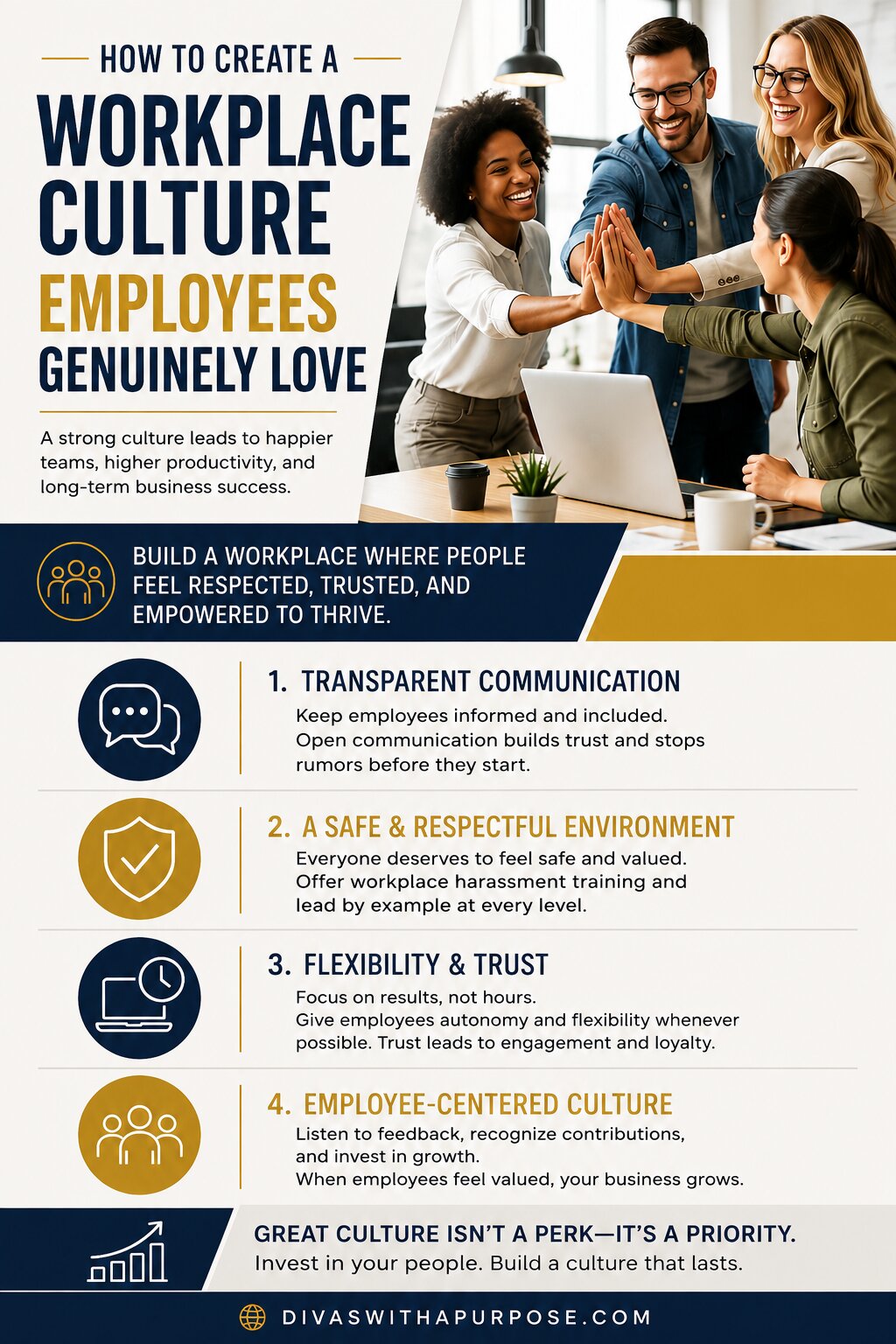
How To Create a Workplace Culture Employees Genuinely Love
Everyone’s in agreement that having a great workplace culture can have a transformative impact on an organization. After all, study after study has shown that having a great workplace culture can have a positive impact on employee retention rate, staff morale, and productivity.
But here’s the thing: wanting a great workplace culture and having one are two different things. All too often, employers think that adding quirky additions to the office, providing free snacks, or hosting “fun” get-togethers that employees are forced to attend will do the trick.
The reality is that creating a workplace culture that employees genuinely love has to go beyond cheap gimmicks. For that, the workplace culture has to fundamentally benefit the employee’s day-to-day lived experience. In this post, we’ll run through some of the foundational components that can provide the framework for an unbeatable work culture.

Transparent Communication
All the ping pong tables and free donuts in the world can’t compensate for a lack of trust between employees and management.
And that trust is earned through strong communication. While employees don’t need to know every decision made at the management level, they fundamentally shouldn’t feel like they’re being kept in the dark. That just breeds rumors and skepticism, which can chip away at the culture of even the best companies. Taking a transparent approach to communication, including from employees to management, can stop potentially damaging problems in their tracks.
A Safe and Respectful Environment
Providing a safe and respectful environment for employees is non-negotiable. Ultimately, employees need to feel that they’re working for a company that provides both the psychological and physical safety they need to deliver their best work and simply feel comfortable in their role.
Businesses should take a proactive approach to creating a respectful workplace. Offering workplace harassment training helps establish clear expectations and encourages positive behavior. Every employee should participate in the training. Managers and supervisors should also complete it because they set the tone for the organization. When leaders model respectful behavior, employees are more likely to build a positive and inclusive workplace culture.
Flexibility and Trust
Employees are increasingly prioritizing flexibility and trust in the workplace. This goes beyond remote work or flexible start/finish times and includes autonomy about how they work, too. Micromanagement is still one of the fastest ways to lose good employees.
Not every business can offer identical working arrangements for every employee. However, leaders should provide flexibility whenever possible. They should focus on results instead of tracking hours or work locations. This approach shows employees that management trusts them to succeed. Trust encourages greater engagement, improves job satisfaction, and helps create a workplace culture where employees feel respected, valued, and motivated to perform their best.
Building a Workplace Culture That Lasts
Creating a positive workplace culture takes intention and consistent effort. Employees notice when leaders communicate openly, build trust, and create a respectful environment where everyone feels valued. Small improvements often make the biggest difference over time. Encouraging flexibility, investing in employee development, and supporting open communication all strengthen workplace relationships. Businesses that focus on these core values are more likely to improve employee satisfaction, increase retention, and build stronger teams. By making people a priority instead of relying on workplace perks alone, organizations can create a workplace culture that employees genuinely appreciate and want to be part of for years to come.