
Simple Habits to Transition From Work Mode to Rest

A busy mind can carry unfinished tasks well beyond the end of the workday, making true rest feel out of reach. Your brain benefits from clear signals that tell it when work has ended and recovery has begun. Without those cues, checking one email can turn into another hour at the computer, while bedtime arrives before you’ve had a chance to unwind.
A dependable evening routine can create that missing transition. Small habits involving your workspace, lighting and sleep environment help your mind release the day gradually. You don’t need a complicated schedule. A few repeatable actions can make evenings calmer and support more consistent sleep.
Draw Clear Boundaries Between Work and Home
Choose a firm stopping time and treat it as an appointment. If your workday ends at 5:30 p.m., spend the last 10 minutes recording unfinished tasks, closing browser tabs and putting away work materials. This simple shutdown routine reassures your brain that responsibilities have been captured and can wait until tomorrow.
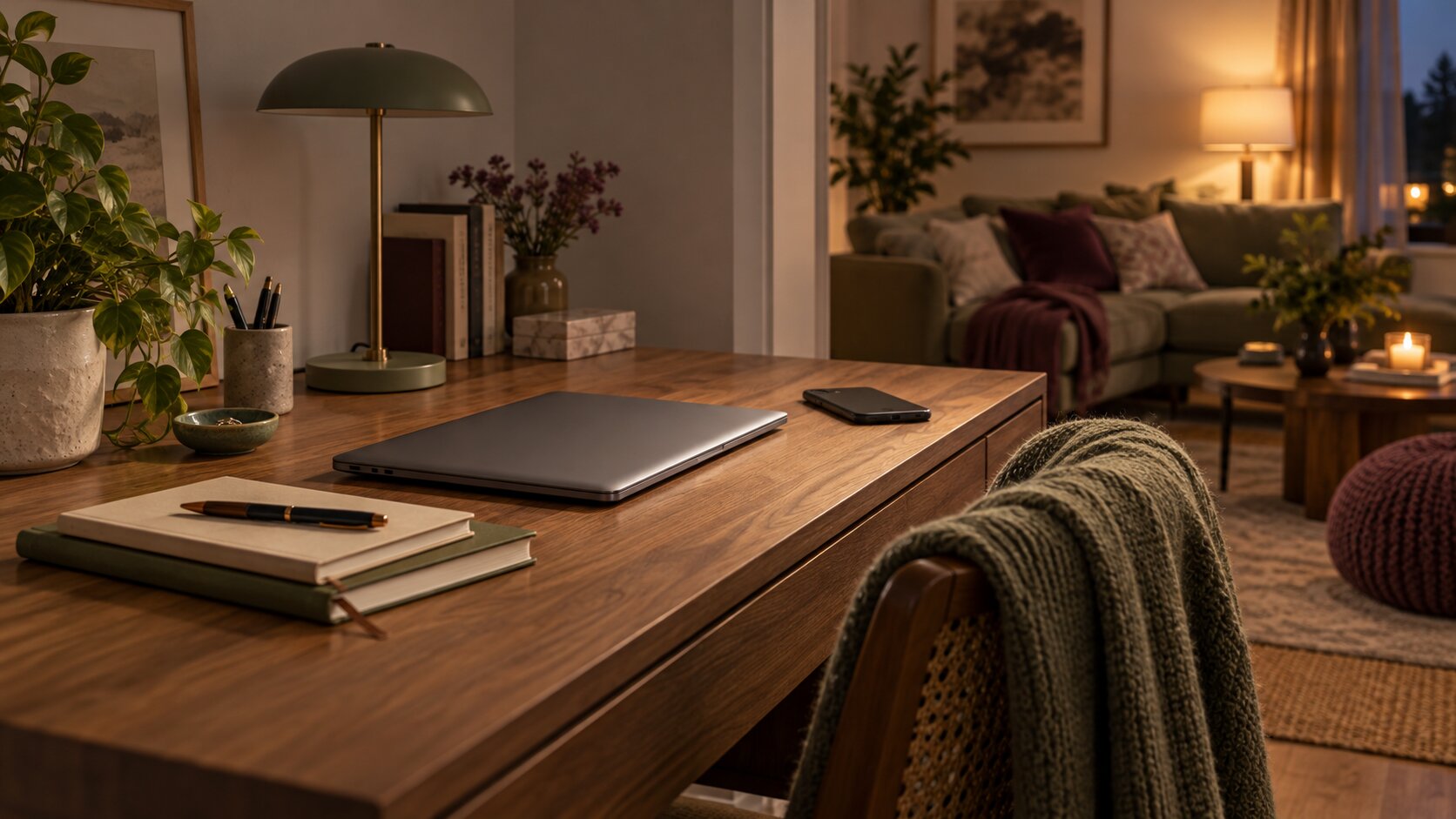
Physical separation helps, even when you work from home. Use one desk or a specific end of the dining table during work hours, then clear it when you finish. Avoid taking your laptop to the couch or bed, where it can blur the difference between productive and restful spaces. These remote work sleep strategies explain how work habits and home environments can affect the quality of your rest.
Create a short transition activity after shutting down. You might change into comfortable clothes, take a 15-minute walk or prepare dinner while listening to music. The activity should be easy to repeat and separate work from the rest of your evening.
Emotional boundaries matter too. If a colleague regularly contacts you after hours, decide what qualifies as urgent and when you’ll respond. Guidance on setting boundaries without guilt can help you protect personal time while communicating clearly and respectfully. Unless your role requires evening availability, silence work notifications and keep the phone out of sight during meals.

Shield Circadian Rhythms From Artificial Light
Light tells your internal clock when to feel alert and when to prepare for sleep. Bright light during the day supports wakefulness, while dimmer conditions in the evening allow the body to move toward its nighttime rhythm. Screens, overhead fixtures and intensely lit rooms can make that shift harder when used close to bedtime.
Start lowering household lighting about two hours before you plan to sleep. Turn off harsh ceiling fixtures and use warm lamps where possible. Dim your phone and computer displays, enable their evening settings and avoid holding a bright screen close to your face in an otherwise dark room.
If screen use is unavoidable because of night work, caregiving or other responsibilities, consider practical ways to reduce glare and intense light exposure; lab-certified blue light glasses are one option for people who experience discomfort from screens, bright light or light sensitivity and for those seeking to support better sleep habits. Glasses should complement sensible lighting choices, regular breaks and screen settings, not replace them.
People who work overnight need a more deliberate light plan because their working hours conflict with the natural day-night cycle. These night shift health tips discuss timed light exposure and other ways to protect circadian rhythms. Guidance about healthier shift work also shows why timing matters. After an overnight shift, reducing morning light on the trip home and keeping the bedroom dark may help the body settle sooner.

Incorporate Evening Journaling and Stillness
Work thoughts often return at night because the mind is trying to hold on to details. Put those details somewhere reliable before bed. Five minutes of journaling can reduce the pressure to remember every deadline, conversation and household task.
Keep the process simple. Write down what you completed, what needs attention tomorrow and one personal thought you want to acknowledge. For example, you might note, “Send the revised document at 9 a.m.,” then add the first action needed to complete it. A specific note gives your mind a plan, which is more useful than a vague reminder to “finish everything.”
If you tend to replay difficult interactions, write a factual account in two or three sentences. Follow it with one step that’s within your control, such as arranging a conversation or asking for clarification. Once you have recorded that step, close the notebook. Journaling should help contain the concern, not turn bedtime into another work session.
Pair writing with a brief period of stillness. Sit comfortably for three to five minutes and breathe at a natural pace, paying attention to the feeling of your breath or the sounds in the room. When work thoughts appear, notice them and return your attention to the present. You can also try gentle stretching or a quiet prayer if those practices feel more natural.
Keep the notebook on a nightstand or side table, but don’t use a work device for this exercise. A paper notebook creates fewer chances to open email, read notifications or get pulled into scrolling.
Prepare Mind and Body for Sound Sleep
A consistent wake time gives your sleep routine a stable foundation. Sleeping late after a difficult night may feel helpful in the moment, but large shifts can make it harder to feel sleepy the following evening. Aim to wake within the same 30-to-60-minute window most days, including weekends when practical.
Build a 30-minute wind-down sequence that uses the same basic order each night. You could wash your face, set out clothes for the morning, read a few pages and turn off the light. Repetition matters because the sequence becomes a cue that no more decisions or tasks are expected.
Your bedroom also deserves attention. Keep it dark, quiet and comfortably cool. Remove visible work papers and charge your phone away from the bed if possible. If you use your phone as an alarm, switch on its do-not-disturb setting and place it across the room. Advice for better work-from-home sleep also emphasizes maintaining regular hours and separating the bedroom from daytime work.
Pay attention to timing throughout the evening. Finish heavy meals early enough that discomfort doesn’t follow you to bed, and avoid intense exercise just before lights-out if it leaves you alert. A warm shower, light stretching or a familiar book may fit more comfortably into the final hour.

Some nights will still be restless. If you can’t sleep after lying awake for a while, move to a dim room and do something quiet until drowsiness returns. This helps preserve the association between bed and sleep. Persistent sleep trouble, loud snoring, breathing interruptions or severe daytime fatigue deserve a conversation with a qualified health professional.
The most useful evening routine is one you can repeat after both easy and demanding days. When the laptop is closed, tomorrow’s tasks are written down and the lights are lowered, your mind receives a clear message: work is finished for now.