
Standard Operating Procedures for Solopreneurs
Being the person who sells the service, answers the emails, delivers the work, and handles the bookkeeping can make every day feel full. Standard operating procedures give you a repeatable way to get important work done without rebuilding the plan each time.
You don’t need a corporate binder full of complicated rules. A standard operating procedure template gives you a lightweight starting point for organizing recurring work. Use it to protect your time, improve client experience, maintain quality, and support business outcomes.
Start with the work you repeat, then build from there.
Why standard operating procedures matter in a one-person business
A standard operating procedure, often called an SOP, is a clear set of step-by-step instructions for completing a repeatable task. It tells you what starts the task, what to do, what tools you need, and what “done” looks like.
For a solopreneur, an SOP is a memory backup. Better process documentation supports process consistency during a busy Tuesday, a family emergency, a launch, or a new hire’s first week.
SOPs protect your time and quality
Think about the tasks that pull you away from your best work. Sending client welcome emails, preparing a coaching session, shipping an order, posting a blog, following up on invoices, or organizing receipts.
When those jobs live only in your head, each one takes more energy than it should. Clear process documentation cuts down on second-guessing and helps you deliver a consistent experience.
A social media consultant, for example, can document her monthly content approval process. A product seller can document packing and shipping. A virtual assistant can document how new client files are set up.
SOPs make delegation less stressful
You do not need a team to start documenting your business processes. In fact, it is much easier to write them before you are overwhelmed and hiring in a hurry.
A standard operating procedure template gives a contractor or future hire a useful starting point. It can also support employee onboarding without requiring a large team or complicated system. If you are not sure what should stay with you, begin by identifying your most valuable tasks. Your energy belongs with the work only you can do.
Key Takeaways
- Standard operating procedures document repeatable work, so you don’t have to rely on memory alone.
- Begin with one task that happens often, affects clients, or creates costly mistakes when rushed. Use a standard operating procedure template to capture the trigger, steps, and definition of done.
- Match the format to the job. Simple steps work for simple tasks, while flowcharts help with choices.
- Test each SOP during real work before giving it to a contractor.
- Review procedures at least yearly, and update them whenever your tools, offers, or workflow change.
Choose the first process to document
Don’t try to document your entire business this weekend. That is a quick path to frustration and a folder full of unfinished files.
Choose one of the business processes you repeat weekly, especially work that creates client delays or you’d gladly hand to someone else. A standard operating procedure template can help you define its trigger, scope, and finish line before you write every detail.
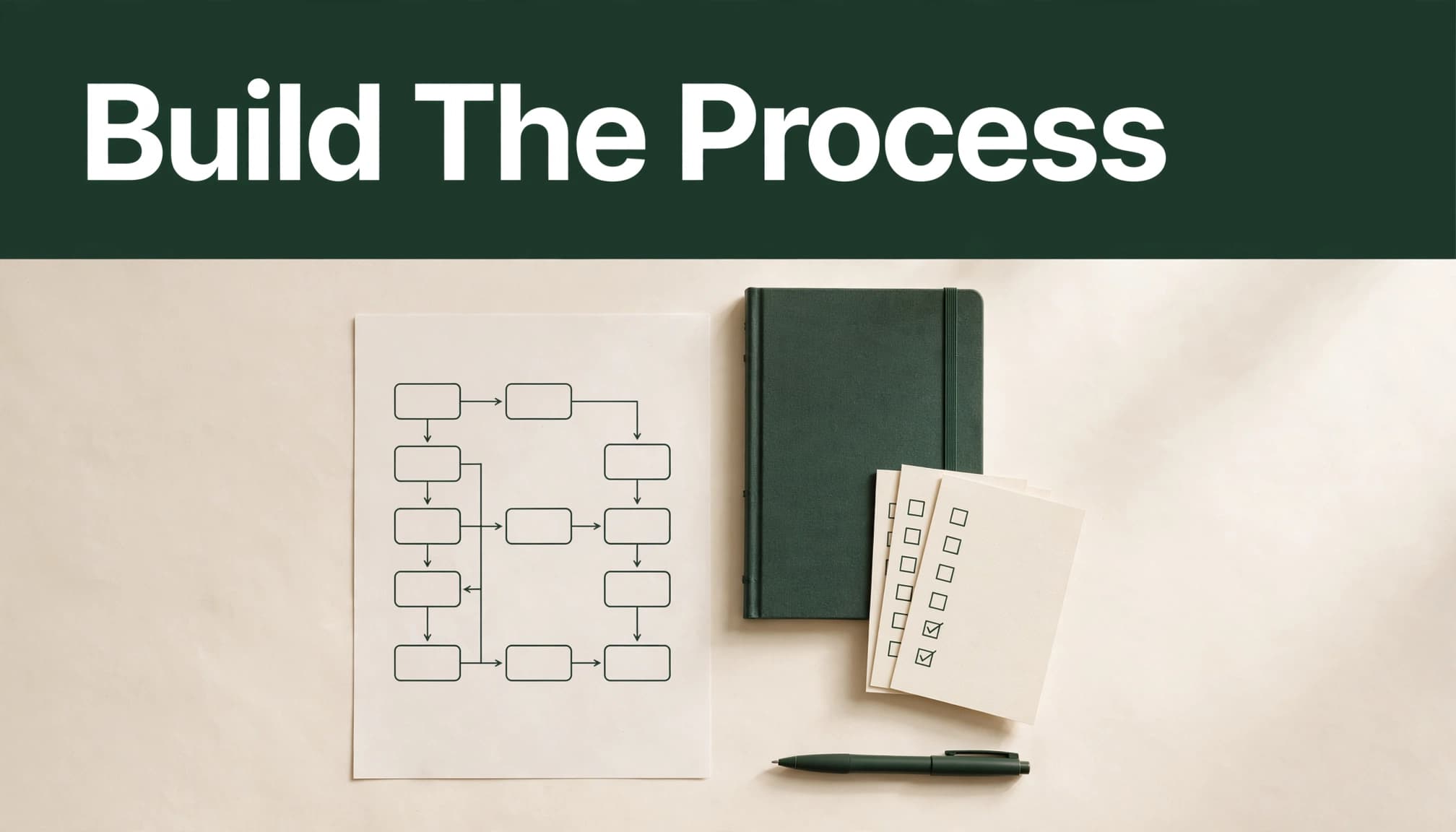
Start with tasks that repeat often
Your first SOP might cover publishing a blog post, booking discovery calls, preparing invoices, responding to new leads, or closing out client projects.
Ask yourself three questions:
- Do I do this more than once a month?
- Does a missed step create extra work, missed income, or a poor client experience?
- Could someone else complete most of this with clear instructions?
If the answer is yes, it is ready for documentation.
Leave room for work that needs your judgment
Not every part of your business needs a script. Discovery calls, custom strategy, creative direction, and sensitive client conversations often need your personal voice and judgment.
Document the repeatable pieces around that work instead. You can create an SOP for sending a contract after a call, preparing meeting notes, or adding a new client to your project system.
An SOP should remove unnecessary decisions, not remove the care and discernment that make your work valuable.
Pick the right SOP format for the task
The best standard format depends on how many steps the task has and whether decision points come up along the way. Keep it simple enough that you will use it when life gets busy.
| SOP format | Works best for | Example |
|---|---|---|
| Simple steps | A short task with the same order every time | Sending a new-client welcome email |
| Hierarchical checklist | A larger task with sections and smaller actions | Preparing a monthly client report |
| Flowchart | A process with decision points or different outcomes | Handling a late payment or return request |
Choose a standard operating procedure template that makes the next action obvious.
Use simple steps for predictable routines
Simple sequential steps are perfect for tasks with a clear beginning and end. Simple checklists can cover routines like, “Open the invoice template. Add client details. Check the due date. Send the invoice. Save a copy.”
Keep each step action-based. Start with a verb, use plain words, and name the exact folder, template, or tool when needed.
Build checklists for bigger projects
Hierarchical steps work well when a task has phases. A photographer’s session workflow may include booking, preparation, the session, editing, gallery delivery, and follow-up.
Each main phase gets its own short checklist. Using hierarchical steps keeps a large process from becoming one long, intimidating page.
Draw a flowchart when choices change the path
Use flowcharts and diagrams when the next step depends on an answer. For example: Has the client signed the contract? If yes, send the onboarding packet. If no, send one reminder, then pause the project until the agreement is complete.
A workflow diagram is helpful for client support, returns, overdue invoices, and any process with frequent decision points. Adapt your standard operating procedure template to the task instead of forcing every process into the same layout.
Write an SOP someone can actually follow
Do the task once while you write. Notice the small things you usually do without thinking. Those are often the steps a contractor or future version of you will need most.
Write for a capable person who knows your business basics but cannot read your mind. Use one action per line when possible. Larger tasks can use hierarchical steps, but keep each action clear.
Give every procedure a clear beginning and end
Each SOP needs a purpose, a trigger, and a finish line. “Manage client onboarding” is too broad. “Send the new-client welcome packet after a signed contract and paid invoice” is clear.
For businesses working toward formal quality systems, documentation doesn’t have to follow one rigid layout. A simple SOP isn’t the same as a formal quality management system. ISO guidance on documented information allows flexibility in how organizations record their quality-management information. Your process can be simple and still be useful.
Use this standard operating procedure template
Copy this standard operating procedure template into a Google Doc, Notion page, or project folder:
- Procedure name: Name the specific task, such as “Prepare weekly client invoices.”
- Purpose: State the result this process should produce and connect it to measurable business outcomes.
- When to use it: Name the trigger, deadline, or frequency.
- Owner: List who completes it now and who can complete it later.
- What you need: Include templates, login details stored safely, links, files, and supplies.
- Steps: List actions in the order they happen.
- Exceptions: Explain what to do at common decision points, such as when a client doesn’t respond, a payment fails, or information is missing.
- Done looks like: Describe the final result and where records are saved.
- Last updated: Add the date and a short note about what changed.
Keep screenshots and short videos for tasks that happen inside software. A two-minute screen recording can prevent a lot of back-and-forth later.
Linked SOPs can become a practical operating manual, then support training manuals and employee onboarding as your business grows. Save this standard operating procedure template and adapt it for future procedures as part of writing effective SOPs.
Test the process before you depend on it
An SOP is a working document. It needs to survive a real workday, not only look organized in a folder.
Run the completed standard operating procedure template during a real task. Don’t fill in missing instructions from memory. If you have to stop and think, the SOP needs more detail.
Test with a real task, not a perfect scenario
Use the procedure during an active client onboarding, content-planning day, order fulfillment session, or invoice cycle. Treat this as a basic quality control check, and flag unclear instructions, missing links, repeated actions, and undocumented decision points.
If you work with a contractor, ask her to follow the SOP and mark any point that feels confusing. The person doing the work often sees what the document missed.
Publish one version and schedule updates
Store each SOP in one place. Use simple version control: keep one current file, add a clear update date, and archive or remove obsolete copies.
Review your core SOPs once a year, perhaps during the same season you complete your tax and financial planning. Also review them after you add a new service, switch tools, change pricing, hire help, or hear the same client question twice. This supports continuous improvement without creating unnecessary work.
A short quarterly check-in can keep your systems from becoming forgotten files. Add review reminders and “review one SOP” to your weekly business workflow when you are planning priorities.
If your business needs more structured records, you can adapt this approach into a formal quality management system. Most solopreneurs only need a clear, current set of procedures.
Choose tools without building another complicated system
The tool is not the system. Your process comes first. The tool simply gives it a home.
For many solopreneurs, Google Docs and Google Drive are enough. A standard operating procedure template can live in Google Docs, Notion, or another tool your business already uses. You can write procedures, add links, store templates, and share access when you bring in help.
Match the tool to your actual workflow
If you already use Notion, Trello, ClickUp, or Asana for work planning, keep relevant SOPs close to the tasks they support. A project-management tool can connect procedures to recurring client work and simplify employee onboarding. Keep your core procedures in one internal knowledge base so they’re easy to find and update.
Larger document management systems may make sense later if you have many contributors, formal approvals, or detailed compliance needs. Until then, choose a system you’ll keep current. More subscriptions won’t fix an unclear process.
Simple systems for recurring tasks can save you from digging through tabs, folders, and old email threads.
Know when compliance requires more care
Most solo service businesses create SOPs to protect time and client experience. A formal quality management system requires more structure than ordinary business organization.
Businesses with employees, physical safety risks, regulated products, or strict contracts may have additional responsibilities. OSHA says employers should establish, update, and communicate operating procedures so workers can follow safety and health requirements. OSHA also provides a step-by-step safety-management framework for building workplace safety practices and safety protocols.
If your business pursues ISO certification, sells regulated products, or handles sensitive customer data, get guidance that fits your industry. Industry-specific support can help with regulatory compliance and audit readiness. Don’t treat a general online template as legal, safety, or compliance advice.
Frequently Asked Questions
How often should I update an SOP?
Review your most-used procedures at least once a year. Update them sooner when you change software, offers, contractors, pricing, client requirements, or any step that creates confusion.
Can I create SOPs if I do not have a team?
Yes. Writing SOPs while you are solo gives you breathing room now. It also prepares your business for a virtual assistant, subcontractor, or temporary support when the time is right.
Will SOPs make my business feel rigid?
They should not. Strong SOPs handle routine work so you have more space for creativity, client care, and strategic decisions. Keep room for judgment where the work calls for it.
Build the business you can sustain
Your business should not depend on you remembering every tiny detail while carrying everything else in your life. A few thoughtful standard operating procedures can bring calm to work that once felt scattered.
Start with one repeatable task this week. Use a standard operating procedure template to write the steps, test them in real life, and make the next version better. Small systems create room for steady, purposeful growth.