
5 Residential Golf Simulators That Add Value to Your Home Setup
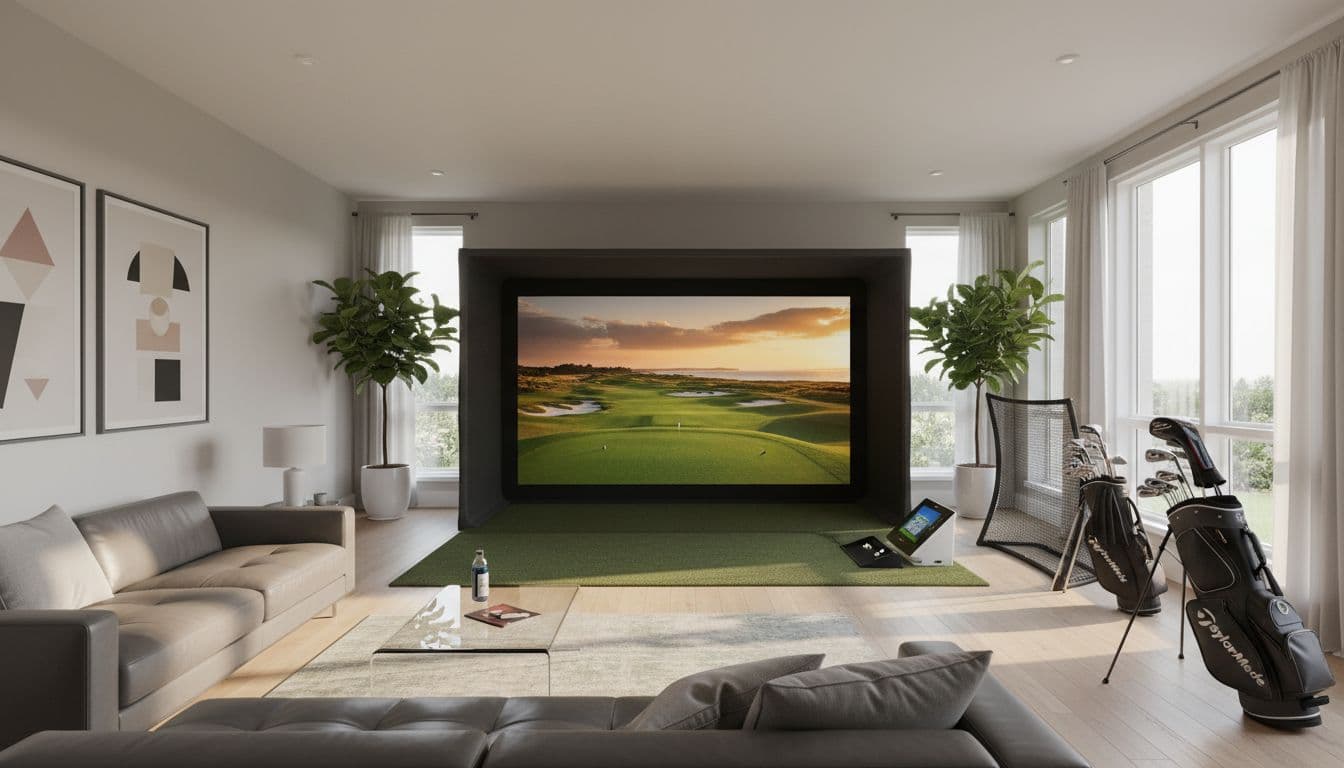
Most golfers don’t realize how much is actually involved in setting up a home simulator until they’re already deep in the process. Residential golf simulators range from $5,000 entry-level builds to $70,000+ full-room installations, and the gap in quality between those price points is massive. Space matters too. Ceiling height, room depth, and projector placement can make or break the whole setup. After reviewing dozens of systems, brands, and installer options across the market, this guide breaks down five standout options worth knowing about before you commit.
The research approach for this ranking
Each company was evaluated by pulling together publicly available information, including user reviews from golf forums and specialty platforms, feature breakdowns from official websites, and third-party coverage from golf equipment directories. Only companies with documented experience in the golf simulation space made the cut.
-> See the full research breakdown
- Foresight Sports – Best for professional-grade golf simulation and launch monitor technology
- Friendly Golfer – Best for home golf simulator reviews and guides
- SoundCheck – Best for custom golf simulators and smart home entertainment systems
- LaunchPad Golf – Best for year-round golf entertainment and corporate golf experiences
- Red Stakes Golf – Best for golf simulation technology and in-home/commercial golf entertainment installations
Why Residential Golf Simulators Matter
Picking the wrong setup costs real money and real frustration. High upfront costs ranging from $5,000 to $70,000+ create genuine hesitation, and that hesitation only gets worse when buyers realize they also need to account for ceiling height, room depth, and projector type before anything gets installed. The right simulator system pays off in ways that a driving range membership simply can’t match.
Year-round practice in a controlled space, with consistent feedback on ball speed and spin rate accuracy compared to on-course Trackman data, is the kind of return that serious golfers actually care about.
And a system with a deep course library and low visual delay in the projection keeps the experience feeling real. That combination is what separates a setup people use every week from one that collects dust after the first month.
Top 5 Residential Golf Simulators Breakdown and Comparison
Note: All data in this table is sourced from review platforms and the official websites of the listed companies.
| Company Name | Headquartered In |
| Foresight Sports | San Diego, California |
| Friendly Golfer | – |
| SoundCheck | Southfield, Michigan |
| LaunchPad Golf | Okotoks, Alberta, Canada |
| Red Stakes Golf | Brighton, Michigan |
1 – Foresight Sports – Best for Professional-Grade Simulation and Launch Monitor Accuracy
What Does Foresight Sports Do?
Foresight Sports builds and manufactures performance analysis technology for golf, including launch monitors, simulation software, and full residential golf simulators. Founded in 2009 in San Diego, they introduced the GC2 launch monitor in 2010 and haven’t really slowed down since. With over 15,000 units deployed globally, their systems show up in retail fitting bays, commercial venues, and high-end home setups. Honestly, the fact that nearly 60% of the Fifth Major field trusted their GCQuad tells you a lot about where they sit in the market.
Why Foresight Sports Stands Out for Residential Golf Simulators:
Foresight Sports solves one of the biggest problems in home golf setups: the accuracy gap between simulator data and actual on-course performance. Their camera-based launch monitor technology delivers ball speed and spin rate readings that hold up against professional-grade Trackman comparisons, which makes the practice data feel worth trusting.
Summary of Real User Reviews:
From what the reviews show, Foresight Sports earns consistent praise for data accuracy and build quality across both home and commercial installations. The GCQuad winning Golf Digest’s Editors’ Choice Award for Best Launch Monitor four years running is the kind of track record that’s hard to argue with. Users do note the price point is significant (not cheap, but worth it for serious players), and most agree the software library and shot dispersion accuracy justify the investment.
2 – Friendly Golfer – Best for Home Golf Simulator Reviews and Guides
What Does Friendly Golfer Do?
Friendly Golfer operates as a dedicated review and educational platform built entirely around home golf simulator technology. They cover launch monitors, impact screens, enclosures, hitting mats, and simulation software, all in one place. What makes them useful is the depth of their breakdowns. This isn’t surface-level content written for casual browsers. Their goal is to become the most complete online resource for anyone building or buying a home simulator setup, and based on the research, they’re building toward that with real specificity.
Why Friendly Golfer Stands Out for Residential Golf Simulators:
Friendly Golfer fills a real gap for buyers who feel lost between a $5,000 entry-level setup and a $40,000 custom room build, by laying out what each component actually does and what trade-offs come with it. That kind of clear, unbiased guidance is genuinely rare in a space where most content is written by people trying to sell something.
Summary of Real User Reviews:
From what the data shows, readers turn to Friendly Golfer when they’re comparison shopping and need context that product pages don’t give them. The site’s focus on niche simulator categories, like comparing projector-based versus screen-based systems, connects with buyers who are past the awareness stage and deep in the decision phase. The educational tone builds trust in a way that review aggregators rarely manage.
3 – SoundCheck – Best for Custom Golf Simulators and Smart Home Connection
What Does SoundCheck Do?
SoundCheck designs and installs custom golf simulators alongside full smart home systems across Michigan. They’re a certified Full Swing Golf dealer, which puts them in a specific tier of installer that’s actually trained on the technology rather than just reselling hardware. Beyond the simulator, they handle audio, lighting, temperature, and security, so the golf room becomes part of a cohesive home setup rather than a standalone add-on. Being named Michigan’s first Control4 Pinnacle dealer and landing among the top 100 home theater companies in the country confirms this isn’t just a regional shop running side installs.
Why SoundCheck Stands Out for Residential Golf Simulators:
SoundCheck addresses the part of simulator ownership that most equipment brands don’t talk about: what happens after the hardware shows up. Connecting a golf room with smart lighting presets, proper acoustic treatment, and automated climate control is the difference between a room you use daily and one that feels like a hassle to set up.
Summary of Real User Reviews:
Clients consistently point to the quality of their installation work and how naturally the golf room connects to the rest of the home’s systems. That kind of attention to connection (think: one remote controls the lights, projector, and simulator launch sequence) stands out in reviews. For Michigan homeowners who want a full entertainment room rather than just a simulator bay, SoundCheck is the name that keeps coming up.
4 – LaunchPad Golf – Best for Year-Round Golf Entertainment and Corporate Experiences

What Does LaunchPad Golf Do?
LaunchPad Golf runs year-round golf entertainment venues in Canada and Minnesota, built around award-winning Inrange radar technology for ball tracking. They cater to both competitive golfers looking for serious swing practice and groups booking corporate or social events. The venue model lets players access virtual course play and interactive game modes without the commitment of owning equipment. With 32 team members and expansion into the U.S. market already underway, they’re growing in a direction that suggests they’re not just a regional player.
Why LaunchPad Golf Stands Out for Residential Golf Simulators:
LaunchPad Golf gives prospective buyers a chance to experience high-quality simulator technology before committing to a home installation. That’s a real advantage in a space where a wrong purchase can mean $20,000 in regret. Their Inrange radar system also gives them a different technical angle compared to camera-based setups, making them a useful point of comparison for anyone still deciding on sensor type.
Summary of Real User Reviews:
From what the research shows, guests highlight the accuracy of the ball tracking and the variety of gameplay formats as the main draws. Corporate clients mention the event-ready setup as something competitors don’t always get right. The Minnesota expansion has drawn attention from U.S. golfers who previously had to travel to experience the same quality, and that momentum is showing up in a positive early reception.
5 – Red Stakes Golf – Best for In-Home and Commercial Golf Simulation Installations

What Does Red Stakes Golf Do?
Red Stakes Golf builds golf simulation hardware and software for both home and commercial setups, growing out of the OptiShot Golf legacy and bringing over 100 years of combined industry experience to the table. Their systems use proprietary camera technology for club and ball tracking, and they back it with RSG Club, a digital platform that supports online tournaments and wager matches between players. With more than 18,000 customers served, this isn’t a startup finding its footing. The commitment to American manufacturing also sets them apart from the imported hardware alternatives flooding the market (think enterprise-level attention to product consistency without the enterprise price tag for entry-level tiers).
Why Red Stakes Golf Stands Out for Residential Golf Simulators:
Red Stakes Golf solves the engagement problem that many home simulators run into after the first few weeks: the novelty wears off when there’s no one to compete against. RSG Club’s tournament and wager format keeps players coming back by adding a competitive layer that solo practice sessions can’t replicate.
Summary of Real User Reviews:
From what the data shows, long-term customers credit the proprietary tracking accuracy and the RSG Club platform as the two things that keep their simulator feeling worth using month after month. The OptiShot heritage gives the brand credibility with buyers who did early research on the space, and the American manufacturing story appeals to buyers who want to know where their equipment is actually made. Newer users note that the setup process is straightforward compared to competitors at a similar price point.
Research Methodology and Selection Process
Initial Data Collection
The research began by building a starting list from golf-specific directories, home entertainment review platforms, and professional golf forum discussions. Brands and services that appeared repeatedly across multiple independent sources were flagged for deeper review. This initial sweep covered simulator hardware companies, certified installers, venue operators, and educational platforms that contribute meaningfully to the residential golf simulator space.
Shortlisting Phase
From that broader list, options without documented customer history or verifiable market presence were removed. Review patterns across sources were analyzed to identify consistency, not just volume. A company with 10 detailed, specific reviews from verified buyers carried more weight than one with 100 generic mentions. Options that appeared only on their own marketing materials, without third-party corroboration, didn’t make the cut.
Verification of Claims
Claims made on official websites were cross-checked against what real users reported on independent platforms, golf equipment forums, and installation discussion groups. Where a company claimed award recognition, those awards were traced back to the original publication or issuing body. Technical specifications, like launch monitor accuracy and software library size, were checked against reviewer comparisons rather than taken from manufacturer data alone.
Authority and Industry Contribution Layer
Each company’s standing in the broader golf industry was assessed by looking at mentions from PGA professionals, appearances in golf media coverage, and whether the company had contributed original technology or tools that others in the space reference. Companies that showed up repeatedly in expert-level discussions, not just consumer searches, scored higher in this layer. Brand endorsements from PGA professionals and golf instructors were treated as strong signals of technical credibility.
Residential Golf Simulators-Specific Evidence
The final filter focused on residential relevance. Companies were evaluated on whether they had dedicated service pages for home installations, reviews from homeowners rather than commercial buyers only, and documented knowledge of residential-specific challenges. That includes ceiling height constraints, projector versus screen decisions for different room types, and the electrical and flooring requirements that come with full simulator builds. Only companies that demonstrated a real understanding of these home-specific realities made it into the final five.
How to Choose the Right Residential Golf Simulators
The right simulator setup depends on more than just budget. Start by mapping your space and what you actually want the room to do, and the decision gets a lot clearer from there.
- Industry and Domain Experience: Look for companies that work with home installations, not just commercial bays. Experience with ceiling height constraints and room-specific projector placement matters more than general golf technology knowledge.
- Features and Service Options: Check what’s included beyond the hardware. Software libraries, course variety, shot data tracking, and post-installation support all affect how much you actually use the system after setup.
- Pricing Structure: Budget for the full picture, including flooring, screens, enclosures, and electrical upgrades. A $10,000 simulator can easily become a $20,000 project once the room is properly built out.
- Results Measurement: Ask how the system reports your data. Ball speed and spin rate accuracy, shot dispersion percentages, and frame rate consistency are the numbers that tell you whether the practice is actually transferable to the course.
- Industry Knowledge and Compliance: Make sure any installer understands USGA/R&A equipment conformance standards and launch monitor accuracy requirements. Not every vendor stays current on this, and it matters if your data is going to mean anything.
Bottom Line
Choosing the right residential golf simulator setup comes down to three things: accuracy of shot data, quality of the install, and whether the system fits the specific room. Foresight Sports leads on technology credibility, while options like SoundCheck and Red Stakes Golf fill in the installation and software engagement gaps. This space is growing fast, and the buyers who invest in quality hardware and smart installation support now are the ones who’ll still be using their setups five years from now.