
How to Organize Family Paperwork in Small Spaces
Paper clutter can take over a kitchen counter faster than laundry takes over a chair. If you are trying to organize family paperwork without a giant filing cabinet, the good news is simple, you do not need more furniture. Effective home organization is not about adding storage pieces; it is about creating a flow that works for your square footage.
You need fewer piles, clearer categories, and a small system you can keep up with on busy days. When school forms, insurance papers, and other important documents all land in the same spot, even a tiny setup can feel calm and workable.
Let’s make paper management feel lighter, not harder.
Key Takeaways
- An organized paper system works best when every one of your important documents has a designated home and a clear purpose.
- Sort papers into three main categories: keep, digitize, or shred.
- Compact tools like binders, portable file boxes, and folders can effectively replace a bulky filing cabinet.
- A weekly 10-minute reset prevents paperwork from accumulating into random stacks.
A simple 4-step system for family paperwork
Trying to organize family paperwork can feel like cleaning out a junk drawer that keeps refilling itself. While the pile may look overwhelming, most of your important documents only require a single decision to manage effectively. You do not need twelve categories or complicated color-coded tabs on day one. You simply need one designated paper zone and a consistent process to keep things manageable.
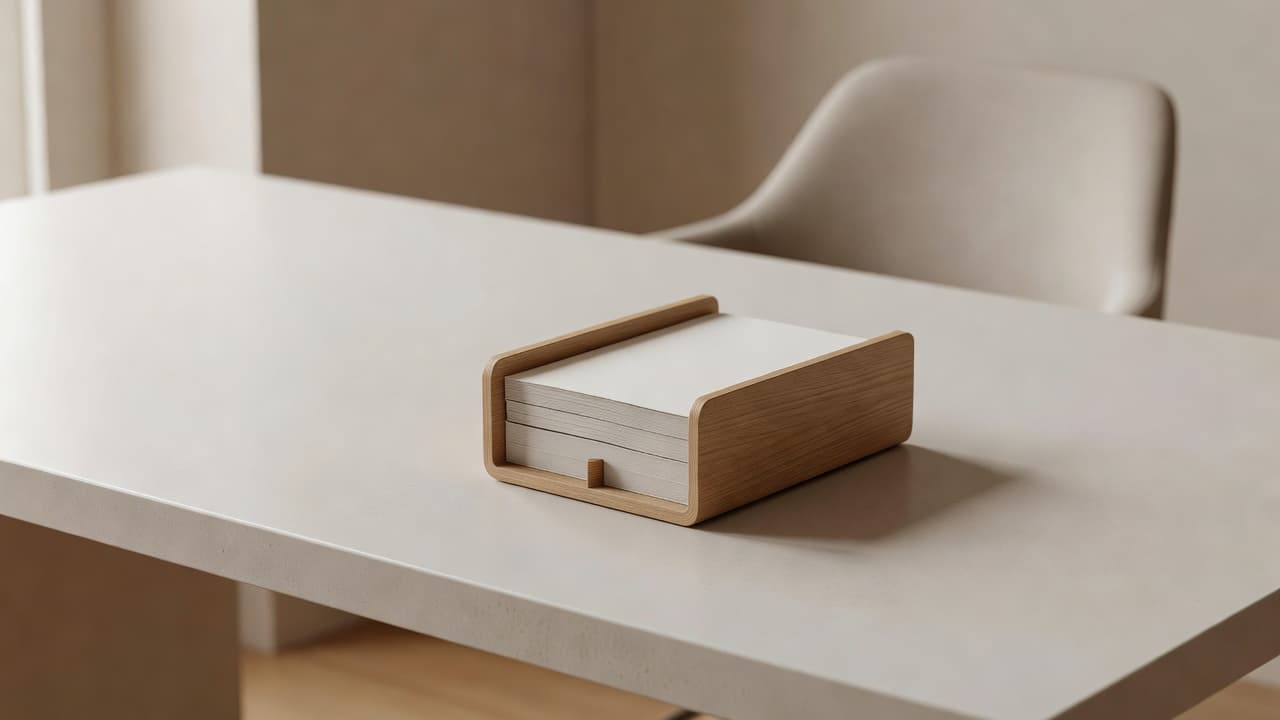
Start with these four steps:
- Gather every loose paper you can find. Check backpacks, purses, the kitchen counter, desk drawers, mail piles, and that one basket where everything lands.
- Make four quick stacks. Use “Act on,” “Keep,” “Scan,” and “Shred.” That is enough to start. You can add smaller labels later if you need them.
- Give each stack a home. “Act on” goes into one folder or upright sorter. “Keep” goes into your main storage tool. “Scan” stays in a small to-do folder until you digitize it. “Shred” goes straight to the shredder bag or bin.
- Set a short review time. Ten minutes once a week is enough for most families. You are not trying to win an organizing award. You are trying to stop paper from running the house.
One more thing matters here. Keep your paper station small on purpose. A portable file box, one shelf, or one cabinet drawer creates a limit. Limits are helpful because they make you choose what truly deserves space.
If your paper clutter is part of a bigger project, these simple house organization hacks can help you clear room and master your home organization without turning your whole weekend upside down.
What to keep, what to digitize, and what to shred
This is where most people get stuck. They are not bad at organizing; they are simply tired of making the same decisions over and over. When you are wondering how long to keep documents, the best approach is to establish clear rules once and let them do the heavy lifting.
A simple guide helps:
| Keep the original | Scan and store | Shred after review |
|---|---|---|
| Birth certificate, passports, Social Security cards, wills, property deeds, estate plan | Insurance policies, school calendars, medical visit summaries, receipts for large purchases, warranty information, home repair invoices | Junk mail, duplicate statements, expired forms, old flyers, empty envelopes with personal information, receipts you do not need |
| Current legal documents, custody papers, marriage certificates, birth certificate, passports, Social Security cards | Paid bills, report cards, immunization records, financial records, tax documents | Drafts, extra copies, outdated manuals, old account notices |
If a paper would be hard to replace, keep it. These vital records, such as your birth certificate, passports, and Social Security cards, deserve a secure spot. If a document is easy to replace but helpful to reference, scan it. If it has no job, shred it.
For tax documents, medical records, and legal documents, pause before tossing originals. Rules can vary by region, and your personal comfort level matters, too. Some families prefer to keep a physical copy alongside a digital version of their insurance policies and financial records for peace of mind. That is perfectly fine. The goal is not to own the fewest papers possible. The goal is to know where your important documents are when you need them.
When you scan, use clear file names. For example, 2026-07 car insurance renewal is much better than scan001. Store digital files in folders that match your paper categories, such as Home, Medical, School, Taxes, and IDs.
A cross-cut shredder is worth it if paper builds up fast in your house. If not, keep one envelope or bag labeled for shredding and take it to a local shredding event when it fills up.
Compact storage options that work in small homes
Once you sort the paper, you need a home for it that fits your real life. Not your dream office. Not that imaginary craft room with custom drawers. Your actual home.
A lot of families do best with one of these compact setups:
A portable file box is great if you want to organize all your important documents in one place. It slides into a closet, under a bed, or on a shelf. Add a few hanging file folders for categories like Family IDs, Medical, Home, School, and Taxes. This is the option many people mention in this real-life decluttering thread, and for good reason; it is small and easy to move.
Document binders work well for papers you reference often. Think school contacts, medical forms, meal planning printables, or home maintenance records. Use sheet protectors for papers you do not want hole-punched.
A monthly folder or accordion file is helpful for active papers. If bills, permission slips, and appointment notes keep floating around, give them one temporary home instead of five random ones.

Photo by Ron Lach
A fireproof safe, or a smaller fire-resistant pouch, is smart for the papers you never want to lose, like passports, birth certificates, and legal records. It does not have to be big. It just needs to be secure and easy to grab.
If you want visual inspiration before buying anything, these small-space paper storage ideas show how simple containers, binders, and vertical storage can replace a full cabinet.
The best storage option is the one you will keep using. If it is too bulky, too pretty to touch, or too complicated to reset, it will turn back into a pile.
How to keep the system working when life gets busy
A paper system does not fail because you picked the wrong folder. It fails because life gets full. Someone gets sick, the school sends home five forms, the mail stacks up, and suddenly the counter disappears again. That is normal. Build for normal.
Start by reducing the volume of incoming mail by switching to paperless statements whenever possible. Keep one inbox basket or tray for any remaining physical paper. Nothing should live loose on the counter. Not one receipt, one field trip form, or one mysterious note from the pediatrician’s office. If paper enters the house, it lands in the inbox first.
Then give yourself a weekly reset. Ten minutes is enough. Open the tray, pay what needs paying, sign what needs signing, scan what needs saving, and use a paper shredder to safely dispose of sensitive documents. Pair this task with something you already do, like Sunday planning, Monday coffee, or Friday desk cleanup.
Digital backup matters too. Your phone can do the heavy lifting here. Apps like Adobe Scan and Microsoft Lens work well, and the Notes app on iPhone can scan documents to create a digital filing cabinet. Save your files to cloud storage services like Google Drive, Dropbox, OneDrive, or iCloud, and be sure to use the same folder names every time. Consistency beats perfection.
If routines are hard to hold onto, tie this habit into your bigger home rhythm with these tips for purposeful productivity. A little structure goes a long way when your days already feel full.
You can also make paperwork easier for the whole family. Put a labeled folder near the door for school papers. Keep stamps, pens, and return envelopes in the same spot. Let older kids know where signed forms belong. Paper is less stressful when everyone knows the drop zone.
Frequently Asked Questions
How often should I purge my paper files?
It is best to perform a quick review weekly to prevent piles from forming. A more thorough deep-dive purge of your filing system can be done once or twice a year to remove expired documents or outdated records.
What should I do if I have too many original documents to fit in a small space?
Prioritize keeping only the essentials like vital records and legal documents in physical form. Anything else that is easily replaceable or accessible online should be scanned and stored digitally to free up your physical storage space.
Can I use digital tools for all my family paperwork?
While you can digitize most documents, you should always keep the physical originals of vital records like birth certificates and property deeds. Digital backups are an excellent way to manage daily paperwork, but a hybrid system ensures you have the necessary documentation for legal or emergency situations.
A small system wins
Paper clutter does not require an entire room, and it certainly does not need a bulky filing cabinet. It simply needs a home, a few clear rules, and a weekly reset you can maintain even during your busiest days.
Start with one stack, one folder, and one decision at a time. By ensuring your vital records and other important documents have a dedicated place, your home will feel lighter. Once you establish these routines, the stress of a last-minute scramble to find what matters becomes a thing of the past.