
How to Prepare for a Mammogram When You’re Anxious
You can ease mammogram anxiety by knowing what to expect, telling the imaging team what you need, and planning how you’ll hear from the clinic. You don’t have to feel completely calm or free of fear before you go, and you can ask for support throughout the appointment.
Whether this is your first screening or you’ve had a difficult experience before, your concerns deserve attention. Start with a few practical preparations that make the visit feel more predictable and give you more control.
Key Takeaways
- Tell the imaging staff about anxiety, previous painful exams, and any positioning difficulties before the mammogram begins.
- Skip deodorant and other products on your breasts and underarms that day, and wear clothing that’s easy to remove above the waist.
- Leave with a clear follow-up plan, and remember that a callback means more information is needed, not a cancer diagnosis.
Why Mammogram Anxiety Can Feel So Intense
Sometimes the biggest worry is breast compression. Other times, it’s being exposed, remembering a previous medical experience, or wondering what the images might show. Waiting can feel harder than the exam because there’s nothing immediate to do with that uncertainty.
A previous callback can make another appointment emotionally difficult, with fear lingering into future screening. The National Cancer Institute describes how a false-positive finding can affect future screening, showing that these experiences can have lasting effects.
Avoiding an appointment may bring short-term relief, but it leaves the original concern unresolved. Anxiety often rises as an appointment approaches and can ease as the experience becomes familiar. You don’t need to force yourself through overwhelming distress, though. Extra support, breaks, and a slower pace can help you stay engaged with your care.
Before Your Visit: Reduce the Unknowns

Ask for support when you book
Tell the scheduler that you feel anxious, especially if fear has caused you to postpone screening. If you’re booking an annual mammogram, mention previous painful exams, limited shoulder movement, breast implants, or concerns about touch and privacy.
Women and people of any gender having a first screening can ask for support. You can request a female technologist or ask whether a support person may accompany you. Access to the imaging room may be restricted, but someone can still help with transportation or wait nearby.
Choose a time that gives you breathing room around work, caregiving, and travel. Ask how much time to allow for paperwork and waiting in the waiting room.
Gather your history and choose your questions
Have previous mammogram images transferred if you’re visiting a different facility. Earlier images help the radiologist recognize changes and understand what’s usual for you.
Bring relevant breast history, including prior procedures, diagnoses, and breast cancer in your family. Keep a medication list available, including hormones and supplements. You don’t need perfect records to explain your concerns.
Choose your three most important questions. These might cover managing discomfort, requesting a pause, and receiving results. Write them down so anxiety doesn’t have to compete with your memory.
Our reminder about putting self-care into practice despite fear applies here: your health deserves space on the calendar, even when taking that space feels uncomfortable.
Prepare Your Body and Your Schedule
Wear a separate top and bottom because you’ll usually undress above the waist and put on a gown. Comfortable shoes can help because the exam commonly involves standing and changing position.
On exam day, don’t apply deodorant, antiperspirant, powder, or lotion to your breasts or underarms. Some products can affect the images. The CDC’s mammogram preparation guidance also advises telling the imaging team if you’re pregnant or might be pregnant.
If you menstruate and your breasts become tender around your period, scheduling your annual mammogram outside that window may help. However, don’t delay assessment of a new breast change to wait for a more comfortable date or a screening mammogram appointment.
Mammography usually doesn’t require fasting, so eat normally unless you have different instructions for another procedure. Before leaving home, practice a gentle breathing rhythm: breathe in comfortably, then let your exhale last a little longer. Avoid forcing unusually deep breaths, which can make you lightheaded.
During the Mammogram: Know What Happens
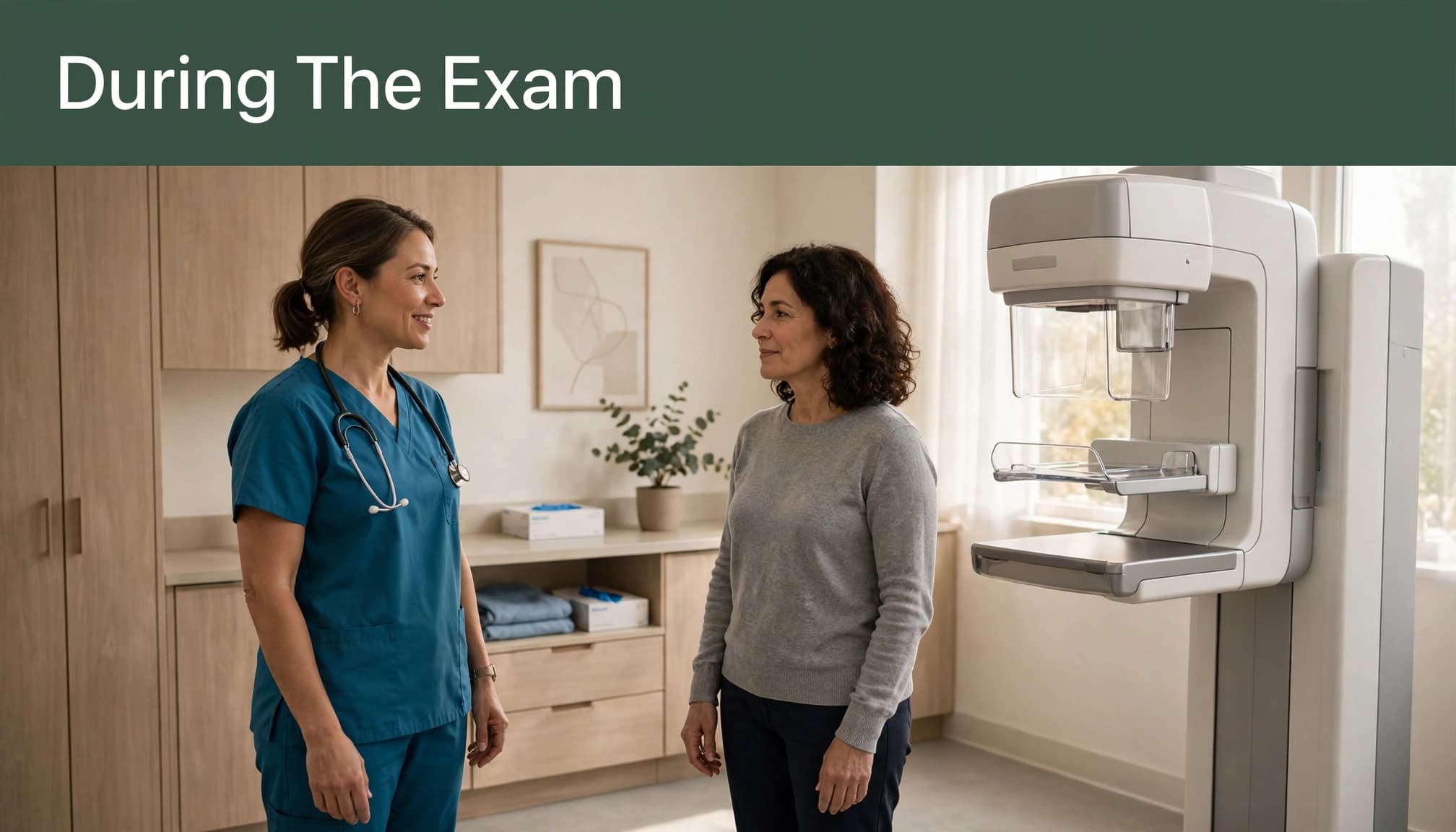
Expect positioning and brief compression
During a mammography exam, the technologist positions one breast at a time on the machine. A plate lowers to compress the breast so the equipment can capture a clearer image.
A standard screening mammogram typically includes two views of each breast, although additional images may be necessary. Compression lasts briefly for each image, rather than continuously throughout the appointment. They may ask you to hold your breath for a few seconds.
The imaging takes only part of the visit. Changing clothes, positioning, and reviewing image quality also take time. Extra pictures don’t automatically mean someone has found cancer.
Use a coping tool between images
While they position you, keep your attention on something simple: your feet against the floor or a fixed point in the room. Between images, let your shoulders soften and return to an easy breathing rhythm.
You might also silently count your exhales. Choose one technique that feels manageable rather than trying to perform several perfectly.
People experience compression differently. Some describe firm pressure; others find it painful. Tell them promptly if it hurts, particularly if you feel sharp pain or cannot maintain the position. They can pause and assess whether a positioning change would help.
Speak Up About the Support You Need
Ask for clear, attentive communication
The C.A.L.M. framework brings together communication, attentiveness, listening, and mindfulness of the patient’s perspective. Staff can help ease patient anxiety by explaining the exam, listening without rushing, and responding to your concerns.
A helpful encounter starts with an introduction by name. A friendly connection can make the room feel less impersonal. Attentiveness includes limiting distractions and multitasking, along with eye contact that feels comfortable to you. You can tell staff how much eye contact feels right.
Staff may describe compression as “pressure” or “discomfort” to make the explanation less frightening. Those words should never replace listening when you report pain. Clear updates about delays also help prevent uncertainty from adding to your stress. Respectful care supports a better patient experience.
Make consent and comfort clear
You don’t have to disclose a personal trauma history to request more control over the exam. You can simply explain what helps. When available, nurses can help relay your concerns to the technologist.
“I’m anxious about this exam. Please explain before you touch or reposition me, and agree on a signal so I can ask for a pause.”
You can also request more coverage between images or ask the technologist to describe each step before it happens. Some people feel calmer with conversation; others prefer minimal talking.
If you begin to panic, say so. Pause, regain your balance, and discuss the next step together. Facing mammogram anxiety doesn’t require ignoring your limits.
After Your Mammogram: Make a Results Plan
Know how and when you’ll hear
Before leaving, ask when to expect the exam report and how you’ll receive your exam results. The report isn’t always available immediately. Diagnostic appointments sometimes include a radiologist’s review while you wait, but same-day answers aren’t guaranteed.
If waiting is especially difficult, ask whether interpretation before you leave is possible. The team may not be able to offer it, but they can explain the process. If there’s a delay in the waiting room, ask staff for an update.
Don’t use the speed of a phone call or portal notification to interpret the result yourself. The CDC’s guidance on mammogram reporting advises contacting the facility or your healthcare provider if you haven’t received a report within 30 days. Follow up sooner if the clinic’s stated delivery window passes.
Understand what a callback means
A callback means the team needs more information. Sometimes an image isn’t clear enough. Other times, the radiologist needs additional mammogram views, an ultrasound, or comparison with older images.
Most callbacks don’t lead to a cancer diagnosis. The National Cancer Institute’s guide to breast changes explains that breast findings can be benign.
Still, attend the recommended follow-up. Ask what test comes next and when someone will explain the findings. Ask how the clinic will share any follow-up test results. Nurses, when available, can help direct your questions. Meanwhile, choose a set time to check messages instead of repeatedly refreshing your portal. Arrange a conversation with someone who can listen without guessing what the result means.
Questions About Anxiety and Mammogram Safety
When should I contact a clinician instead of waiting for screening?
A new lump, nipple discharge, skin dimpling, or another new breast change deserves medical assessment, even after a normal mammogram. Tell the clinic about symptoms when booking because you may need diagnostic imaging rather than routine screening.
Possible pregnancy also needs discussion before imaging. It doesn’t automatically rule out necessary breast evaluation. Your clinician can guide the appropriate approach.
Can medication help if my anxiety feels overwhelming?
If panic, trauma symptoms, or severe anxiety have prevented you from attending, discuss this with your prescribing clinician before the appointment. Therapy and individualized coping support may help; medication is sometimes considered.
Don’t take someone else’s medication or use alcohol to get through the visit. If a clinician prescribes a sedating medicine, follow the directions and arrange transportation. Medication doesn’t replace your right to explanations, consent, or pauses.
Take the Next Step With Support
Preparing for a mammogram means getting useful information and making your needs heard. You don’t have to hide your anxiety to receive respectful care.
You can face fears and attend even when you don’t feel completely calm. Write down your questions, tell the imaging team what helps, and leave with a clear follow-up plan. Your appointment can include necessary screening and compassionate care.