
Financial Planning for a Career Break Without Panic
A career break, especially a midlife career break, can be a gift to your health, family, education, or next chapter. It can also feel scary when your paycheck is the thread holding every bill together.
Thoughtful sabbatical planning can protect your financial security while giving you room to step away with intention. A solid financial planning career break strategy doesn’t require a perfect income or a giant savings account. You need honest numbers, a clear timeline, and a plan that supports the life you want during your time away.
Key Takeaways
- Define the purpose, start date, and return timeline for your career break, while allowing extra time for unexpected delays.
- Calculate your career-break fund using essential expenses, break-specific costs, and a buffer; keep it separate from your emergency fund.
- Review health coverage, employer benefits, debt payments, taxes, and retirement contributions before leaving your job.
- Consider limited side income that supports your goals without turning the break into another full-time job.
- Begin preparing for your return to work three to six months before your planned date by updating your resume and reconnecting with your professional network.
Financial Planning Career Break: Begin With Your Real Timeline
Before you price flights, enroll in a course, or hand in notice, name the kind of career break you are taking. Are you planning three months to care for a parent? A year home with a new baby? Six months to recover from burnout or figure out your next career move?
Your reason matters because it shapes your spending and the cost of time off. A travel-focused break has different costs than a caregiving break. A transition into self-employment needs a different cash plan than a season of rest.
Write down your target start date and return date. Then give yourself a second return date, one that accounts for a slower job search or an unexpected change in plans.
A simple timeline might look like this:
| Planning point | What to decide |
|---|---|
| 12 months before | Break purpose, target date, savings goal, debt payoff plan |
| 6 months before | Health coverage, reduced spending, income options, resume updates |
| 2 months before | Final bills, account transfers, work benefits, monthly cash plan |
| During the break | Monthly money check-in, spending adjustments, return-to-work actions |
Use the past 12 months of bank and card statements to find your true spending baseline. Don’t build your budgeting plan around your best month. Build it around the month when the car needed repairs, school fees were due, and groceries cost more than expected.
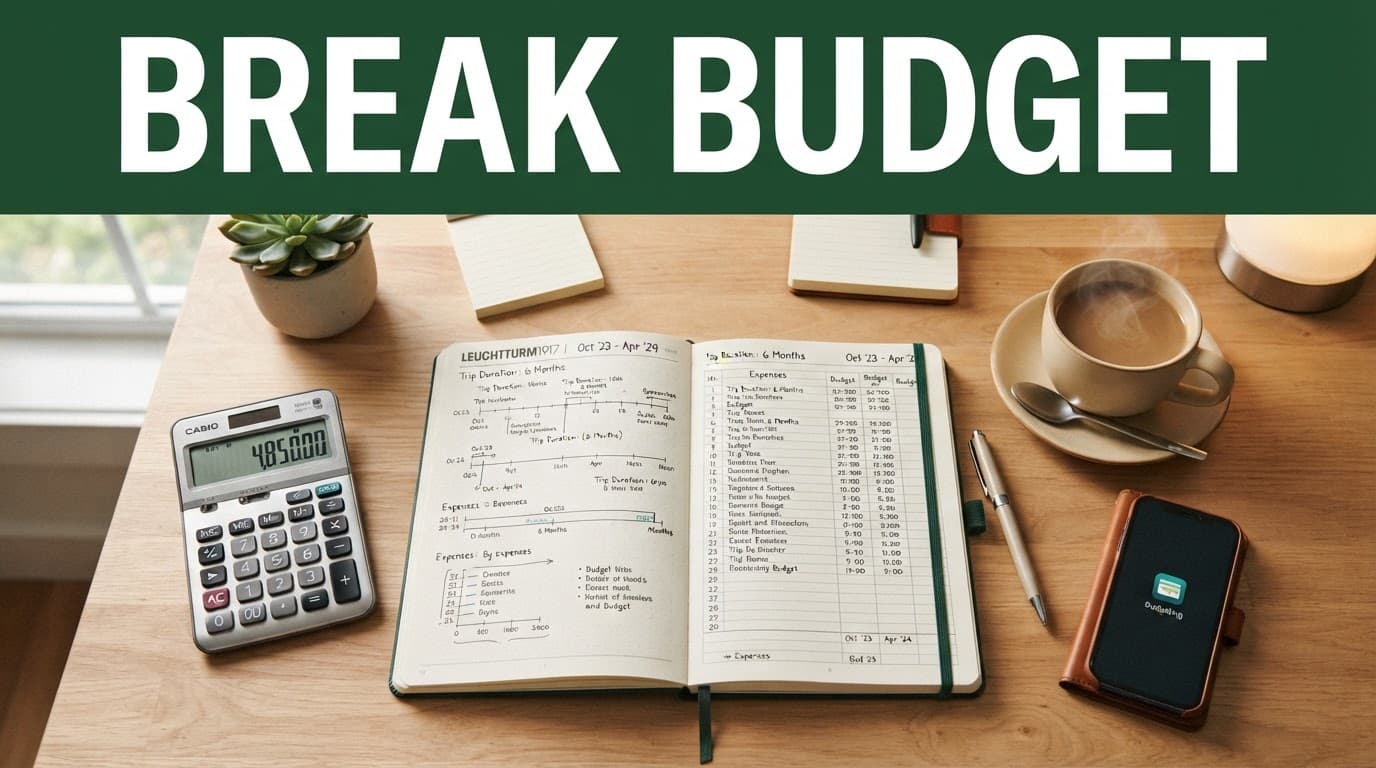
Split your career-break budget into three categories:
- Essential living expenses include housing, utilities, basic food, transportation, insurance, medication, and minimum debt payments.
- Break-specific expenses may include travel, tuition, child care changes, licensing fees, or a home project.
- Optional spending includes dining out, subscriptions, shopping, entertainment, and extras that can pause when money gets tight.
A planned career break is not a failure of ambition. It is a choice that deserves the same care you would give a business plan, a move, or a major family decision. If you need a place to begin, use these personal and financial goal-setting ideas to turn your financial goals and hopeful idea into clear numbers.
Calculate Your Income Gap and Cash Cushion
Here is the number that matters most: how much money will be missing each month when your regular paycheck stops?
Start with your monthly essential expenses. Multiply that number by the months you expect to be away. Then add your break-specific costs and a buffer. This financial preparation helps you build a cash cushion without confusing planned time away with an unexpected crisis.
Career-break fund = monthly essentials x months away + break costs + buffer
For example, say your essential monthly bills are $3,200. You plan to take six months away, and you expect $2,500 in travel and course costs.
| Part of the plan | Amount |
|---|---|
| Six months of essential bills | $19,200 |
| Travel and education costs | $2,500 |
| 20% buffer | $4,340 |
| Total career-break fund | $26,040 |
That $26,040 is separate from money earmarked for a true emergency. Your career break fund covers the income gap you planned for, while your emergency fund protects you from an unexpected medical bill, broken appliance, family crisis, or job loss that extends beyond your timeline.
Many financial institutions suggest holding three to six months of essential expenses in an emergency fund for an income shock. Vanguard’s emergency-fund guidance also separates a short-term spending shock from a longer income loss. If you have dependents, variable income, major health needs, or a single-income household, a larger cushion may fit your reality and support your long-term financial independence.
Your break fund pays for the plan. Your emergency fund protects you when life refuses to follow the plan.
Keep money you will need within the next year somewhere stable and easy to access, such as a high-yield savings account, money market account, or short-term Treasury option. This cash should stay separate from your investment portfolio and out of volatile markets. Its job is to be there when rent is due.
Review Benefits, Debt, and Retirement Before You Leave
Employer sponsored benefits can disappear faster than you expect. Review every benefit before your last day, not after a surprise bill arrives.
Ask your HR team for the exact end dates of your health insurance, dental, vision, life, disability, and employee-assistance coverage. If you are in the United States, compare COBRA costs with health insurance plans available through the Health Insurance Marketplace and a spouse’s or partner’s plan. Elsewhere, public coverage, private policies, and eligibility rules vary widely.
Also check what happens to your health savings account, flexible spending account, unused paid time off, stock compensation, pension benefits, and vesting schedule. A bonus or vesting date may affect whether it makes sense to leave in June or wait until August.

Debt needs a straightforward plan. High interest debt, especially credit card balances, can make a break more expensive every month. Focus on debt reduction before you leave, while your income is steady. Keep making at least the required payments on every account. Contact lenders early if a temporary hardship plan or lower payment is needed.
A car loan, student loan, mortgage, or personal loan does not always need to be paid off first. It does need to be included in your monthly number. Baird’s career-break funding guide offers a helpful reminder to build a designated savings fund while revisiting debt payments.
Retirement deserves attention too. If your employer offers a match, make your retirement contributions large enough to receive it until your last eligible paycheck. Once you leave, don’t withdraw retirement money to fund a planned break unless you have exhausted safer options. Early withdrawals can reduce your future savings and may trigger taxes or penalties.
You may still be able to make retirement contributions to an IRA or another retirement account if you have eligible earned income during the tax year. Contribution rules vary, so check with a qualified tax professional before making decisions.
Plan for Taxes, Side Income, and Returning to Work
A lower-income year can change your tax picture and create important tax implications. It may affect withholding, estimated tax payments, student-loan repayment, health insurance subsidies, child-related credits, and retirement contribution eligibility.
If you receive severance, freelance income, unemployment benefits, stock payouts, or income from a small business, set aside money for taxes as it comes in. Don’t spend every dollar that reaches your account. A separate savings account for taxes can save you from a painful surprise next April.
Side income can stretch your savings, but it should not turn your break into a second full-time job. Choose work that fits your purpose and put boundaries around it. You might set a monthly income goal, a weekly hour limit, or a firm end date for client work.
Consider options such as:
- A few consulting projects in your former field, with a clear cap on hours.
- Seasonal work that provides income without draining your energy.
- Selling a service or digital product you already know how to deliver.
- Part-time work that keeps a professional connection alive while leaving room for rest or caregiving.
Track income and expenses from day one. Save receipts, note mileage when applicable, and keep business spending separate from personal spending. Tax, insurance, and benefits rules differ by location, so speak with a qualified local tax professional, financial advisor, financial planner, or benefits adviser for guidance tied to your situation.
Your return-to-work plan starts before your break begins. Set a reminder for three to six months before your intended return to work date. Update your resume, reconnect with trusted colleagues through professional networking, refresh your LinkedIn profile, and begin watching the job market.
A career break does not need to become a resume gap you rush to explain away. You can say you took intentional time for caregiving, study, health, travel, or a planned transition. Be honest, brief, and confident when you return to work.
Frequently Asked Questions
How much money should I save for a career break?
Start with your monthly essential expenses multiplied by the number of months you plan to be away. Add break-specific costs, such as travel or education, and include a buffer for higher-than-expected expenses.
Should my career-break fund be separate from my emergency fund?
Yes. Your career-break fund pays for the planned income gap, while your emergency fund covers unexpected events such as medical bills, repairs, or an extended job search.
What benefits should I review before leaving my job?
Check the end dates and replacement options for health, dental, vision, life, and disability coverage. Also review paid time off, stock compensation, vesting schedules, flexible spending accounts, health savings accounts, and retirement benefits.
Can I earn side income during a career break?
Yes, limited consulting, seasonal, freelance, or part-time work can extend your savings and maintain professional connections. Set clear boundaries around hours, income goals, and the type of work so the break still serves its purpose.
When should I begin planning my return to work?
Set a reminder for three to six months before your intended return date. Use that time to update your resume, refresh your LinkedIn profile, reconnect with colleagues, and start watching the job market.
Give Yourself Permission to Pause With a Plan
A career break feels lighter when your money has a job before you step away. Know your monthly needs, protect your emergency fund, review your coverage, and make financial preparation part of your plan for the unexpected.
Your financial planning career break process doesn’t have to happen in one weekend. Start with one number, one account, and one date. Small, steady steps can strengthen your financial security and give you the breathing room to pause without losing sight of where you’re headed.