
How to Choose the Right Calming Collar for Your Stressed Dog
A stressed dog often shows clear signs such as pacing, barking, hiding, or shaking during storms, travel, or time alone. Many owners look for a simple way to ease that stress, and a dog calming collar often promise steady support through pheromones or gentle scents that release over time. However, not every collar suits every dog, so a careful choice matters.
To choose the right calming collar, they need to match the collar type, size, and ingredient formula to their dog’s specific anxiety triggers, body size, and daily routine. Some collars use synthetic pheromones that mimic a mother dog’s scent, while others rely on plant-based aromas, and each works best for certain stress causes. In addition, fit and duration affect results, since a poor fit or short active period may limit benefits.
A smart choice requires a close look at safety, materials, and how long the collar stays active, as well as a clear comparison of available options. With the right approach, they can narrow the field and select a collar that fits their dog’s needs and supports a calmer daily life.
How to Choose the Right Dog Calming Collar
A dog shows stress through clear behavior and body signs, and the right collar must match those needs. Owners should review ingredients, safety data, and proper fit before they select a product.
Recognizing the Signs of Stress in Your Dog
A dog often shows stress through pacing, shaking, whining, or sudden barking. Some dogs hide, avoid eye contact, or cling to their owner. Others chew furniture or scratch doors.
Physical signs also matter. Excess panting, drooling, or tense muscles may point to anxiety. Sleep changes and loss of appetite can also signal a problem.
Owners who notice these patterns may consider a calming collar for stressed dogs as part of a plan to reduce anxiety. However, they should first identify triggers such as loud noise, travel, or time alone. Clear awareness of the cause helps them decide if a collar suits short-term stress or a more constant issue.
Assessing Active Ingredients and Their Safety
Most calming collars rely on pheromones or plant extracts. Pheromone collars copy the scent that a mother dog releases to calm her puppies, and research shows that many dogs respond well to this signal.
Herbal options may include lavender or chamomile. Although these ingredients sound gentle, owners should still check labels for full ingredient lists and confirm that the product contains non-toxic materials.
Veterinarians often suggest pheromone collars for mild to moderate stress because they do not require medication. Dogs with severe anxiety may need behavior training or medical care in addition to a collar. Clear safety information, age guidelines, and weight limits help owners avoid skin irritation or other side effects.
Matching Collar Size and Fit to Your Dog’s Needs
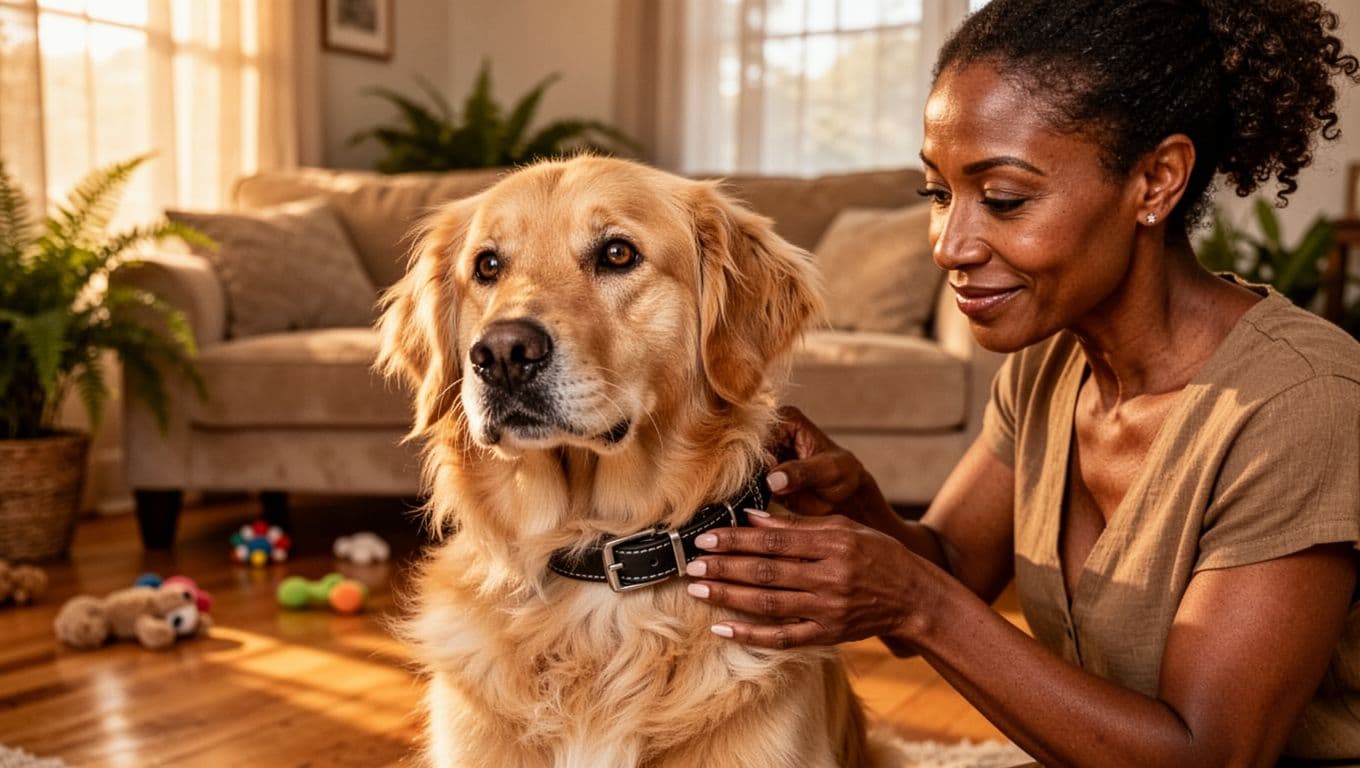
Proper fit affects both comfort and results. A collar that sits too loose may not stay in contact with the skin, and a collar that sits too tight may cause rubbing or hair loss.
Owners should measure the dog’s neck with a soft tape and compare that number to the product size chart. Most collars allow some adjustment, yet each has a maximum length.
Puppies grow fast, so frequent checks help maintain a safe fit. Large breeds need sturdy material, whereas small breeds need a lighter design. A well-fitted collar stays secure, rests flat against the neck, and does not limit normal movement.
Comparing Calming Collar Types and Brands
Calming collars use different methods to reduce stress, and each type works best for specific dogs and situations. Buyers should compare active ingredients, expected results, and wear time before they choose a product.
Scent-Based vs. Herbal vs. Pheromone Collars
Scent-based collars release mild aromas such as lavender or chamomile. These scents aim to promote relaxation through simple exposure. However, results vary because dogs respond differently to smells, and strong outdoor odors may reduce the effect.
Herbal collars contain plant extracts or essential oils that claim to calm the nervous system. Some include blends of lavender, valerian, or other natural oils. Owners should review the ingredient list and check for skin sensitivity, since certain oils may irritate dogs with allergies or sensitive skin.
Pheromone collars use synthetic dog-appeasing pheromones that copy the scent a mother dog gives her puppies. Research supports this method for mild to moderate anxiety, such as stress from travel, loud noise, or short periods alone. Many veterinarians recommend pheromone collars because they are drug free and target natural behavior responses. For dogs with strong anxiety, however, owners may need added training or medical support.
Evaluating Durability and Longevity of Collars
Most calming collars last between 30 and 60 days, although heat and moisture can shorten that time. A dog that swims often or spends time in rain may lose the calming effect sooner. Therefore, owners should check product details about water exposure before purchase.
Material quality also affects comfort and lifespan. Adjustable collars with secure clasps provide a better fit, and a proper fit allows steady contact with the dog’s skin. Loose collars may reduce pheromone transfer, while tight collars may cause discomfort.
Size range matters as well. Many brands offer puppy, small, medium, and large options, and owners should measure the dog’s neck before purchase. Clear labeling about duration, refill needs, and replacement schedules helps buyers compare value rather than focus on price alone.
Conclusion
Choosing the right calming collar starts with a clear view of the dog’s stress triggers, since noise, travel, or separation can each require a different approach. Owners should check the collar size, review the active ingredients such as pheromones or plant extracts, and confirm that the product suits the dog’s age and health status.
A calming collar works best as part of a steady routine that includes training, exercise, and a calm home setting, because no single product can solve anxiety on its own. With careful selection and realistic expectations, owners can help their dog feel more at ease and better able to handle daily stress.