
Build a Client Referral System That Fits Your Solo Business
The best leads often come with a name attached. Someone they trust has already said, “You should talk to her.” That kind of introduction is hard to beat.
A client referral system helps you invite more of those introductions without making every conversation feel like a sales pitch. A customer referral program doesn’t need fancy software, a huge audience, or a big reward budget. You need a clear offer, a simple ask, and a consistent way to follow up.
Key Takeaways
- Ask for referrals after a real client win, not at random.
- Make it easy for clients to explain what you do and who you help.
- Use a small, ethical thank-you that fits your business and professional rules.
- Track every referral source, conversation, outcome, and reward.
- Protect privacy by letting clients make a warm introduction instead of sharing someone’s contact details without permission.
- Review the system monthly, then keep what brings qualified, good-fit clients.
What a Referral System Does for Your Business
A referral system gives word of mouth marketing a home in your business. It turns a referral marketing strategy into a repeatable process for asking, receiving, tracking, and thanking.
Research published by Wharton found that referred customers had higher customer lifetime value than other customers in the study. You can read the findings in the referral customer-value research. Warm leads can make customer acquisition cost more manageable, though trust does not guarantee a sale. A thoughtful referral experience can also strengthen customer retention. The same principles can support e-commerce growth and a solo b2b saas offer.
Referrals begin with a clear offer
People cannot refer what they cannot explain. “I do a little bit of everything” is hard to pass along. “I help busy service providers plan a month of social media content in one focused session” is much easier.
Choose one core offer first. Name the person you help, the problem you solve, and the next step someone should take.
A good referral is more than a name
For a solo business, a successful referral is a person who fits your offer, has a real need, and agrees to be contacted. That definition protects your time.
You are not trying to collect dozens of random leads. You are building relationships with people who already have a reason to care about the work you do.
A referral is strongest when the client can say, “I know exactly who needs this,” not “I might know somebody someday.”
Start With Your Best Referral Sources
Your first referral partners are often already in your corner. Think about satisfied clients who can become brand advocates, former coworkers who know your work ethic, trusted peers, and business owners who serve the same audience without offering the same service.
Make a short list of 10 people. Do not send a mass message. Reach out with care and a reason.
Look for clients who have experienced a win
The right time to ask is after a moment of relief, progress, or celebration. A real client win reflects customer satisfaction and gives your request a natural reason. Maybe a coaching client reached a goal. Maybe a content-planning client stopped staring at a blank calendar. Maybe your organizing client can finally use her kitchen again.
Their good experience gives them words. Your job is to give them a simple way to share those words.
Build relationships with complementary businesses
A bookkeeper may know a new business owner who needs a brand strategist. A web designer may work with someone who needs social media support. A therapist, attorney, financial professional, or healthcare provider may have strict rules about referrals, so check before offering rewards or asking for client names.
Keep the relationship human. Learn what they do well, refer people when it is truly a fit, and do not expect a transaction every time.
Ask for Referrals Without Feeling Pushy
Asking is not begging. You have served someone well, and you are making it easy for them to connect another person with help they may need.
The difference is your timing and your tone. Ask once, make it optional, and leave room for a clear no.
Use language that sounds like you
Try this after a positive client moment:
“I’m so glad this has been helpful. My business grows through word of mouth, and I have room to support a few more clients like you. If someone comes to mind who is dealing with [problem], would you feel comfortable connecting us? No pressure at all.”
For a former client, keep it warm:
“I was thinking about the progress you made with [result]. I am opening a few spots this month for [service]. If you know someone who could use that kind of support, I would be grateful for an introduction.”
Avoid asking every week. A thoughtful request after a win is enough. Put a reminder in your workflow to reconnect with past clients a few times each year, not every few days.
Give them words and a simple next step
A client should not have to write your marketing for you. Give them a short description they can copy into a text, email, or direct message.
“Michelle helps women business owners create clear content plans so they can show up consistently without spending every day wondering what to post.”
Include one booking link, email address, or inquiry form. One path is better than five choices.
Choose Referral Rewards That Feel Right
Referral incentives should feel like appreciation, not pressure. Before you promise cash, discounts, or gift cards, consider your profit margin, industry rules, and the relationship you want to build. A modest incentive can pay off when it brings a strong-fit, long-term client with high customer lifetime value.
Some businesses do well with a $25 gift card after a new client pays. Other referral program ideas include custom rewards, such as account credit, a bonus session, a resource bundle, or a handwritten thank-you note. A small reward is still meaningful when it is personal and prompt.

Decide between one-sided and two-sided rewards
A one-sided reward thanks the person who refers. This works well when your service is personal, custom, or high-touch.
A two sided rewards setup gives something to the referrer and the new client. Use it only when your margins support rewarding both people. For example, the existing client receives a $25 credit, and the new client receives $25 off her first package.
Keep the rules simple: the reward applies only after the new client signs, pays, and completes any required cancellation period.
Keep the first version simple. Don’t add a tier based program before the basic process works, and don’t confuse it with a broader loyalty program. Test the process manually before buying referral program software.
Keep rewards ethical and transparent
Some professions restrict referral payments. Healthcare, legal, financial, real estate, government contracting, and other regulated fields may have rules that apply to you. Read your licensing requirements and contracts before you offer an incentive.
If someone recommends your paid service because they may receive a reward, disclosure matters. The FTC’s endorsement guidance explains material connections and transparent recommendations.
If you send a physical gift, keep records. The IRS says business gift deductions are generally limited to $25 per recipient each tax year, with details in its business gift guidance.
Build Your Referral Process in One Afternoon
This process does not need a complicated portal. A spreadsheet, form, or simple booking link can work better than referral program software or referral tracking software when you’re starting.
Write it down in a Google Doc, project board, or notebook. A process you use beats an impressive system you avoid.
Set up one referral path
Choose one of these low-cost options:
- Ask the client to introduce you by email or group text.
- Create a short inquiry form with a “Who referred you?” question.
- Give each referral partner a simple referral code, such as “JASMINE25.”
- Offer a unique referral link to a small group of active referral partners.
Even a solo founder in b2b saas can start with a simple referral path. A group text or short form may be all you need.
A warm introduction is often best. The client asks permission, then connects you both. Nobody’s private email address gets passed around without consent.
Write the follow-up sequence before leads arrive
Reply to a referred inquiry within one business day. Thank the person, mention the mutual connection if appropriate, and invite them to take one clear next step.
Wait to add automation tools or automated workflows until this manual sequence works reliably. If they do not respond, follow up after three to five days. Then send one final check-in about a week later. A kind follow-up gives busy people room to decide. This simple lead follow-up plan can help you keep those conversations moving without becoming a pest.
Track Referrals Without Overcomplicating It
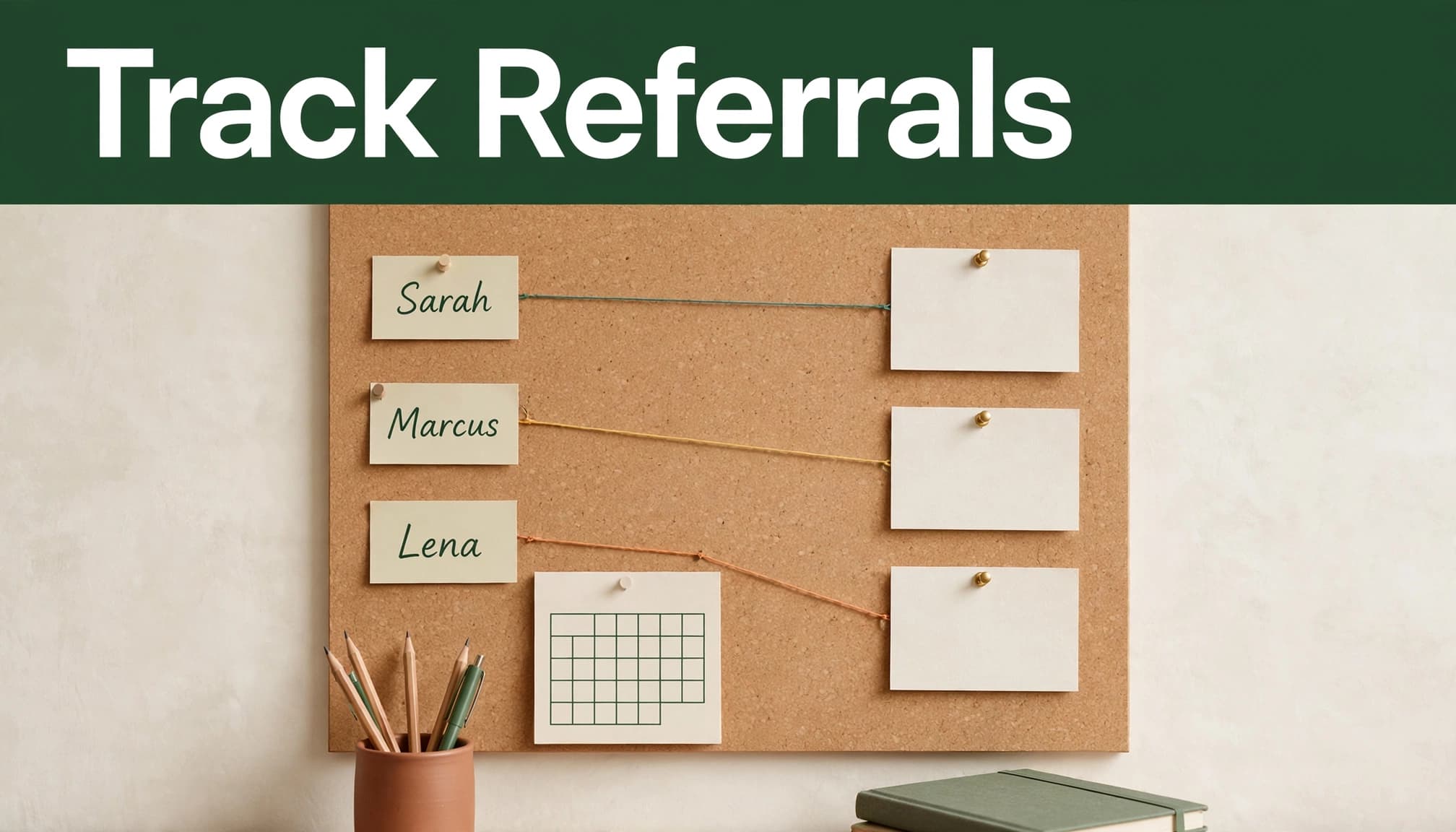
A spreadsheet is enough when you are starting. You need clean information, not another subscription.
Create one tab called “Referrals.” Add a row the same day a lead arrives. This small habit keeps good opportunities from getting lost in your inbox.
Use Simple Referral Tracking
Here is all you need to record at first:
| Field | What to record |
|---|---|
| Date received | When the referral came in |
| Referral source | Client, colleague, or partner name |
| Referral code | Optional code connected to the referral source |
| New lead | Name and preferred contact method |
| Service needed | The problem or offer discussed |
| Status | Contacted, booked, paid, or not a fit |
| Reward sent | Date and type of thank-you, including custom rewards |
Review the sheet once a week. Compare how many referrals become calls with how many calls become paying clients. That comparison gives you a useful conversion rate.
A simple sheet is usually more useful than an analytics dashboard at this stage. Track source, bookings, revenue, fit, and customer lifetime value as your system matures.
Stay with a spreadsheet until volume makes manual updates difficult. Then consider referral tracking software or referral program software. Neither is required, and automated workflows won’t improve a process you haven’t clarified.
Add basic boundaries against confusion and fraud
Write a few rules before issues show up. A referral can’t refer herself. One new client can trigger one reward. Existing leads don’t count as new referrals. Rewards aren’t paid for canceled invoices or refunds.
These rules provide basic fraud detection without adding complexity. If two people claim the same client, honor the first documented introduction or ask the new client who encouraged her to reach out. Be fair, be consistent, and put the rule in writing.
Protect Privacy and Promote With Care
Never ask clients to hand over a friend’s phone number or email address. Ask them to make an introduction only after that person says yes. Keep referral records private and limit access to anyone helping in your business.
If you work with people in the European Union or collect their information there, review the European Commission’s data-protection guidance. Local privacy laws and professional rules may require more than a simple spreadsheet.
Share the program at natural touchpoints
Mention referrals after a project milestone, in your wrap-up email, during a client check-in, or in a thank-you note. Add one short line to your email signature or onboarding guide if it fits.
Treat these moments as a small, permission-based referral campaign, not a mass push. You can also post about the kind of clients you want to serve. Be clear, not vague. Let people know what you do, who you help, and how to reach you.
Review the system before you add more tools
After your first 10 referrals, ask a few honest questions. Did clients understand who to send your way? Was the cost of custom rewards justified by the quality of the resulting work? Did you respond quickly enough?
Make one change at a time. You may need better referral language, a clearer service description, or a simpler intake form. Once the manual process works, you can consider referral program software or referral tracking software. Neither is required, and more software won’t fix an unclear process.
Frequently Asked Questions
When should I ask a client for a referral?
Ask after a clear positive result, a compliment, a completed project, or a meaningful milestone. Give the client time to experience the value of your work first.
Should I pay cash for referrals?
Cash can work, but it is not your only option. Credits, discounts, bonus support, gifts, and a sincere thank-you may fit better. Check your contracts, professional rules, and profit margin before deciding.
What if a referral does not become a client?
Thank the person who referred them anyway. They made a thoughtful introduction, and the lead may have been a poor fit, badly timed, or not ready to buy. Track the outcome without treating the relationship like a failed transaction.
Build It With Consistency, Not Pressure
A referral process works when it feels like an extension of the care you already give. Serve people well, stay clear about your offer, and make it easy for the right people to connect.
You don’t need to chase every lead or reward every mention. Consider referral tracking software only if a spreadsheet-based process outgrows manual tracking. Trust grows through a process that’s simple, private, and consistent.