
Essential Home Maintenance Skills for Everyday Confidence
A few practical home skills can turn an unexpected problem into a manageable task. You don’t need to become a repair expert or own a cabinet full of specialized equipment. The most useful abilities involve recognizing common issues, making a space safe, and knowing when professional help is needed. These five skills give you a solid foundation for handling everyday home maintenance with confidence.
Confidence Begins with Self-Reliance
Self-reliance grows through small, repeatable wins. Learn how to read your electrical panel labels, replace an HVAC filter, and keep simple maintenance records. These tasks build familiarity with your home, which can make larger problems feel less intimidating.
Resources covering independent living skills also emphasize steady progress through manageable tasks. Choose one home system each month and learn its basic controls. The article on tools that help women build skills and confidence offers further encouragement for developing practical abilities.
Keep a folder with appliance manuals, warranty details, and service dates. When something stops working, you’ll have key information ready instead of searching for it under pressure.
Resolve Heating System Hiccups
If the heat stops, begin with the thermostat. Confirm that it’s set to heat, raise the temperature a few degrees, and replace the batteries if the screen looks dim. Next, check the electrical panel for a tripped breaker. Reset a breaker only once by moving it fully to the off position before switching it back on.
Homeowners can also follow clear instructions on how to reset a furnace before requesting a service visit. Stop troubleshooting if you notice burning odors, unusual sounds, repeated shutdowns, or visible damage.
Replace dirty filters according to the manufacturer’s schedule. Many standard filters need attention every one to three months, though pets, dust, and heavy system use can shorten that interval.
Locate and Manage Shutoff Valves
Knowing how to stop water flow can limit damage from a leaking supply line or overflowing fixture. Find the main water shutoff and the smaller valves beneath sinks, behind toilets, and near the washing machine. Label them clearly and make sure every adult in the household knows their locations.
Turn a valve clockwise gently to close it. Don’t force a stuck or corroded handle because it may break and worsen the leak. If a valve won’t move with light pressure, call a plumber.
Electrical shutoff knowledge matters too. Identify the main disconnect and confirm that each breaker has an accurate label. These are practical daily living skills that help you respond faster when a problem affects one room or appliance.
Assemble an Everyday Tool Essentials Kit
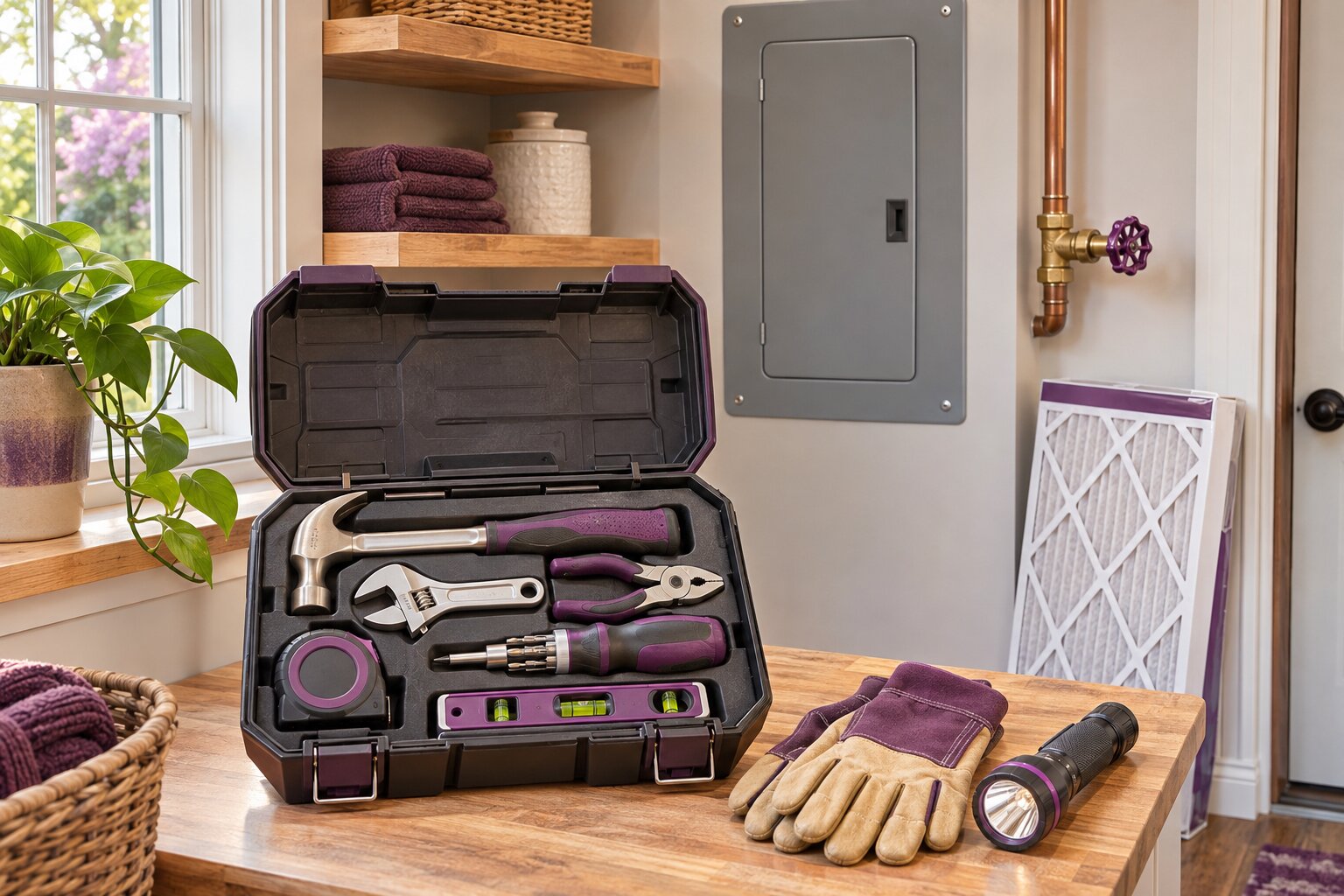
A compact tool kit can handle loose cabinet pulls, flat-pack furniture, and many basic adjustments. Start with a claw hammer, adjustable wrench, slip-joint pliers, tape measure, flashlight, and a screwdriver with interchangeable bits. Add work gloves, painter’s tape, a small level, and spare batteries.
Buy comfortable tools that fit your hands. A heavy hammer or oversized pair of pliers can make a simple job harder, while textured grips provide better control. Store everything in one portable box so you aren’t searching through several drawers during a repair.
Your fifth core skill is using tools within their limits. Read instructions first, wear eye protection when a task could release debris, and stop when a project involves hidden wiring, structural damage, or a persistent leak. Calling a qualified professional is a smart part of home care.
A useful first move is to walk through your home with your phone and photograph the electrical panel, water valves, HVAC filter size, and appliance model numbers. Save the images in a clearly named folder. The next time a filter needs replacing, or a valve must be closed, the details will already be at your fingertips.