
Essential Risk Management Considerations for Roofing Companies
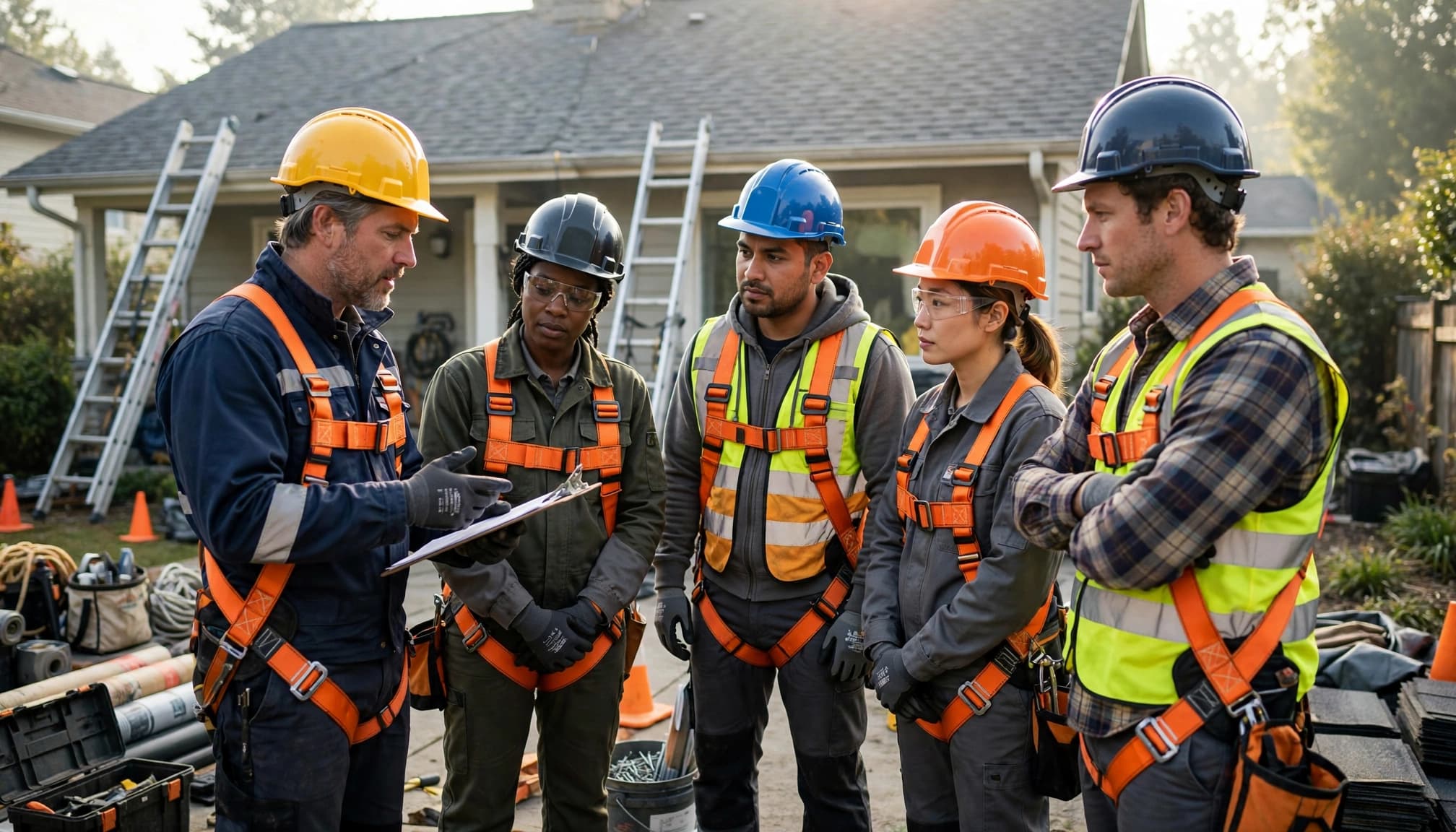
Roofing ranks among the most physically dangerous trades in all of construction. Falls, dropped materials, structural collapses, and third-party property damage liability create a risk profile that most industries simply don’t encounter. And yet plenty of roofing contractors still treat risk management like an afterthought.
Risk management matters for roofing companies, and it’s what separates businesses that survive a bad incident from those that don’t.
Secure the Right Insurance Coverage Before You Start Any Job
Liability begins the moment your crew steps onto someone’s property. Roofers insurance typically bundles general liability, workers’ compensation, and commercial auto into a program calibrated to the actual hazards of roofing work, not a generic contractor policy riddled with coverage gaps. Getting that right before work begins isn’t optional. A purpose-built roofers insurance policy guards against the specific dangers roofing teams face every day: falls from height, storm damage liability during active projects, and equipment losses that standard commercial policies often exclude or sharply limit.
General liability covers third-party property damage and bodily injury claims that arise from your operations. If a shingle falls and damages a neighbor’s car, or a subcontractor causes a leak that ruins a homeowner’s interior, liability coverage is what stands between you and a lawsuit that drains your accounts.
Workers’ compensation is just as critical, and most states require it by law. The Bureau of Labor Statistics has consistently tracked roofing among the top five most dangerous trades, with injury rates that far outpace most of construction. One comp claim without adequate coverage can cost a roofing company more than the entire job paid.
Don’t let a lower premium tempt you into a policy with exclusions for steep-slope or high-rise work. Read what the policy actually covers before you sign anything.
Establish a Written Fall Protection Program
Falls account for a disproportionate share of roofing fatalities. OSHA generally requires fall protection when construction employees work six feet or more above a lower level. Section 1926.501 establishes that duty, while Section 1926.502 outlines requirements for fall-protection systems. Telling workers to “be careful up there” doesn’t come close to constituting a compliant safety program.
A written fall protection plan should specify the types of systems your crew uses – guardrail systems, personal fall arrest systems, or safety nets – along with the conditions under which each is required. It should also name who is responsible for inspecting equipment before each shift.
Training matters just as much as the paperwork does. Workers need hands-on instruction in properly donning a safety harness, inspecting anchor points, and recognizing when equipment has been compromised. Document every session. Keep sign-off sheets on file where they can be found quickly.
OSHA currently lists a maximum federal penalty of $165,514 for each willful or repeated violation. Penalty limits are adjusted periodically, so contractors should confirm the current amount through OSHA. One inspection after an incident can wipe out months of profit.
Vet Every Subcontractor You Bring Onto a Job
Roofing companies often use subcontractors to handle overflow work, specialty tasks, or geographic expansion. But when a sub causes property damage or injures someone on your jobsite, the claim can land on your policy – especially if that sub doesn’t carry adequate coverage of their own.
Before any sub sets foot on a project, get their certificate of insurance and confirm that their general liability and workers’ compensation limits meet what your contract specifies. Don’t accept a certificate without checking expiration dates and named-insured details. A certificate tied to a policy that lapsed three months ago is worthless.
Require that your company be listed as an additional insured on the sub’s general liability policy, which adds a meaningful layer of protection if their work triggers a loss. Put all subcontractor agreements in writing, including indemnification language that spells out exactly who’s responsible for what.
So the paperwork is the protection. A handshake and a phone call don’t hold up when an adjuster is asking who’s liable for a $40,000 interior flood.
Manage Contract Risk Before You Sign Anything
The contract you sign with a property owner or general contractor shapes your legal exposure for the entire duration of the project. Many roofing companies accept standard-form contracts without reading them carefully – and some of those contracts include indemnification clauses that transfer an unreasonable level of risk onto your company.
Broad-form indemnification clauses can leave you on the hook for losses caused entirely by someone else’s negligence. That’s a serious problem when you’re a subcontractor and the GC’s crew damages property after your work is done. Before signing any indemnification language, have an attorney or a qualified risk advisor review the clause carefully.
Watch the contract provisions around warranties and workmanship guarantees. A warranty that outlasts your coverage period, or that covers damages your insurer would exclude, creates an obligation nobody’s backing. Your contractual commitments need to match what your policy actually covers.
And include a clear scope-of-work definition. Disputes over what the job included are one of the most common drivers of roofing litigation.
Build an Incident Response Plan Your Whole Team Knows
When something goes wrong on a jobsite – a fall, a property damage event, an equipment failure – what happens in the first hour matters enormously. Contractors with a documented incident response plan tend to preserve evidence, reach the right people quickly, and avoid statements that complicate claims. Those without one frequently make expensive mistakes while under pressure.
Your incident response plan should outline the immediate steps after an injury: call 911 if needed, secure the scene, document the area with photos and video before anything moves, and notify your insurance carrier promptly. Delayed reporting can give a carrier grounds to deny a claim, which is a situation you want to avoid entirely.
Assign a designated point of contact for all communications with adjusters, attorneys, and property owners after an incident. Having multiple people speaking on behalf of the company creates inconsistencies that plaintiff attorneys look for.
Train supervisors on the plan, not just crew members. The person running the job needs to know exactly what to do when they’re standing on a roof looking at a situation that went sideways.
Build Protection Into Every Project
Risk management in a roofing company comes down to preparation. Appropriate insurance, a written safety program, careful subcontractor screening, clear contracts and a practical incident response plan are not simply administrative requirements. They help prevent one serious incident from becoming a business-ending event.
Build these systems before you need them, review them regularly and involve qualified safety, legal and insurance professionals when necessary. That preparation can help protect your workers, customers, reputation and financial stability.