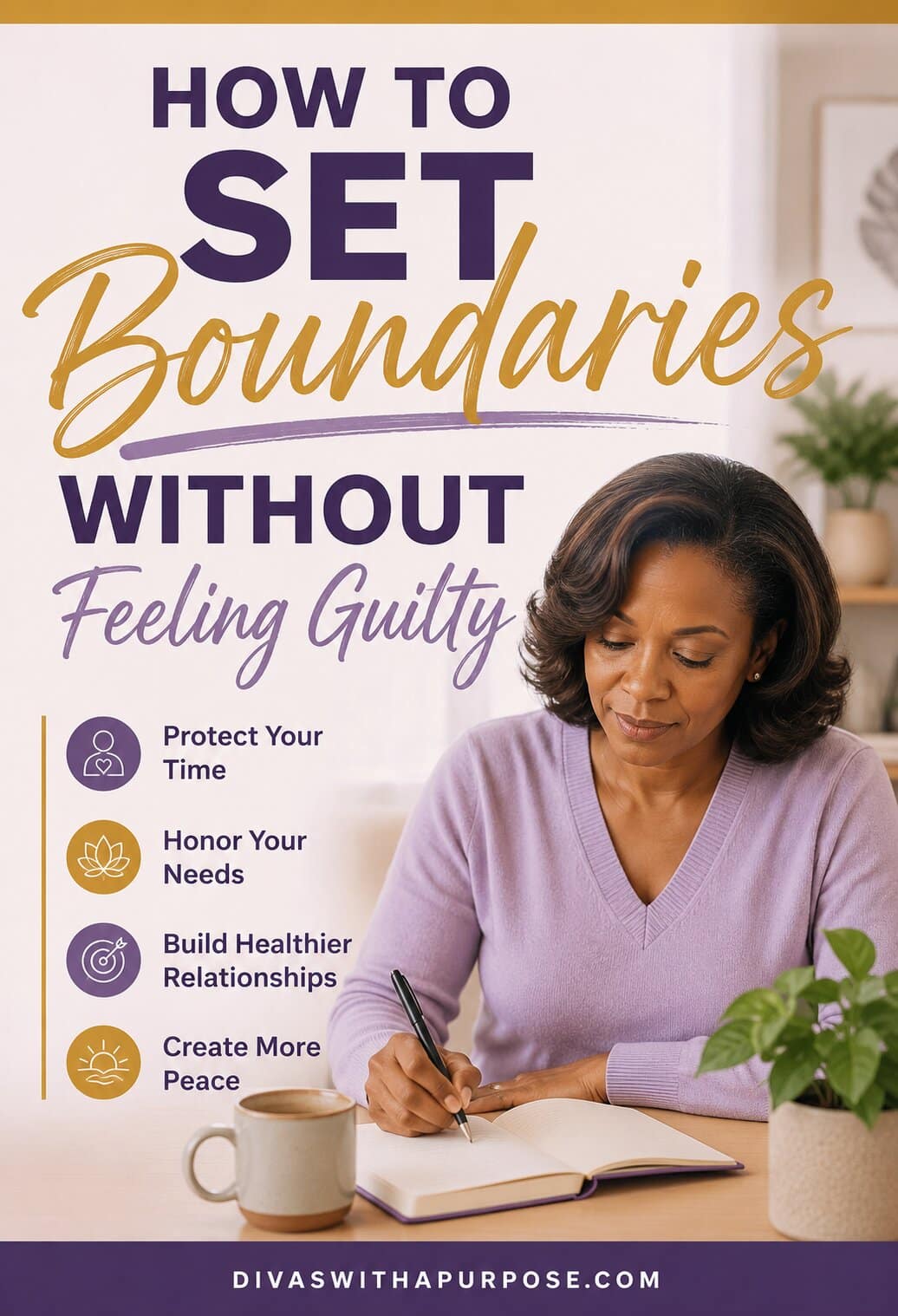
How to Set Boundaries Without Feeling Guilty

Have you ever said “yes” while your whole body was begging for a “no”? That is what setting boundaries often bumps into, such as guilt, fear, and the old habit of keeping everyone else comfortable first.
If you are the person who remembers birthdays, solves problems, fills in gaps, and keeps things moving, you might find that setting boundaries is particularly challenging. You do not want to be rude, and you certainly do not want to disappoint people. However, you also do not want to keep ending every week feeling tired, resentful, and stretched too thin, as this cycle can eventually impact your mental health.
The good news is that boundaries do not make you harsh. They help you stay honest, healthy, and present in your relationships. By prioritizing your needs, you frame boundaries as a foundational act of self-care. Let’s make this feel simpler.
Key Takeaways
- Guilt after setting a boundary does not mean you have done something wrong.
- Setting personal boundaries is about defining what you will do, allow, or participate in, rather than trying to control someone else.
- Calm, clear language is more effective than providing long explanations.
- Establishing healthy boundaries is essential for building and maintaining healthy relationships with family, friends, partners, and colleagues.
- Consistency is more important than having the perfect script when you decide to set healthy boundaries.
Why setting boundaries brings up so much guilt

A lot of people think guilt means stop. It does not. Sometimes guilt simply means you are doing something new.
If you have spent years being helpful, agreeable, and available, a boundary can feel like breaking a rule you never chose. Being a people-pleaser often starts as a form of protection. It helps you avoid conflict, stay liked, and keep the peace. That makes sense, but what kept you safe once can wear you out now.
Guilt also shows up when you have tied your worth to being needed. If being the dependable one became part of your identity, it may signal an underlying sense of codependency, making saying no feel selfish even when the request is unfair. Add family expectations, work pressure, or a partner who is used to constant access, and your nervous system may react before your mind catches up.
That is why so many adults know they need better boundaries but still experience a freeze response during high-pressure moments, which puts their mental health at risk.
Burnout is usually the loudest clue that something is wrong. You start dreading texts, feel irritated by small requests, or harbor hidden resentment toward those you are trying to help. You might say yes, then replay the conversation for hours. That does not mean you are mean. It means you need to cultivate more self-awareness to recognize these historical patterns. If overgiving has become your normal, these practical strategies for personal growth can support the bigger work of changing your habits.
Here is the heart of it: guilt is a feeling, not a verdict. You can feel guilty and still make a wise choice. You can care about someone and still tell them no. Both things can be true at the same time.
What a healthy boundary sounds like
A boundary is not a punishment, nor is it a wall. It is a clear line that defines your time, capacity, and emotional boundaries, as well as your physical boundaries. Practicing healthy boundaries is a way to honor your needs while maintaining your integrity.

A healthy boundary says, “This is what works for me,” not “You are bad for asking.”
That shift matters. Boundaries are not about managing other adults. They are about being honest about your limits and following through on them. That honesty builds trust. People may not love every limit you set, but clear relationships are healthier than resentful ones.
When you need to speak up, keep it simple. Long explanations often come from anxiety, not clarity. You do not need a courtroom case for needing rest, privacy, or space.
A calm boundary usually has four parts, which rely on the principles of assertive communication:
- Name what is happening in plain language.
- State what you need or what you will do.
- Keep your tone respectful and steady.
- Repeat it if needed, without adding a new speech each time.
That can sound like this: “I can’t take that on this week.” “I’m not available for last-minute plans tonight.” “If voices get raised, I’m going to step away and we can talk later.”
Notice what is missing. No essay. No apology spiral. No attack.
This takes practice, especially if you have been trained to soften every sentence until your meaning disappears. Start with small moments. Let a call go to voicemail. Say, “I need to check my schedule before I commit.” Ask for 24 hours before giving an answer. Small steps build your confidence.
If you want more tips for establishing personal boundaries, keep building on the basics of clear language and follow-through. Establishing boundaries is a skill that improves over time, and consistency in setting limits will eventually change your relationships for the better.
Real-life scripts for family, friends, partners, and work

Different relationships press different buttons. The goal is not to sound robotic. The goal is to sound honest.
With family
Family boundaries can feel loaded because history comes with them. Old roles have a way of showing up fast. Maybe you are expected to babysit, struggle with financial boundaries, answer every call, or attend every gathering.
Try this: “I won’t be able to host this year, but I’m happy to bring a dish.” Or, “I’m not discussing my parenting choices today.” If a relative keeps pushing, repeat yourself: “I hear you. I’m still not available for that.”
This is not disrespect. It is clarity. Family love does not require unlimited access. It also does not require you to explain your choices until everyone approves.
Friendship and relationship boundaries
Friendship can get blurry when one person always carries the emotional weight. You may be the friend who listens for hours, rearranges plans, or says yes because you do not want anyone to feel let down.
A simple script helps: “I care about you, and I don’t have the energy for a long call tonight.” When you need to communicate your limits, using time boundaries ensures you have the space to recharge. Another option is, “I need more notice for plans. Same-day invites usually won’t work for me.”
Good friends may need time to adjust, especially if your old pattern was endless availability. That does not mean the friendship is failing. It means the friendship is getting more honest. If you are working on bigger habits around self-worth and overcommitment, setting personal growth goals can help you stay grounded in the changes you want to make.
With romantic partners
Boundaries in romantic relationships are not a sign of distance. They support safety, respect, and mutual care.
You might need space around privacy, time alone, money, conflict, or physical affection. Say it directly and kindly: “I need 30 minutes alone after work before I can talk.” Or, “I’m not okay with being called names during an argument. If that happens, I’m ending the conversation until we’re both calm.”
A loving partner may not get everything right the first time. What matters is whether there is respect, repair, and effort. If someone treats every boundary as rejection, that is not proof your need is wrong. It is information about the health of the relationship.
At work

Work boundaries can feel risky because money, performance, and reputation are involved. Still, limits matter here too. Establishing professional boundaries is essential for maintaining your sanity and protecting your work-life balance.
You can be professional and clear at the same time by setting clear expectations. Try: “I can finish this by Thursday, or I can prioritize the new request and move the other deadline. Which would you prefer?” That keeps the focus on workload, not guilt. Another script is, “I’m offline after 6 p.m., so I’ll respond tomorrow morning.”
If interruptions are the issue, say, “I work best when I can focus for a block of time. I’ll check messages again at 2.” If extra tasks keep landing on your desk, ask for priorities in writing. Boundaries at work are often about scope, timing, and communication, not attitude.

What to do when guilt or pushback shows up
This is the part many people aren’t prepared for. Even after you say the right words, you may still feel shaky.
That is normal. Your body is learning a new pattern. Many people swing between rigid boundaries, where they shut others out completely, and porous boundaries, where they allow their needs to be ignored. Do not treat that initial discomfort like an emergency. Let it pass without rushing to fix it by taking your boundary back.
Pushback can look like anger, silence, guilt trips, or jokes about you changing. You must learn how to enforce boundaries even when it feels uncomfortable. Stay steady. You do not need a new explanation every time someone does not like your limit. A short repeat is enough: “I understand you are disappointed. I am still not able to do that.”
Not everyone will cheer for your boundary, especially if they benefited from you having none.
It also helps to check your own language. If you notice yourself saying, “I’m sorry, but…” every time, pause. Try saying, “I won’t be able to,” or “That doesn’t work for me.” Cleaner language often creates cleaner energy.
Afterward, give yourself support instead of criticism. Journal for five minutes, call someone safe, or take a walk before you second-guess yourself into old habits. The goal is not to stop feeling guilty overnight. The goal is to stop letting guilt run the whole relationship.
Remember that people who care about you may need time. New limits change the rhythm of a relationship. Healthy people will eventually show they are capable of respecting boundaries once they adjust. However, high conflict personalities or toxic people may resist harder because they only want access on their own terms. That resistance can hurt, but it also reveals the truth, helping you move forward without building up hidden resentment.
Frequently Asked Questions
Does feeling guilty mean I made the wrong choice?
No, feeling guilty is a natural reaction when you change a long-standing behavior, not a signal that you have done something wrong. It often arises because you are finally prioritizing your own needs, which can feel uncomfortable if you are used to people-pleasing.
How do I handle someone who ignores my boundaries?
If someone continues to push your limits, hold your ground by calmly repeating your boundary without adding long explanations. Consistent repetition demonstrates that your limits are firm and helps others understand that your stance is not up for negotiation.
Do I need to apologize when setting a boundary?
Avoid apologizing when stating a limit, as unnecessary “sorrys” can undermine your clarity and make the boundary seem like a request rather than a firm decision. Instead, use neutral, assertive language to state what you need or what you will do, which keeps the focus on your capacity rather than guilt.

Conclusion
The moment you stop saying yes to everything, it can feel like you are doing something wrong. In reality, the process of setting boundaries is simply a way of being honest about what you have the capacity to carry.
Healthy boundaries are not a withdrawal of love. They are a way of protecting your peace so your care can stay real, rather than turning into resentment.
Start with one small sentence this week. Keep it clear and keep it kind. By prioritizing self-care and maintaining healthy relationships, you will find that a little consistency goes a long way. Let that be enough.

Michelle D. Garrett is the founder of Divas With A Purpose.
She focuses on sharing resources for being purposely productive; setting personal and professional goals and achieving them through daily action; and successfully running a business while focusing on your mental health. Michelle is a full-time entrepreneur who specializes in teaching female entrepreneurs how to show up consistently in their business – online and off.