
4 Ways to Visualize Your Dreams and Goals
Women often stop pursuing their dreams not because they lack ambition, but because life becomes overwhelming. Responsibilities, bills, expectations, and daily pressures can slowly pull them away from the goals they once cared about.
Over time, many women become so focused on taking care of everyone else that they slowly lose connection with themselves and what they truly want from life. But their dreams don’t disappear. They’re still there, quietly waiting to be rediscovered.

The good news is that visualization is a very effective method that can help women reconnect with their goals and dreams.
You see, visualization is not just about dreaming about exotic vacations or creating beautiful Pinterest boards. At its core, visualization can help you reconnect with yourself. It allows your mind to explore new opportunities and avoid becoming overwhelmed by the stress and daily routine of your life. Through the use of visualization, women can rediscover lost goals, build self-confidence, and connect emotionally with the future they’re going to create.
Here are 4 different visualization techniques you can use.
1. Mental Rehearsal
For a long time, athletes have used mental visualization or mental rehearsal, and it works just as effectively for anyone else. The principle of mental visualization is simple: close your eyes and vividly imagine yourself doing the thing you dream of doing. Focus not on the outcome, but on the actual process: the steps, the feelings, and the details involved.
Set aside five quiet minutes either early in the morning or before you go to sleep to mentally visualize yourself completing your goal. For example, if you are starting a new business, visualize yourself on the phone with your first client: what are you wearing, how confident does your voice sound, and how do you feel after the call is completed? Another example is writing a book. Imagine yourself at your desk with words flowing easily as you work toward finishing your manuscript.
The more specifically you can visualize your goal and engage all your senses (sight, sound, and feeling), the better. When you consistently visualize yourself being successful in any endeavor, you begin to form neural pathways in your brain that support that outcome. In this way, you are not just dreaming, you are rehearsing and mentally practicing.

2. Vision Boards
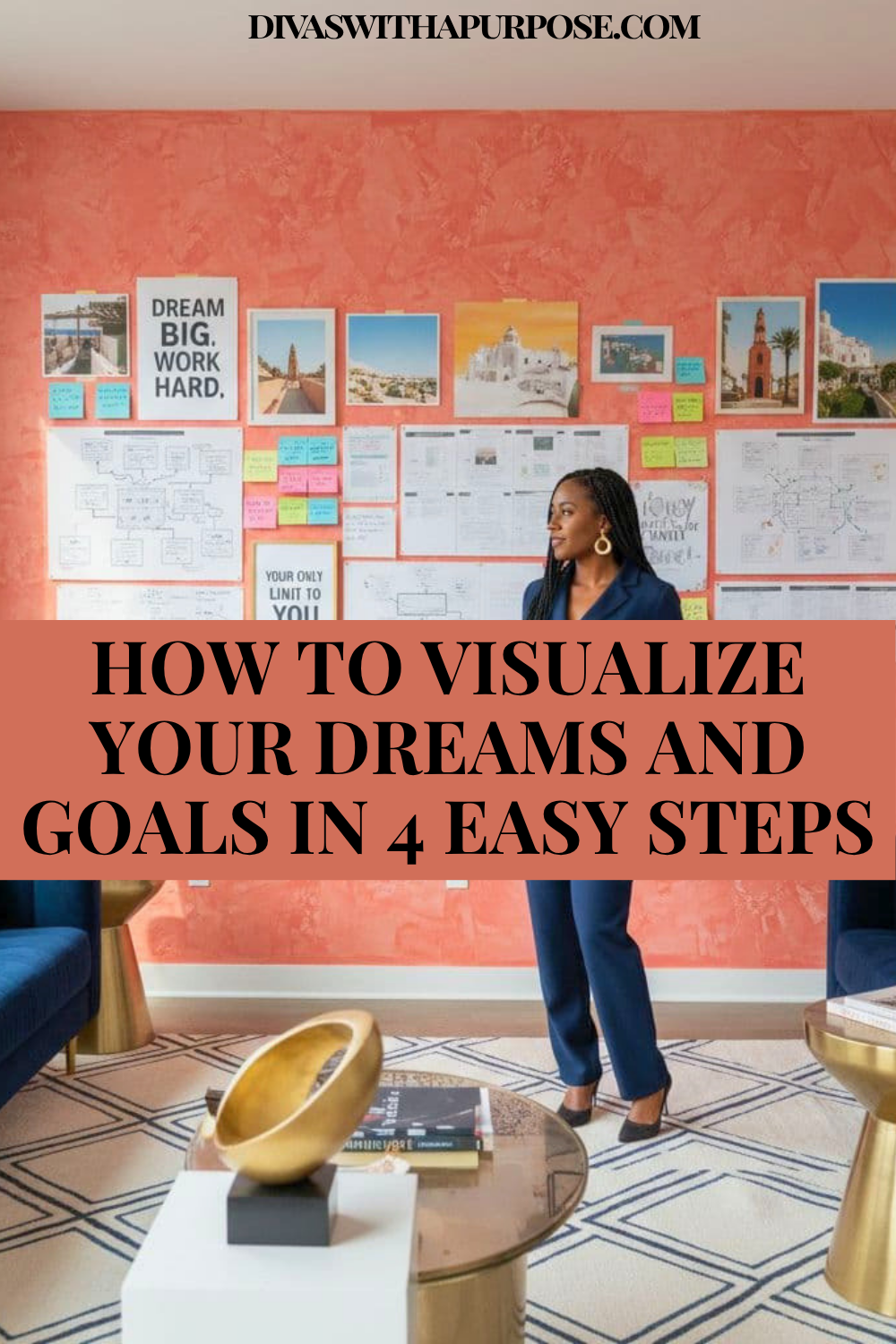
One of the best ways to reconnect with your dreams and achieve your goals is to use a vision board. You might have heard of vision boards: they’ve become quite popular recently.
Most people think they are just a collage of beautiful images arranged on a board. A deeper look into how vision boards work reveals that they can have a powerful impact on the brain, helping you feel more motivated and focused on what you want to achieve. That’s because vision boards activate a neural network in the brain responsible for filtering information and keeping the mind focused on specific goals.
This is why many people report getting good results from using vision boards. They find it easier to take action toward their goals, trust the process more, and stay focused and motivated.
The good news is that you only need a few minutes per day to look at your board. The best times are when you wake up and before going to bed.
Making a physical vision board may initially feel overwhelming, but the truth is you can simplify it a lot. You don’t really need too many images. Just get a few pictures relevant to your dreams and goals – you can find them online or in magazines. Cut them out and tape them on a small physical board. You can even tape them on your wardrobe door.
If you don’t have enough space for a physical board, you can create a digital one. Just get a few digital images, save them on your phone and look at them briefly a few times per day.
One important thing to know is that vision boards are more effective when you also use words or affirmations. Simply write down a few short prompts and put them on your board as well. Example: “I am capable of achieving my dreams and goals”, “I am enough”, “I am successful”, etc.

3. Future Self Visualization
This technique works by visualizing a version of your future self who has already achieved the goal or dream you’re working toward. It’s not just about fantasizing about that future self, but about fully stepping into her experience in your imagination: seeing through her eyes, hearing her voice, and feeling what she feels.
A simple way to practice this is to sit in a quiet space, close your eyes, and picture yourself five years from now. You have done the things you set out to do, created what you set out to create, healed what you set out to heal, and become who you set out to become. As you look back at your present life from this future perspective, what does she want to tell you? What would your future self want you to stop worrying about? What step would she encourage you to take today?
This technique works because it helps shift the way you relate to your present situation and your future goals. Instead of seeing your dream as something distant and separate from you, you begin to feel the connection between who you are now and who you are becoming. This can make your goals feel less like far-off fantasies and more like a direction you are actively moving toward.
Some women find it helpful to journal afterward from the perspective of their future self – writing in the first person, as if those goals have already been achieved.
4. Visualization Journaling
Visualization journaling is a writing practice that combines imagination with reflective journaling to help you mentally experience your desired future. It involves writing in the present tense as if you are already living your dream life. You describe your daily routines, emotions, environment, relationships, and experiences in detail.
The goal is not to build a strategy or the steps toward achieving your goal. It is about building a vivid picture of your desired future in your mind.
Many people use prompts such as: What does my ideal day look like? How do I feel in this version of my life? Where am I living, and what does my life feel like on a day-to-day basis?
Here is one example, so you understand better how to practice visualization journaling. Imagine you want to start a small online business, but you’re still in the early stages and it all feels a bit uncertain. Set aside about 10 minutes in a quiet space. Grab a notebook and write at the top of the page: “A day in my life as a successful business owner.”
Then, instead of thinking about what you should do, you write as if it is already your reality, in the present tense.
You can begin like this: “I wake up in the morning feeling calm and optimistic. I take a few minutes to stretch and check my messages, and I already see inquiries from clients who are excited to work with me.”
Keep going and make it as detailed as possible: “I make my coffee and sit at my desk. My workspace feels inspiring and simple. I open my laptop and review the projects I’m working on. I feel confident in what I’m doing because I know my work is valued.”
Then include more details: “I feel focused and grounded, and there is no rush or panic. I can hear soft background music while I work, and I feel proud of the life I’m building.”

You Don’t Have to Do All Four
You don’t need to overhaul your entire routine to start benefiting from visualization. Choose one or two practices that feel comfortable to incorporate, then try them on a regular basis for the next two weeks.
You will find that you will get the greatest results from each of the four practices if you show up and continue doing them despite how imperfectly you perform them. For example, using 5 minutes to visualize how your future self would perform (mental rehearsal), mentally visualizing yourself achieving your goals, creating a simple vision board using images cut from magazines, or writing a short journal about your future self.
Your dreams didn’t disappear. They’re still there, waiting for you to pay attention to them again.
Please pin one of these images to your favorite Pinterest board.
This simple share makes a big difference to my blog. Thank you!



Michelle D. Garrett is the founder of Divas With A Purpose.
She focuses on sharing resources for being purposely productive; setting personal and professional goals and achieving them through daily action; and successfully running a business while focusing on your mental health. Michelle is a full-time entrepreneur who specializes in teaching female entrepreneurs how to show up consistently in their business – online and off.