
Strategic Decorating Tips For A High-End Finish in Your New Home
Moving into new homes offers something few buyers appreciate until the keys are in their hands: a completely blank canvas. No legacy colour choices, no one else’s taste baked into the walls. But that freedom can quickly feel overwhelming. Here’s how to approach it with intention.
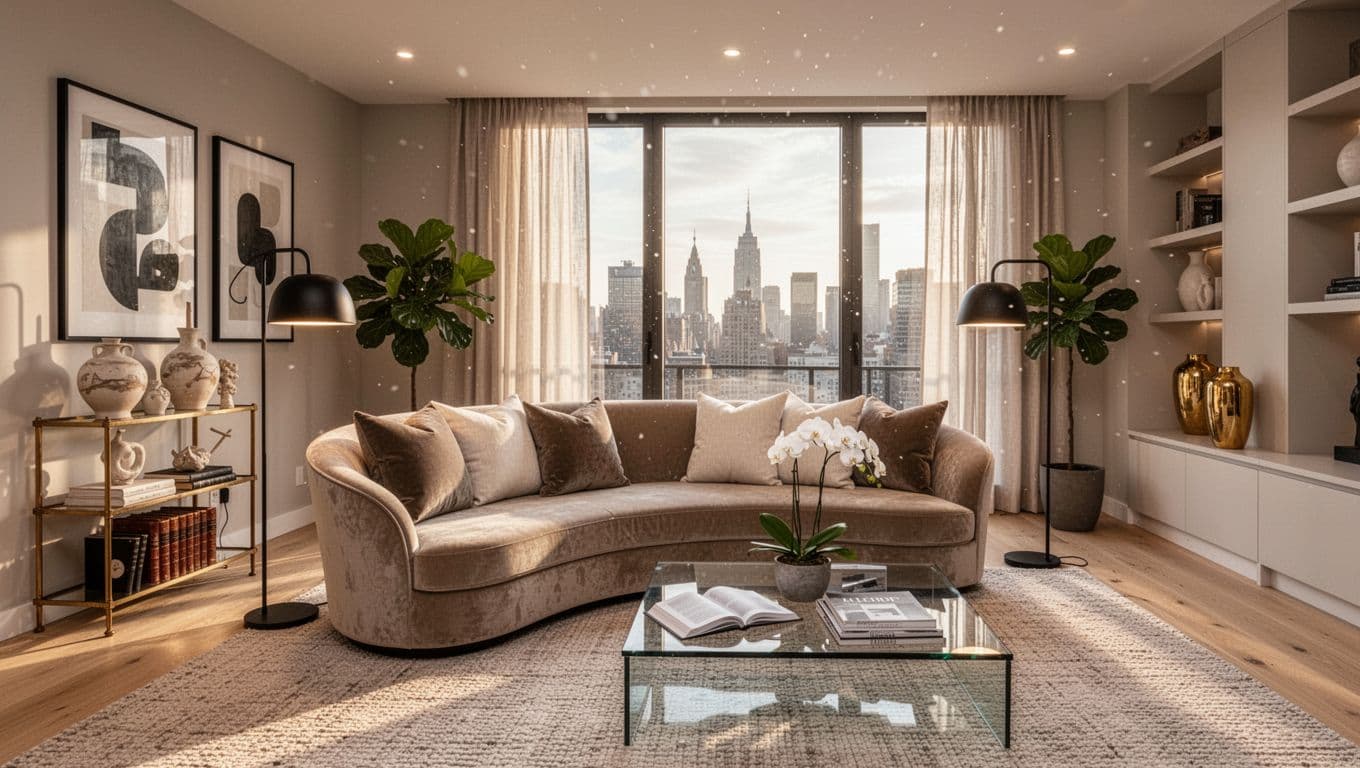
1 – The “Anchor Piece” Strategy
Interior experts increasingly recommend what’s known as the 1-in-5 rule: rather than filling every room with mid-range furniture you’ll tire of within a few years, allocate roughly 60% of your initial room budget to one standout, high-quality piece, a statement velvet sofa, a solid walnut dining table, or a hand-crafted sideboard. The remaining 40% can stretch across affordable but high-impact additions like lighting and textiles. One well-chosen anchor elevates everything around it, making a budget rug or flat-pack bookshelf look considerably more considered.
2 – Priortize “Atmospheric Infrastructure”
Lighting is the most consistently underestimated decorating decision. Standard ceiling fittings in new builds tend to be functional at best and clinical at worst. This is fine for a building site and less fine for a home. Before committing budget to artwork or wallpaper, plan a layered lighting scheme: dimmable floor lamps, warm-toned LED strips beneath kitchen cabinets, and one statement pendant per key room. Good lighting softens builder-grade finishes and creates a sense of warmth and completeness even in a sparsely furnished space.
3 – Use “Colour Capping” to Save on Paint
Colour drenching, where you paint every surface in a single tone, dominated interiors in 2025, but 2026 has brought a more restrained evolution: colour capping. Designers are now favouring approaches that layer warmth and atmosphere without overwhelming a space, painting only the lower two-thirds of a wall or applying a rich tone solely to the ceiling with a narrow frieze. The result is an architectural, high-end look achieved with a single tin of premium paint, with Little Greene or COAT being popular choices, at a fraction of the cost of treating an entire room.
4 – Shop the “Pre-Loved Luxury” Market
In 2026, sustainability has become a genuine design value instead of a marketing footnote. Interior designers are championing what they describe as “individual, handcrafted and vintage” as the defining trifecta of the year, with a curated mix of old and new now considered more sophisticated than a showroom-fresh interior. Platforms like Facebook Marketplace and Vinted regularly yield 1970s sideboards or Art Deco pieces with better construction and more character than modern flat-pack equivalents, often at half the price.
5 – The Hardware “Micro-Upgrade”
New builds typically come fitted with standard chrome handles and plastic sockets, the details that most immediately signal a budget interior to anyone who knows what to look for. A targeted spend of between £200 and £400 on brushed brass or matte black replacements for kitchen cabinet handles, door knobs, and light switches delivers an immediate and tactile sense of quality throughout the home. It’s a straightforward DIY job with a disproportionate visual return.
Decorating a new home well is about spending deliberately. Prioritise atmosphere over accumulation, invest in the pieces that carry a room, and let the space develop gradually instead of forcing it to feel finished overnight.